3: Conservative backlashes
Content:
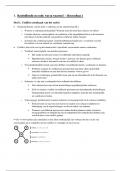
1. Explaining the French Revolution
2. A conservative backlash
2.1. International reactions to the FR
2.2. Congress of Vienna (1815): peace and the restoration of monarchies
2.3. Liberal challenges: 1830 revolutions
3. Collapse of the conservative order: - birthmark of democracy in Europe
3.1. 1848 revolutions
3.2. Democratisation in the 2nd half of 19C
1. Explaining the FR
What caused it? Why then, in 1789?
● Theories on the causes of the FR
“Despite its status as a political event, the FR has been heavily associated with social explanations.”
(socio-economic)
3 dominant explanations
1) A Marxist interpretation: class-competition (bourgeoisie against the nobility)
- FR explained in terms of a class struggle in which the bourgeoisie is pitted against the nobility and
struggles for greater rights and economic interests.
2) The victory of the Enlightenment ideas:
- Popular sovereignty;
- Reason and rights → DRTR constantly challenged by the revolutions.
- Switch Hobbes → Locke
3) Linking social and ideational (political) theories: (mix of 1) and 2))
- Changing income and wealth patterns and rates of upward mobility → re-shaping dominant beliefs
regarding power and governance.
- Rise of a commercial class created meritocratic ideals.
- Notion of meritocracy was crucial for circulating the very abstract ideas of the Enlightenment,
such as reason.
1.1. Marxist interpretation
Dominant paradigm in 20C (esp. till the 70s).
● FR as a class struggle “bourgeoisie - nobility”
- Middle class was in a financial economic struggle with the nobility.
- Wanted access to the King & ability to buy land.
- Claiming their rights.
- Fought against the nobility for recognition.
● With the industrial proletariat pushing the bourgeois to more ‘left-wing positions’ towards social
reform.
- First revolutionaries belonged to the MC; - were joined by lower class groups (ex. sans-culottes) who
pushed them towards social reform.
This interpretation really draws on the writings of Marx:
- System of production affects societal structure and dominant beliefs/ideology.
- Inherent conflict
- Class consciousness as catalyst for revolution
, - Bourgeois dominance would bring about a capitalist society; replacing the plurality of conflicts by a
duality: bourgeois-proletariat.
Whatever kind of culture or political system a society has, it is determined by material conditions: the system of
production = system by which goods are created; the economy. Determines the principles that govern society ==>
Historical materialism.
(based on primitive communism, slavery, feudalist structure, capitalism + industrialism)
Unorganised society → empire → landed aristocracy → bourgeois democracy → proletariat rule & development
of a democratic, communist utopia.
(Unorganised society: primitive communism; conflict: division of labour, private property, tribalism.
Empire: slavery; conflict with barbarians.
Landed aristocracy: feudalism; conflict with bourgeoisie.
Bourgeois democracy: capitalism; conflict with the proletariat.)
- He identifies within every stage of history/type of society an internal struggle.
- A system of production inevitably boils down to a conflict between the ‘haves’ and the ‘have nots’.
- Political vision/culture/tradition produced as a result of this power inequality in the economic system
would lead to support inequalities even further.
- Ideas, principles (ex. Mode of governance) would blind people to their oppression and cause them to
continue to accept their subordination and oppression.
- Accepted oppression until a point of no return: till the oppressed/ordinary would become aware of their
own own oppression because the situation got so dire that they rebel against the ruler.
- = class consciousness - awareness of your own oppression so you can retaliate against it.
In the context of the FR:
Growing bourgeois influence - increasingly rich, dominating commerce and trade, and having many financial
means.
Whilst at the same time: traditional nobility born into aristocracy was losing financial means ==> economic
rivalry.
Bourgeois would bring about a capitalist society - transform the traditional landed aristocracy and the
agricultural context. By pushing towards an industrial capitalist society, they’d replace the plurality of conflicts
(clergy, traders, commoners, workers, peasants) by one singular dominant conflict: bourgeoisie - proletariat.
→ bourgeois - industrial/capitalist, able to invest in industry.
==> Up and coming bourgeoisie wanted to take over & were in conflict with the nobility.
BUT:
“The impossibility of explaining the FR by the triumph of an unidentifiable capitalist bourgeoisie over an
unidentifiable feudal aristocracy.” aka: Who was that capitalist bourgeoisie and the feudal aristocracy? - By
1789, they weren’t neatly separated classes.
- Lots of upward mobility
- Many merchants would buy a noble title → as a result of becoming nobles of the robe they’d sometimes
abandon their commercial activities and live as traditional noblemen.
==> Misinformed about the nature and/or existence of classes in society at that time.
Invalidated by historical evidence:
1) False distinction between “feudal aristocracy” and “capitalist bourgeoisie”
- The feudal system had already been severely weakened.
- Many traditional noble privileges were already weakened, dispersed with other people
(bourgeois) → noble titles for sale (by acquiring land and an office. Sometimes buying land
came with a noble title. Join public office and work for the king: become a ‘noble of the robe’.
- Intermarriage: son/daughter of a wealthy trader would marry the child of an impoverished
nobleman.
Content:
1. Explaining the French Revolution
2. A conservative backlash
2.1. International reactions to the FR
2.2. Congress of Vienna (1815): peace and the restoration of monarchies
2.3. Liberal challenges: 1830 revolutions
3. Collapse of the conservative order: - birthmark of democracy in Europe
3.1. 1848 revolutions
3.2. Democratisation in the 2nd half of 19C
1. Explaining the FR
What caused it? Why then, in 1789?
● Theories on the causes of the FR
“Despite its status as a political event, the FR has been heavily associated with social explanations.”
(socio-economic)
3 dominant explanations
1) A Marxist interpretation: class-competition (bourgeoisie against the nobility)
- FR explained in terms of a class struggle in which the bourgeoisie is pitted against the nobility and
struggles for greater rights and economic interests.
2) The victory of the Enlightenment ideas:
- Popular sovereignty;
- Reason and rights → DRTR constantly challenged by the revolutions.
- Switch Hobbes → Locke
3) Linking social and ideational (political) theories: (mix of 1) and 2))
- Changing income and wealth patterns and rates of upward mobility → re-shaping dominant beliefs
regarding power and governance.
- Rise of a commercial class created meritocratic ideals.
- Notion of meritocracy was crucial for circulating the very abstract ideas of the Enlightenment,
such as reason.
1.1. Marxist interpretation
Dominant paradigm in 20C (esp. till the 70s).
● FR as a class struggle “bourgeoisie - nobility”
- Middle class was in a financial economic struggle with the nobility.
- Wanted access to the King & ability to buy land.
- Claiming their rights.
- Fought against the nobility for recognition.
● With the industrial proletariat pushing the bourgeois to more ‘left-wing positions’ towards social
reform.
- First revolutionaries belonged to the MC; - were joined by lower class groups (ex. sans-culottes) who
pushed them towards social reform.
This interpretation really draws on the writings of Marx:
- System of production affects societal structure and dominant beliefs/ideology.
- Inherent conflict
- Class consciousness as catalyst for revolution
, - Bourgeois dominance would bring about a capitalist society; replacing the plurality of conflicts by a
duality: bourgeois-proletariat.
Whatever kind of culture or political system a society has, it is determined by material conditions: the system of
production = system by which goods are created; the economy. Determines the principles that govern society ==>
Historical materialism.
(based on primitive communism, slavery, feudalist structure, capitalism + industrialism)
Unorganised society → empire → landed aristocracy → bourgeois democracy → proletariat rule & development
of a democratic, communist utopia.
(Unorganised society: primitive communism; conflict: division of labour, private property, tribalism.
Empire: slavery; conflict with barbarians.
Landed aristocracy: feudalism; conflict with bourgeoisie.
Bourgeois democracy: capitalism; conflict with the proletariat.)
- He identifies within every stage of history/type of society an internal struggle.
- A system of production inevitably boils down to a conflict between the ‘haves’ and the ‘have nots’.
- Political vision/culture/tradition produced as a result of this power inequality in the economic system
would lead to support inequalities even further.
- Ideas, principles (ex. Mode of governance) would blind people to their oppression and cause them to
continue to accept their subordination and oppression.
- Accepted oppression until a point of no return: till the oppressed/ordinary would become aware of their
own own oppression because the situation got so dire that they rebel against the ruler.
- = class consciousness - awareness of your own oppression so you can retaliate against it.
In the context of the FR:
Growing bourgeois influence - increasingly rich, dominating commerce and trade, and having many financial
means.
Whilst at the same time: traditional nobility born into aristocracy was losing financial means ==> economic
rivalry.
Bourgeois would bring about a capitalist society - transform the traditional landed aristocracy and the
agricultural context. By pushing towards an industrial capitalist society, they’d replace the plurality of conflicts
(clergy, traders, commoners, workers, peasants) by one singular dominant conflict: bourgeoisie - proletariat.
→ bourgeois - industrial/capitalist, able to invest in industry.
==> Up and coming bourgeoisie wanted to take over & were in conflict with the nobility.
BUT:
“The impossibility of explaining the FR by the triumph of an unidentifiable capitalist bourgeoisie over an
unidentifiable feudal aristocracy.” aka: Who was that capitalist bourgeoisie and the feudal aristocracy? - By
1789, they weren’t neatly separated classes.
- Lots of upward mobility
- Many merchants would buy a noble title → as a result of becoming nobles of the robe they’d sometimes
abandon their commercial activities and live as traditional noblemen.
==> Misinformed about the nature and/or existence of classes in society at that time.
Invalidated by historical evidence:
1) False distinction between “feudal aristocracy” and “capitalist bourgeoisie”
- The feudal system had already been severely weakened.
- Many traditional noble privileges were already weakened, dispersed with other people
(bourgeois) → noble titles for sale (by acquiring land and an office. Sometimes buying land
came with a noble title. Join public office and work for the king: become a ‘noble of the robe’.
- Intermarriage: son/daughter of a wealthy trader would marry the child of an impoverished
nobleman.