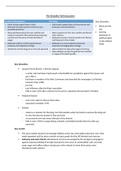
The Girondins’ fall from power
Also Girondins:
Were pro the
war
Anti the
extension of
political rights
to the militant
mobs
Key Girondins:
Jacques-Pierre Brissot- a Parisian deputy:
- a writer who had been imprisoned in the Bastille for pamphlets against the Queen and
gov 1783-4.
- had been a member of the Paris Commune and launched the newspaper La Patriote
Francais (May 1789).
- pro war
- Lost influence after the King’s execution.
- Fled in June 1793 after a decree for his arrest; captured and executed in October
Madame Roland:
- met in her salon to discuss their ideas
- executed in October 1793
Roland:
- acted as a minister for the King; lost that position when he tried to convince the king not
to veto the decrees passed in May and June
- an economist and was twice Minister of the Interior.
- Fled in June 1793 to escape being arrested; committed suicide when his wife was
executed.
Key events:
The sans-culottes became increasingly militant as the war went badly and prices rose; they
made repeated calls for price controls on basic goods but the NC blocked such decrees
February and early March: disturbances in Paris encouraged by the enragés (campaigners
against anyone profiting from high food prices) over price of commodities such as bread,
soap, sugar and coffee; bakers and grocers who refused to lower their prices were
threatened with violence
Also Girondins:
Were pro the
war
Anti the
extension of
political rights
to the militant
mobs
Key Girondins:
Jacques-Pierre Brissot- a Parisian deputy:
- a writer who had been imprisoned in the Bastille for pamphlets against the Queen and
gov 1783-4.
- had been a member of the Paris Commune and launched the newspaper La Patriote
Francais (May 1789).
- pro war
- Lost influence after the King’s execution.
- Fled in June 1793 after a decree for his arrest; captured and executed in October
Madame Roland:
- met in her salon to discuss their ideas
- executed in October 1793
Roland:
- acted as a minister for the King; lost that position when he tried to convince the king not
to veto the decrees passed in May and June
- an economist and was twice Minister of the Interior.
- Fled in June 1793 to escape being arrested; committed suicide when his wife was
executed.
Key events:
The sans-culottes became increasingly militant as the war went badly and prices rose; they
made repeated calls for price controls on basic goods but the NC blocked such decrees
February and early March: disturbances in Paris encouraged by the enragés (campaigners
against anyone profiting from high food prices) over price of commodities such as bread,
soap, sugar and coffee; bakers and grocers who refused to lower their prices were
threatened with violence