NRNP 531 Week 10 Assignment; i-Human Case Study; Evaluating and Managing
Neurologic Conditions
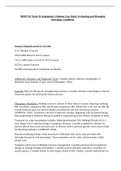
Primary Diagnosis and ICD-10 Code:
G35- Multiple Sclerosis
70553-MRI Brain W W/O Contrast
72153- MRI Spine Cervical W W/O Contrast
62270- Lumbar Puncture
162388-Antineutrophil Cytoplasmic Antibodies
Additional Laboratory and Diagnostic Tests: Consider optical coherence tomography to determine exact damage of optic nerve (Pietrangelo, 2020).
Consults: Physical therapy for strengthening exercises. Consider referral to neurologist to discuss
treatment options for slowing the disease process.
Therapeutic Modalities: Multiple sclerosis consists of three clinical courses: relapsing-remitting MS, Secondary progressive MS, and Primary progressive MS. While there is no cure for MS, the
overall treatment goal is to prevent further exacerbations and slow the disease process (AMBOSS, 2020). Treatment is devised of step-wise therapy; beginning with escalation therapy then progressing to induction therapy if patient is experiencing severe disease symptoms at onset.
Treatment for acute exacerbation includes: Methylprednisolone 500-1000mg PO daily for 3-5 days. Begin slowly tapering dosage if symptoms decrease. Consider prophylactic therapy for adverse effects from corticosteroids; such as Prilosec daily to prevent gastritis and Lovenox daily for thromboprophylaxis (AMBOSS, 2020).
Disease-modifying therapy exists but possess substantial risks and is only provided after thorough discussion with neurologist. These treatments can be costly and have many health related risks.
Symptom relief is key to Multiple Sclerosis management. Consider physical and occupational therapy to manage strength and mobility. Consider muscle relaxants; baclofen or Zanaflex for muscle spasms. Consider Ritalin to treat fatigue related to MS. Finally, consider medications for
Neurologic Conditions
Primary Diagnosis and ICD-10 Code:
G35- Multiple Sclerosis
70553-MRI Brain W W/O Contrast
72153- MRI Spine Cervical W W/O Contrast
62270- Lumbar Puncture
162388-Antineutrophil Cytoplasmic Antibodies
Additional Laboratory and Diagnostic Tests: Consider optical coherence tomography to determine exact damage of optic nerve (Pietrangelo, 2020).
Consults: Physical therapy for strengthening exercises. Consider referral to neurologist to discuss
treatment options for slowing the disease process.
Therapeutic Modalities: Multiple sclerosis consists of three clinical courses: relapsing-remitting MS, Secondary progressive MS, and Primary progressive MS. While there is no cure for MS, the
overall treatment goal is to prevent further exacerbations and slow the disease process (AMBOSS, 2020). Treatment is devised of step-wise therapy; beginning with escalation therapy then progressing to induction therapy if patient is experiencing severe disease symptoms at onset.
Treatment for acute exacerbation includes: Methylprednisolone 500-1000mg PO daily for 3-5 days. Begin slowly tapering dosage if symptoms decrease. Consider prophylactic therapy for adverse effects from corticosteroids; such as Prilosec daily to prevent gastritis and Lovenox daily for thromboprophylaxis (AMBOSS, 2020).
Disease-modifying therapy exists but possess substantial risks and is only provided after thorough discussion with neurologist. These treatments can be costly and have many health related risks.
Symptom relief is key to Multiple Sclerosis management. Consider physical and occupational therapy to manage strength and mobility. Consider muscle relaxants; baclofen or Zanaflex for muscle spasms. Consider Ritalin to treat fatigue related to MS. Finally, consider medications for