100% satisfaction guarantee Immediately available after payment Both online and in PDF No strings attached 4.2 TrustPilot
logo-home
Exam (elaborations)

BIOD 171 FINAL EXAM Completed with All Correct Answers.

Rating
-
Sold
8
Pages
7
Grade
A+
Uploaded on
07-10-2021
Written in
2022/2023

BIOD 171 FINAL EXAM BIOD 171FINAL EXAM BIOD 171FINAL EXAM 1. True or False: A virus is considered a microorganism. False. Viruses are not living and as such are not considered microorganisms. Viruses can, however, be classified as microbes, a more general term that includes microorganisms and viruses. 2. What is the smallest biological unit of life? A cell. 3. At a generalized level, all cells are comprised of what? Macromolecules* *A student may also answer: Proteins, Lipids, Nucleic acids and Polysaccharides but they must answer with all four to be fully correct. 1. Animalia, Plantae, Fungi and Protista are all classification under what type of organism? A. Bacteria B. Eukarya C. Archaea D. Virus B. Only Eukarya contains animals, plants, fungi and protists. 2. All multicellular microorganisms classified as Animalia are autotropic. False—they are heterotropic. 3. Microorganisms classified as obtain most of their energy by converting light energy into chemical energy. Plantae 1. Define catabolism. Catabolism is the process of breaking down larger molecules into useful energy sources. 2. Upon cellular injury, which metabolic process is involved during the growth and repair phases of the cell? The anabolic process would be active as it (by definition) is involved in the building up of small complexes into larger complexes. 1. What is one of the main functions of light reactions? Similar to the electron transport chain, one of its main functions is to generate a proton concentration gradient to generate ATP. 2. True or False: Dark reactions can occur in the presence or absence of light. True. The term ‘dark reactions’ (also known as the Calvin Cycle) simply denotes the second stage in photosynthesis—dark reactions do not actually require darkness in order to occur. 1. Assuming a constant (non-adjustable) light source power, identify the part of the microscope you would adjust to limit the amount of light entering the microscope. Select all that apply. A. Objective B. Condenser C. Iris diaphragm D. Eye piece C. The iris controls the amount of light that passes through the sample and into the objective lens. Thus, it can be adjusted (opened or closed) to alter the amount of light. 2. What is the total magnification (relative to your eye) of a sample imaged with a 60x objective and a 10x eyepiece? Show your math. 60 x 10 = 600x magnification 1. Identify what type of electron microscope was used to capture the following image and explain your choice. The image was captured using a Scanning Electron Microscope (SEM). The above image shows the trademark ‘shell’ image (no subcellular organelles are visible) reminiscent of SEM. Only TEM is capable of visualizing subcellular substrucutres. 1. True or False: LB agar is classified as a selective, non-differential media. False. LB agar is the most basic type of agar and like LB media supports the growth of virtually all microbes without restriction. 2. What is agar used for in microbiology? Agar is used to create a solid, smooth surface on which microbes can grow. 1. True or False. When performing a dilution streak a new (or sterilized) loop is not required for each phase as long as the bacterial culture is pure. False. A new or sterilized loop is absolutely required for each phase. Failure to do so would prevent the establishment of a dilution gradient, as the same bacterial concentration would be spread across both phase regions, regardless of whether or not the culture is pure. 2. The number of phases (3 vs. 4) and/or the number of times a loop passes through a previous phase (once vs. multiple times) is acceptable provided what happens? Either deviation is acceptable in practice provided the resulting gradient contains within it the growth of individual colonies—if not, the experiment must be repeated. 3. True or False. Pathogenic strains of bacteria tend to grow slower than normal non-pathogenic bacterial strains. False. Pathogenic strains of bacteria tend to grow faster than non-pathogenic strains at 37°C, which is why researchers may set incubators at 25°C to restrict its growth. 1. Folliculitis D A. Childhood skin disease near mouth/nose 2. Scalded-skin syndrome E B. Infection of thin, transparent scleral tissue 3. Impetigo A C. Infection occurs at time of birth 4. Conjunctivitis B D. Pus-filled lesions on skin or hair 5. Ophthalmia Neonatorum C E. Ruptured pustules; treated with Penicillin 2. True or False. The causative agent of conjunctivitis can be either bacterial or viral. True. There are bacterial (staph) and viral forms of conjunctivitis, both resulting in the inflammation of the conjunctiva and ‘pink eye.’ 1. True or False. Although there is no cure for tetanus, it can be prevented through vaccination. True. There is no cure for tetanus. However, tetanus is entirely preventable through vaccination. 2. Describe the symptoms and treatment regimen for someone infected with Clostridium perfringens. Clostridium perfringens (also known as Gas gangrene) presents with muscle necrosis, swelling of infected areas, fever and intense gas production. Treatment entails removal of all infected tissue, often resulting in amputation of the affected areas, in conjunction with heavy antibiotic therapies. 3. Why does the alpha toxin (perfringolysin) produced during an infection of gas gangrene cause cell death? The toxin perforates the membrane. It forms pores in the plasma membrane of host cells resulting in uncontrolled ion fluxes and eventually cell lysis and death. 1. The surrounds the capsid of some viruses. Envelope. 2. True or False. You would expect to see a viral envelope on a virus infecting a plant cell. False. The overwhelming majority of animal viruses are enveloped whereas the majority of plant or bacteria-infecting viruses are not. 3. Rank the following viruses based on their size from largest to smallest: Orthomyxovirus Poliovirus Variolavirus Variolavirus (~200nm) > Orthomyxovirus (100-150nm) > Poliovirus (~30nm) 1. While traveling abroad, should you be worried about coming into contact with either the Variola major or Variola minor viruses? No. Both viruses are variants of smallpox and were eradicated in 1977. You would not need to worry about coming into contact with the virus. 2. What small (~30nm) single-stranded, non-enveloped RNA virus causes temporary or permanent paralysis by infiltrating (infecting) motor neurons within the spinal cord, brain stem or motor cortex? Polio, also known as poliomyelitis. 3. Described the main underlining differences between the Salk and Sabin polio vaccine. The Salk vaccine contained an inactivated form of the virus and was injected while the Sabin vaccine contained a live attenuated (weakened) form of the virus and was administered orally. 4. Which subtype of Influenza is the most virulent? Influenza A

Show more Read less


Whoops! We can’t load your doc right now. Try again or contact support.

Document information

Uploaded on
October 7, 2021
Number of pages
7
Written in
2022/2023
Type
Exam (elaborations)
Contains
Questions & answers

Subjects

  • however

Content preview

BIOD 171FINAL EXAM


1. True or False: A virus is considered a microorganism.


False. Viruses are not living and as such are not considered microorganisms. Viruses can,
however, be classified as microbes, a more general term that includes microorganisms and
viruses.


2. What is the smallest biological unit of life?


A cell.


3. At a generalized level, all cells are comprised of what?


Macromolecules*
*A student may also answer: Proteins, Lipids, Nucleic acids and Polysaccharides but they
must answer with all four to be fully correct.


1. Animalia, Plantae, Fungi and Protista are all classification under what type of
organism?
A. Bacteria
B. Eukarya
C. Archaea
D. Virus


B. Only Eukarya contains animals, plants, fungi and protists.


2. All multicellular microorganisms classified as Animalia are autotropic.


False—they are heterotropic.


3. Microorganisms classified as obtain most of their energy by converting light
energy into chemical energy.


Plantae


1. Define catabolism.


Catabolism is the process of breaking down larger molecules into useful energy sources.

, 2. Upon cellular injury, which metabolic process is involved during the growth and
repair phases of the cell?


The anabolic process would be active as it (by definition) is involved in the building up of
small complexes into larger complexes.


1. What is one of the main functions of light reactions?


Similar to the electron transport chain, one of its main functions is to generate a proton
concentration gradient to generate ATP.


2. True or False: Dark reactions can occur in the presence or absence of light.


True. The term ‘dark reactions’ (also known as the Calvin Cycle) simply denotes the second
stage in photosynthesis—dark reactions do not actually require darkness in order to occur.


1. Assuming a constant (non-adjustable) light source power, identify the part of the
microscope you would adjust to limit the amount of light entering the microscope.
Select all that apply.
A. Objective
B. Condenser
C. Iris diaphragm
D. Eye piece


C. The iris controls the amount of light that passes through the sample and into the objective
lens. Thus, it can be adjusted (opened or closed) to alter the amount of light.


2. What is the total magnification (relative to your eye) of a sample imaged with a 60x
objective and a 10x eyepiece? Show your math.


60 x 10 = 600x magnification


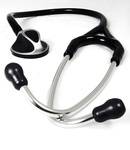
1. Identify what type of electron microscope was used to capture the following image
and explain your choice.
Get to know the seller

Seller avatar
Reputation scores are based on the amount of documents a seller has sold for a fee and the reviews they have received for those documents. There are three levels: Bronze, Silver and Gold. The better the reputation, the more your can rely on the quality of the sellers work.
grade_bender Rasmussen College
View profile
Follow You need to be logged in order to follow users or courses
Sold
1035
Member since
5 year
Number of followers
958
Documents
1871
Last sold
1 month ago
Grade_bender all documents, bundles, and flashcards

Access the most current and rigorously authenticated examination materials, including actual tests with 100% verification. Our comprehensive repository encompasses ATI, Nursing, PMHNP, TNCC, USMLE, ACLS, WGU, and all associated certification and academic assessments—each designed to ensure guaranteed success. Should a specific resource be unavailable in our catalog, our dedicated support team will procure it promptly upon request. Purchase with absolute confidence. We strongly encourage all clients to submit a review post-acquisition to affirm complete satisfaction and uphold our commitment to academic excellence.

Read more Read less
3.8

146 reviews

5
71
4
31
3
14
2
8
1
22

Recently viewed by you

Why students choose Stuvia

Created by fellow students, verified by reviews

Quality you can trust: written by students who passed their tests and reviewed by others who've used these notes.

Didn't get what you expected? Choose another document

No worries! You can instantly pick a different document that better fits what you're looking for.

Pay as you like, start learning right away

No subscription, no commitments. Pay the way you're used to via credit card and download your PDF document instantly.

Student with book image

“Bought, downloaded, and aced it. It really can be that simple.”

Alisha Student

Frequently asked questions