
Summary literature Qualitative Innovation Analytics
Lecture 1: Oost, Heinze (2006), Circling around a Question: Defining your research problem
(IVLOS). “Part I: Theory. Research Problems as a Concept”, pp. 5-10
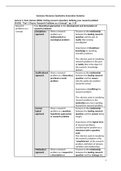
Research Four theoretical approaches to the development and formulation of
problems as a research problems:
concept Disciplinary Views a research Focuses on the relationship
approach problem as a between the leading research
mathematical or question and the part of
sociological problem reality that is being
investigated
Importance of disciplinary
knowledge in resolving
scientific problems
The criterion used in classifying
research problems is the part
of reality that is the object of
the research, knowledge
domain
Justificational Views a research Focuses on the relationship
approach problem as a theoretical, between the leading research
practical or social question and the reason
problem why this particular problem
should be solved
Importance of justifying the
research problem
The criterion used in classifying
research problems is the
motivation one has in putting
forward the research problem
Formal- Views a research Focuses on the relationship
logical problem as a question, between the leading research
approach hypothesis approaches question and the answer being
or research problem sought
Importance of the logical form
of research problems,
considering the problem as a
statement with a question
mark
The criterion used in classifying
the research problems is the
‘completeness’ of the research
problem, definition of domain,
variables and relationships.
Methodical Views a research Focuses on the relationship
approach problem as a request for between the leading research
a description or question and the strategy the
1
, explanation problem implies
Emphasises the importance of
the function the research
should fulfil
Classifying the research
problems by the actions the it
triggers
The main functions of defining the problem are:
1. Defining the subject within a disciplinary domain
2. Formulating a theoretical or practical aim
3. Stating what is known and what is unknown
4. Indicating research type and structure
5. Unifying question, discipline, reason, strategy and answer
6. Facilitating criticism and control
Functions 1-4 have been derived from the theoretical perspectives
mentioned above
Function 5 expresses the synthesis of these perspectives
Function 6 is a communicative function relating to the accessibility of
knowledge and the related condition of the findability of information
Four variables in which the problem can be presented:
Explicitness (communication direct or indirect)
Location (found in expected or unexpected place)
Spread (key information brought together or scattered)
Emphasis (question typographically marked or unmarked)
Standards of quality for the presentation of a problem:
Disciplinary embedding: Relationship between the question and the
disciplinary context
Relevance: Relationship between the question and the reason
Precision: Relationship between the question and the answer
Methodical functionality: Relationship between the question and the
general strategy
Consistency: Mutual relationships between the abovementioned
structural elements
Exposition: Relationships between all the elements and the text
Structure model of the research model:
Research problem as the heart of a
(conceptual) network
Discipline, reason, answer and strategy
are united, both to the question
(research problem) and to one another
function.
The network as a whole expresses the
2
, consistency standard (criterion)
The quality of a research problem in a scientific text is better when:
The position of the research problem in the (inter)disciplinary context
is clearer disciplinary embedding
The theoretical and/or social importance of the desired knowledge is
greater relevance
The linguistic elements of the problem, given its explorative or
testable character, are more correctly and clearly stated precision
The formulation of the statement anticipates a research function
more explicitly methodical functionality
Question, discipline, reason, strategy and answer fit together more
logically consistency
The research problem and the structural relations elaborated are
more accessible and consequently more easy to judge exposition
Lecture 1: Oost, Heinze (2006), Circling around a Question: Defining your research problem
(IVLOS). “Part II: Practice. Module 2: Relevance”, pp. 19-26
Module 2 A research problem is considered relevant when you can show that it is
Relevance worthwhile to find the answer to your question justification of the
research problem
A well-formulated justification convinces the reader of three things:
Newsworthiness: That the research problem has not yet been
answered satisfactorily
o Only worthwhile when it produces new information
o Can be a new question, or repeat a study when an “old”
answer isn’t satisfactory because of new developments
Usefulness: That answering the research problem is worthwhile, it
contributes to science and/or society
o Theoretical contributions: resulting answer contributes to the
theoretical development (a new theory or further
development of an existing theory)
o Contributions to society: resulting answer contributes to
solve a practical problem or achieve a desired situation in
society. Justification needs to show:
what the social problem or desired situation is
how one knows that it has been solved or reached
that knowledge is needed to reach this
that a scientific approach is needed to collect
information
Scope: That the research problem is made as informative as possible
o A research problem is considered optimal when there is no
other question that could yield more information Be
careful with unnecessarily limiting the scope
Function of explaining the relevance of the research problem in a justification:
External function Legitimising
Internal function Motivating
Regulating function Possible to evaluate if the research still reflects
3
, the justification
o It justifies why you are doing what you are doing
Justification makes the research:
A rational activity
A goal oriented activity
An interesting activity
Justification has two important characteristics:
An evaluative text: A text passing a judgement on the value of
something. The relevance of the research problem is judged When
the evaluative aspect has been dealt with, consider the
persuasiveness of the text
A persuasive text: A text that wishes to convince the reader of
something. Convince the reader that the research problem is worth
researching.
Methods to apply the three criteria for justification:
The research problem has not yet been answered satisfactorily
o Do a well-organised literature search
o Based on this, decide what is not known about the research
question
o If the research problem has been answered satisfactorily
Look for new research problem
The research problem contributes to science and /or society
o Analyse the present day level of knowledge on this subject
o Decide whether the answer to the research problem could
lead to a new theory
o Make use of the empirical cycle to describe which stage your
research problem focuses on
o When improving an existing theory, explain the limitations of
the present theory
The research problem is as informative as possible
o By broadening the domain or the variables of the research
problem, you can make your questions more informative
Empirical cycle: Depicts research as a cycle that exists of phases that you
repeatedly go through when doing research:
1. Collection of empirical material
2. Formulate hypotheses
3. Make predictions on basis of the hypotheses
4. Test hypotheses by seeing in how far your predictions are realised in
empirical outcomes
5. Evaluate the outcomes to conclude if the hypotheses are correct, and
if new research is necessary
Different kinds of shortcomings which present day theory may have:
Internal inconsistencies
Phenomena which act differently from what the theory would predict
Incorrect assumptions or premises
Changes in the empirical evidence on which the theory is based
4
Lecture 1: Oost, Heinze (2006), Circling around a Question: Defining your research problem
(IVLOS). “Part I: Theory. Research Problems as a Concept”, pp. 5-10
Research Four theoretical approaches to the development and formulation of
problems as a research problems:
concept Disciplinary Views a research Focuses on the relationship
approach problem as a between the leading research
mathematical or question and the part of
sociological problem reality that is being
investigated
Importance of disciplinary
knowledge in resolving
scientific problems
The criterion used in classifying
research problems is the part
of reality that is the object of
the research, knowledge
domain
Justificational Views a research Focuses on the relationship
approach problem as a theoretical, between the leading research
practical or social question and the reason
problem why this particular problem
should be solved
Importance of justifying the
research problem
The criterion used in classifying
research problems is the
motivation one has in putting
forward the research problem
Formal- Views a research Focuses on the relationship
logical problem as a question, between the leading research
approach hypothesis approaches question and the answer being
or research problem sought
Importance of the logical form
of research problems,
considering the problem as a
statement with a question
mark
The criterion used in classifying
the research problems is the
‘completeness’ of the research
problem, definition of domain,
variables and relationships.
Methodical Views a research Focuses on the relationship
approach problem as a request for between the leading research
a description or question and the strategy the
1
, explanation problem implies
Emphasises the importance of
the function the research
should fulfil
Classifying the research
problems by the actions the it
triggers
The main functions of defining the problem are:
1. Defining the subject within a disciplinary domain
2. Formulating a theoretical or practical aim
3. Stating what is known and what is unknown
4. Indicating research type and structure
5. Unifying question, discipline, reason, strategy and answer
6. Facilitating criticism and control
Functions 1-4 have been derived from the theoretical perspectives
mentioned above
Function 5 expresses the synthesis of these perspectives
Function 6 is a communicative function relating to the accessibility of
knowledge and the related condition of the findability of information
Four variables in which the problem can be presented:
Explicitness (communication direct or indirect)
Location (found in expected or unexpected place)
Spread (key information brought together or scattered)
Emphasis (question typographically marked or unmarked)
Standards of quality for the presentation of a problem:
Disciplinary embedding: Relationship between the question and the
disciplinary context
Relevance: Relationship between the question and the reason
Precision: Relationship between the question and the answer
Methodical functionality: Relationship between the question and the
general strategy
Consistency: Mutual relationships between the abovementioned
structural elements
Exposition: Relationships between all the elements and the text
Structure model of the research model:
Research problem as the heart of a
(conceptual) network
Discipline, reason, answer and strategy
are united, both to the question
(research problem) and to one another
function.
The network as a whole expresses the
2
, consistency standard (criterion)
The quality of a research problem in a scientific text is better when:
The position of the research problem in the (inter)disciplinary context
is clearer disciplinary embedding
The theoretical and/or social importance of the desired knowledge is
greater relevance
The linguistic elements of the problem, given its explorative or
testable character, are more correctly and clearly stated precision
The formulation of the statement anticipates a research function
more explicitly methodical functionality
Question, discipline, reason, strategy and answer fit together more
logically consistency
The research problem and the structural relations elaborated are
more accessible and consequently more easy to judge exposition
Lecture 1: Oost, Heinze (2006), Circling around a Question: Defining your research problem
(IVLOS). “Part II: Practice. Module 2: Relevance”, pp. 19-26
Module 2 A research problem is considered relevant when you can show that it is
Relevance worthwhile to find the answer to your question justification of the
research problem
A well-formulated justification convinces the reader of three things:
Newsworthiness: That the research problem has not yet been
answered satisfactorily
o Only worthwhile when it produces new information
o Can be a new question, or repeat a study when an “old”
answer isn’t satisfactory because of new developments
Usefulness: That answering the research problem is worthwhile, it
contributes to science and/or society
o Theoretical contributions: resulting answer contributes to the
theoretical development (a new theory or further
development of an existing theory)
o Contributions to society: resulting answer contributes to
solve a practical problem or achieve a desired situation in
society. Justification needs to show:
what the social problem or desired situation is
how one knows that it has been solved or reached
that knowledge is needed to reach this
that a scientific approach is needed to collect
information
Scope: That the research problem is made as informative as possible
o A research problem is considered optimal when there is no
other question that could yield more information Be
careful with unnecessarily limiting the scope
Function of explaining the relevance of the research problem in a justification:
External function Legitimising
Internal function Motivating
Regulating function Possible to evaluate if the research still reflects
3
, the justification
o It justifies why you are doing what you are doing
Justification makes the research:
A rational activity
A goal oriented activity
An interesting activity
Justification has two important characteristics:
An evaluative text: A text passing a judgement on the value of
something. The relevance of the research problem is judged When
the evaluative aspect has been dealt with, consider the
persuasiveness of the text
A persuasive text: A text that wishes to convince the reader of
something. Convince the reader that the research problem is worth
researching.
Methods to apply the three criteria for justification:
The research problem has not yet been answered satisfactorily
o Do a well-organised literature search
o Based on this, decide what is not known about the research
question
o If the research problem has been answered satisfactorily
Look for new research problem
The research problem contributes to science and /or society
o Analyse the present day level of knowledge on this subject
o Decide whether the answer to the research problem could
lead to a new theory
o Make use of the empirical cycle to describe which stage your
research problem focuses on
o When improving an existing theory, explain the limitations of
the present theory
The research problem is as informative as possible
o By broadening the domain or the variables of the research
problem, you can make your questions more informative
Empirical cycle: Depicts research as a cycle that exists of phases that you
repeatedly go through when doing research:
1. Collection of empirical material
2. Formulate hypotheses
3. Make predictions on basis of the hypotheses
4. Test hypotheses by seeing in how far your predictions are realised in
empirical outcomes
5. Evaluate the outcomes to conclude if the hypotheses are correct, and
if new research is necessary
Different kinds of shortcomings which present day theory may have:
Internal inconsistencies
Phenomena which act differently from what the theory would predict
Incorrect assumptions or premises
Changes in the empirical evidence on which the theory is based
4


