Theme 5
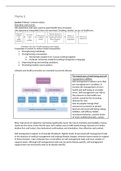
Lecture Patients’ context matters
Education and income:
Life expectancy and years spent in good health have increased.
Life expectancy inequalities have not narrowed. Smoking, alcohol, access to healthcare.
A typology of actions to reduce health inequalities:
1. Strengthening individuals
2. Strengthening communities
a. Horizontale: people from 1 group working together
b. Verticale: university-students teaching immigrants a language
3. Improving living and working conditions
4. Promoting healthy macro-policies
Lifestyle and health promotion are essential to prevent disease.
The importance of well-being and self-
management abilities:
Self-management requires more than
just managing one's condition. It
involves the management of one's
health and well-being in a broader
sense. Self-management can relieve
the pressure on the health care
system caused by the increasing
demand for care.
How do people manage their
resources to promote or protect
physical and social well-being: taking
initiative, self-efficacy beliefs,
investment behavior, positive frame
of mind, multifunctionality, variety.
Riley: high levels of subjective well-being significantly lower the risk of mortality and disability. Human
needs are the same across the life span, but relative ease to fulfil needs change. Resource for status
decline first and fastest, then behavioral confirmation and stimulation, then affection and comfort.
Self-management support in chronically ill patients: highest levels of perceived self-management tasks
in the domains of medical management and making lifestyle changes, whereas lowest needs for support
in these domains. Type of disease has a small effect on self-management tasks and even smaller on
support needs. Although self-management tasks may be partly disease specific, self-management
support does not necessarily need to be disease specific.
Lecture Patients’ context matters
Education and income:
Life expectancy and years spent in good health have increased.
Life expectancy inequalities have not narrowed. Smoking, alcohol, access to healthcare.
A typology of actions to reduce health inequalities:
1. Strengthening individuals
2. Strengthening communities
a. Horizontale: people from 1 group working together
b. Verticale: university-students teaching immigrants a language
3. Improving living and working conditions
4. Promoting healthy macro-policies
Lifestyle and health promotion are essential to prevent disease.
The importance of well-being and self-
management abilities:
Self-management requires more than
just managing one's condition. It
involves the management of one's
health and well-being in a broader
sense. Self-management can relieve
the pressure on the health care
system caused by the increasing
demand for care.
How do people manage their
resources to promote or protect
physical and social well-being: taking
initiative, self-efficacy beliefs,
investment behavior, positive frame
of mind, multifunctionality, variety.
Riley: high levels of subjective well-being significantly lower the risk of mortality and disability. Human
needs are the same across the life span, but relative ease to fulfil needs change. Resource for status
decline first and fastest, then behavioral confirmation and stimulation, then affection and comfort.
Self-management support in chronically ill patients: highest levels of perceived self-management tasks
in the domains of medical management and making lifestyle changes, whereas lowest needs for support
in these domains. Type of disease has a small effect on self-management tasks and even smaller on
support needs. Although self-management tasks may be partly disease specific, self-management
support does not necessarily need to be disease specific.