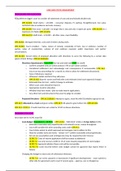
L.O. Advocacy SGS1
EXAM TIPS/KEY Always consider OVERRIDING OBJECTIVE (CPR 1)
INFO Bullet points ONLY (ideally one side of A4)
Lose marks if you appear to have detailed notes
L.O.: PRESENTATION SKILLS
Advocacy Outline - Conduct presentations, meetings, interviewing clients
WHAT IS ADVOCACY?
- SRA Statement of Solicitor Competence (para B5)
- What solicitors should be able to do
- List applies to advocacy both in and out of court
BEING AN EFFECTIVE ADVOCATE
1. Preparation
2. Presentation
3. Content
4. Available Evidence
5. Client's goals
6. PCR concerns
PREPARATION
- In practice: Interview the client/witnesses;
- Identify the client's goal(s)
- Identify the relevant:
Legal/factual/evidential issues
Arguments
- Identify the relevant case law/statutory provisions
- Plan arguments; How does the law apply to your client's facts? What can you prove?
- Prepare various outcomes/decisions
CONTENT [Law and Application is most important]
- Law/Rule
- Apply/ Relevant facts
- Conclusion
PRESENTATION
POSITIVE NEGATIVE
Clear Mumbling
Steady/measured speed Too fast or too slow
Good volume Monotone/boring
Using varying tone/pace to emphasise points Defensive body language (e.g., crossed arms)
Maintain eye contact Overly reliant on a script. Failing to
engage/maintain eye contact
Using notes as a ‘handrail’, not a ‘handcuff’ Fidgeting/pen twiddling/ foot tapping
Thinking on feet – being able to move to a
different submission
Deferential/courteous/professional
If quoting, making sure that the judge is looking
at the correct document/page
EXAM TIPS/KEY Always consider OVERRIDING OBJECTIVE (CPR 1)
INFO Bullet points ONLY (ideally one side of A4)
Lose marks if you appear to have detailed notes
L.O.: PRESENTATION SKILLS
Advocacy Outline - Conduct presentations, meetings, interviewing clients
WHAT IS ADVOCACY?
- SRA Statement of Solicitor Competence (para B5)
- What solicitors should be able to do
- List applies to advocacy both in and out of court
BEING AN EFFECTIVE ADVOCATE
1. Preparation
2. Presentation
3. Content
4. Available Evidence
5. Client's goals
6. PCR concerns
PREPARATION
- In practice: Interview the client/witnesses;
- Identify the client's goal(s)
- Identify the relevant:
Legal/factual/evidential issues
Arguments
- Identify the relevant case law/statutory provisions
- Plan arguments; How does the law apply to your client's facts? What can you prove?
- Prepare various outcomes/decisions
CONTENT [Law and Application is most important]
- Law/Rule
- Apply/ Relevant facts
- Conclusion
PRESENTATION
POSITIVE NEGATIVE
Clear Mumbling
Steady/measured speed Too fast or too slow
Good volume Monotone/boring
Using varying tone/pace to emphasise points Defensive body language (e.g., crossed arms)
Maintain eye contact Overly reliant on a script. Failing to
engage/maintain eye contact
Using notes as a ‘handrail’, not a ‘handcuff’ Fidgeting/pen twiddling/ foot tapping
Thinking on feet – being able to move to a
different submission
Deferential/courteous/professional
If quoting, making sure that the judge is looking
at the correct document/page