Flyvbjerg (2006)
“Five misunderstandings about case-study research”
Misconceptions of case study
1. General knowledge is more valuable than concrete, practical knowledge
a. Predictive theories and universals cannot be found in the study of human affairs.
Concrete, context-dependent knowledge is, therefore, more valuable.
2. One individual case cannot be generalized so cannot contribute to scientific development
a. Formal generalization is overestimated - force of example is underestimated
3. Case study is for generating hypotheses (first stage) not for testing hypotheses and theory
building
a. Case studies can be used for testing theories, they test practical, rather than logical,
considerations.
4. Case study has verification bias, tendency to conceive preconceived notions
a. Case study contains a greater bias toward falsification of preconceived notions than
toward verification
5. Specific case studies are difficult to summarize in general theories
a. Not desirable to summarize/generalize – case studies should be narrative, reflection
of the reality
1
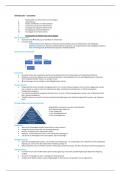
, Bryman (2008)
“Social Research Methods”
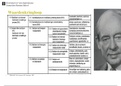
Evaluating qualitative research
Trustworthiness:
– Dependability: (parallel to reliability)
Show and report the research (steps) in detail
– Credibility: (parallel to internal validity)
Match between observations and theory
– Transferability: (parallel to external validity)
Transform findings in generalized theories
– Confirm ability: (parallel to objectivity)
Researcher acted objectively/good faith
Authenticity:
– Fairness:
Fairly represent different viewpoints
– Ontological authenticity:
Help better understand social milieu
– Educative authenticity:
Help appreciate the perspectives of other members
– Catalytic authenticity:
Acted as an incentive to engage in action to change circumstances
– Tactical authenticity:
Empowered members to take necessary steps for engaging in action
Contribution:
– Empirical contribution:
New insight into a particular practice
– Methodological contribution:
Application of a research design in novel way
– Theoretical contribution:
Application of theory in novel way
Developed/refined theory
Respondent validation: process whereby the researcher provides the respondents with an account
with the findings of the study. Seek confirmation that the findings/interpretations are consistent with
the respondents’ views.
2
“Five misunderstandings about case-study research”
Misconceptions of case study
1. General knowledge is more valuable than concrete, practical knowledge
a. Predictive theories and universals cannot be found in the study of human affairs.
Concrete, context-dependent knowledge is, therefore, more valuable.
2. One individual case cannot be generalized so cannot contribute to scientific development
a. Formal generalization is overestimated - force of example is underestimated
3. Case study is for generating hypotheses (first stage) not for testing hypotheses and theory
building
a. Case studies can be used for testing theories, they test practical, rather than logical,
considerations.
4. Case study has verification bias, tendency to conceive preconceived notions
a. Case study contains a greater bias toward falsification of preconceived notions than
toward verification
5. Specific case studies are difficult to summarize in general theories
a. Not desirable to summarize/generalize – case studies should be narrative, reflection
of the reality
1
, Bryman (2008)
“Social Research Methods”
Evaluating qualitative research
Trustworthiness:
– Dependability: (parallel to reliability)
Show and report the research (steps) in detail
– Credibility: (parallel to internal validity)
Match between observations and theory
– Transferability: (parallel to external validity)
Transform findings in generalized theories
– Confirm ability: (parallel to objectivity)
Researcher acted objectively/good faith
Authenticity:
– Fairness:
Fairly represent different viewpoints
– Ontological authenticity:
Help better understand social milieu
– Educative authenticity:
Help appreciate the perspectives of other members
– Catalytic authenticity:
Acted as an incentive to engage in action to change circumstances
– Tactical authenticity:
Empowered members to take necessary steps for engaging in action
Contribution:
– Empirical contribution:
New insight into a particular practice
– Methodological contribution:
Application of a research design in novel way
– Theoretical contribution:
Application of theory in novel way
Developed/refined theory
Respondent validation: process whereby the researcher provides the respondents with an account
with the findings of the study. Seek confirmation that the findings/interpretations are consistent with
the respondents’ views.
2