UPS Leadership & Teamwork 2
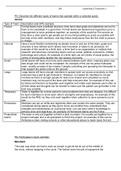
P5- Describe the different types of teams that operate within a selected public
service
Type of Team Description and UPS example
Formal Formal teams have a defined structure, they have clear goals and objectives set out for
them to be completed in a good time. Formal teams are backed and supported up by a
management to solve problems together, an example of this would be Fire service as
they have a clear goal to get people out of a burning building as quick as possible with
the help of the other members, and they follow instructions from the fire chief or person
in charge.
Informal Have a more flexible membership as people move in and out of the team, goals and
structure is less defined and it allows new innovation or ideas to be produced. An
example of this would be a think tank, a think tank is an organisation or institute that
research and advocacy concerning topics such as social, political, economics, military,
technology and culture. An example of a think tank can be Centre of social justice, the
centre of social justice tackles the root causes of poverty.
Small Small teams will have a lot more work shared between each other, meaning tasks may
take longer and could not be completed. An example of this can be police helicopter
team, usually consists of two maybe 3 people controlling and operating the helicopter to
help support the police units on the ground.
Large Large teams will have enough members to spread work out across everybody so that
everyone has a part to get involved in. However, is it easier for members to not get
involved as there is enough people for task to be shared and completed so some
members may not be part of the team and help everyone else. An example of this can
be Nurse and Doctors at hospitals work together and rotate work between each other so
all their ideas and thoughts can be shared to make sure the patient can get better in the
best way possible.
Temporary Team is together for a short period to solve problems then they are disband, it is difficult
for team members to know each other’s strengths and weaknesses. An example of this
would be the RNLI as they only work together when called for to save someone out at
sea.
Permanent Members are put on shifts and regiments often and contain the same people. They are
considered strong teams as they get to know one another they understand their
strengths and weaknesses on a personal level, can use each other’s knowledge to
achieve aims and objectives. An example of Permanent teams are the Police.
Project/task The team is only put together to finish a task or project, it is usually put together by a
teams project manager and is all specialists to finish the project. An example of this can be
Ambulance team visiting schools or other educational places to teach basic first aid.
P6- Participate in team activities
Minefield
This task was when we had to work as a team to get all the kit out of the middle of
the circle, without stepping in the circle. The further down the pile of equipment the
P5- Describe the different types of teams that operate within a selected public
service
Type of Team Description and UPS example
Formal Formal teams have a defined structure, they have clear goals and objectives set out for
them to be completed in a good time. Formal teams are backed and supported up by a
management to solve problems together, an example of this would be Fire service as
they have a clear goal to get people out of a burning building as quick as possible with
the help of the other members, and they follow instructions from the fire chief or person
in charge.
Informal Have a more flexible membership as people move in and out of the team, goals and
structure is less defined and it allows new innovation or ideas to be produced. An
example of this would be a think tank, a think tank is an organisation or institute that
research and advocacy concerning topics such as social, political, economics, military,
technology and culture. An example of a think tank can be Centre of social justice, the
centre of social justice tackles the root causes of poverty.
Small Small teams will have a lot more work shared between each other, meaning tasks may
take longer and could not be completed. An example of this can be police helicopter
team, usually consists of two maybe 3 people controlling and operating the helicopter to
help support the police units on the ground.
Large Large teams will have enough members to spread work out across everybody so that
everyone has a part to get involved in. However, is it easier for members to not get
involved as there is enough people for task to be shared and completed so some
members may not be part of the team and help everyone else. An example of this can
be Nurse and Doctors at hospitals work together and rotate work between each other so
all their ideas and thoughts can be shared to make sure the patient can get better in the
best way possible.
Temporary Team is together for a short period to solve problems then they are disband, it is difficult
for team members to know each other’s strengths and weaknesses. An example of this
would be the RNLI as they only work together when called for to save someone out at
sea.
Permanent Members are put on shifts and regiments often and contain the same people. They are
considered strong teams as they get to know one another they understand their
strengths and weaknesses on a personal level, can use each other’s knowledge to
achieve aims and objectives. An example of Permanent teams are the Police.
Project/task The team is only put together to finish a task or project, it is usually put together by a
teams project manager and is all specialists to finish the project. An example of this can be
Ambulance team visiting schools or other educational places to teach basic first aid.
P6- Participate in team activities
Minefield
This task was when we had to work as a team to get all the kit out of the middle of
the circle, without stepping in the circle. The further down the pile of equipment the