YSS33306 - Advanced Consumer
Studies
Lecture 1 – Communication
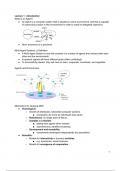
Elaboration Likelihood Model: there’s a central route of processing information and a peripheral route.
- Central: high engagement with the topic you’re communicating; engages and deeply thinks about topic, rational
arguments that lasts to long-lasting attitude and behavioural change
- Peripheral: little engagement with the topic, the processes is more superficial and focuses on features of the
message but not really the content. Less long-lasting attitudinal change
Type 1 & Type 2: Type 1 is used in most decisions, especially in low-involvement products.
Reading 1A:
Framing = “to select some aspect of a perceived reality & make them more salient in communicating text in such a
way as to promote a particular problem definition, causal interpretation, moral evaluation and/or treatment
recommendation for the item described.” Essentially involves selection and salience.
Inoculation = presenting information upfront that may challenge their beliefs and may directly refute information
that is to come. By presenting them misinformation, you give a warning that they may encounter misinformation. It
helps people to ‘vaccinate’ against misinformation; help people recognize it and don’t believe it.
H1: Reading any message has a positive effect on intention
H2: Only meat sceptics intentions were impacted by messages, but not meat believers
H3: Message combined with refutation of misinformation are not superior to message alone, or a combo of the two
H4: A combined message is not superior to single messages
Questions: what are possible limitations of the study. What type of communication research does this study
represent. What can be learned for communication strategies to change eating practices.
Reading 1B:
Compare two different types of bloggers. Two bloggers use different strategies to enhance credibility and gain an
understanding of “healthy eating”. RQ: “What rhetorical strategies and resources are used in creating dietetic credibility and
constructing understandings of healthy eating?” Comparing 1) individual-particularistic view (different for each individual) vs. 2)
population-based approach (public health, general dietary recommendations)
Rhetorical discourse analysis = language is a social action, use language as a practice to achieve certain ends. Ends
are: actors try to create credible common sense understandings of what healthy eating is. Utilize rhetoric strategies
and resources to establish credibility to achieve the understanding/credibility they promote. Arguments need to be
understand in their context and relation to counter-arguments.
Process to do analysis: look at explicit normative advice/claims and identify resources drawn on to make their claims.
Results:
1) Appealing to personal experience: starching differences in how bloggers appeal and value to personal experience.
Bloggers take personal experience as epistemically valid, population based draw on scientific facts.
2) Indicating cultural struggle: freedom fighters: thinking for themselves and critically and sceptical of scientific
advice. Don’t take everything for granted. Appealing to common sense: lived experiences vs. abstract expertise.
3) Redefining authority: appropriation of ‘experts’ and ‘objects’ as tools for particularistic, individualized approaches.
Questions: what are possible limitations of the study. What type of communication research does this study
represent. What can be learned for communication strategies to change eating practices.
,Framing is not always related to the same communication model:
- What is the nature of the frame (what do we mean): can be a cognitive representation of an issue or it can be
interactional (dynamic and interactional as a process): something we do in practice.
- What is it that gets framed: issue framing vs identity/relationship framing (frame the way you relate to each
other) vs process framing (frame process as a subject of framing).
What happens when two issue-framing collide: two different frames that clashes? What are strategies the actors use
to negotiate/navigate the differences? Five different interaction strategies to deal with differences in issue framing:
In sum:
Different strands of communication research:
- Transmissive: one-way interaction: communication about healthy eating: media/message effects
- Transactional: communication as meaning-making around healthy eating
Pluralism of methods in communication research based on RQ, model and theory
Framing can be studied both in terms of (cognitive/transmissive) traditional message-effects and in the sense of
(interactional/transactional) meaning-making to navigate through differences.
, Lecture 2 – Sociological
Focus on consumption and lifestyle patterns. Consumption is not a matter of individual decision making, but rather
being it routinized that arises in a particular context: social norms, cultural, economic and physical context. The way
the world is built around us also influences what behaviours will or will not arise.
Socioecological model of behaviour: How do all these layers shape consumption?
How do the different elements shape our food decisions based on which foods are available in the
environment?
Food environment = places where people interact with actual foods. Food environment has changed the past
years:
- Small towns offer more and more out-of-home foods, but also places to buy something.
- Food is more onmi-present, e.g. in cinemas you have to pass the candy trap. There’s no way
around it. The environment is built to seduce us and infleunces the foods we’re exposed to.
- Portion sizes increased dramatically. Both units are bigger, but also packages of e.g. spaghetti are getting bigger.
Food has become accessible more easily.
- Assortments and variety: rise in obesity is strongly correlated with the changing food environment.
- Price and discounts: to what extent does it adhere to the dietary guidelines we have in NL? Large majority of the
foods do not adhere to the dietary guidelines, around 80% even. Discounts are also least-frequently placed in
healthy foods. So unhealthy choices is even more tempting through discounts.
Macro level: the way in which a neighbourhood is designed also influences which foods will be available. Fast food
companies need to go through the municipality; they try to hold these. However, legislation is limited, so
municipalities cannot intervene 100% in desgining policies to avoid fast food chains to position themselves next to
e.g. schools.
Article Poelman:
The higher the density of the fast food outlets within a particular area, it was associated that the areas with higher
density that there’d be a higher risk of cardiovascular diseases. Even when controlling for other factors, there still
seems to be an association between fast food outlets and actual health outcomes.
Geospatial analyses of food environments surrounding schools:
How equal is the exposure to food environment? If you look into residential areas and map all the schools; if a
secondary school is positioned in an area with a lower-socioeconomic status, the food enviornment is much more
unhealthy; more fast-food outlets. They’re exposed to a more unhealthy environment.
How does our environment shape individual behavioural patterns?
1. People respond automatically to the food environment:
People have a slow route to decision making; take information into account to a deliberate route into decision
making. However, most behaviours are habitual and routinized, making them hard to change = impulsive response.
Proximity of foods: the more near food is to you, the more you eat (accessibility). When the foods are within reach
and just out of reach there’s a substantial decrease in consumption. Leaning over is sufficient to decrease
consumption. Once people take the effort, also led to overconsumption (grab entire hand, because it’s effortful).
Automatic response to cues: portion size of foods leads to an increase in intake. Can also work with healthy foods.
These nudges work for food choices, but are weakened when people have strong motives/preferences (thirst,
hunger).
Center-stage effect: innate preference for something in the middle (moderate). Having extreme choices in the choice
set, you make a different, mediocre choice. However, a strong motive/drive overrules it; choosing e.g. largest option.
Studies
Lecture 1 – Communication
Elaboration Likelihood Model: there’s a central route of processing information and a peripheral route.
- Central: high engagement with the topic you’re communicating; engages and deeply thinks about topic, rational
arguments that lasts to long-lasting attitude and behavioural change
- Peripheral: little engagement with the topic, the processes is more superficial and focuses on features of the
message but not really the content. Less long-lasting attitudinal change
Type 1 & Type 2: Type 1 is used in most decisions, especially in low-involvement products.
Reading 1A:
Framing = “to select some aspect of a perceived reality & make them more salient in communicating text in such a
way as to promote a particular problem definition, causal interpretation, moral evaluation and/or treatment
recommendation for the item described.” Essentially involves selection and salience.
Inoculation = presenting information upfront that may challenge their beliefs and may directly refute information
that is to come. By presenting them misinformation, you give a warning that they may encounter misinformation. It
helps people to ‘vaccinate’ against misinformation; help people recognize it and don’t believe it.
H1: Reading any message has a positive effect on intention
H2: Only meat sceptics intentions were impacted by messages, but not meat believers
H3: Message combined with refutation of misinformation are not superior to message alone, or a combo of the two
H4: A combined message is not superior to single messages
Questions: what are possible limitations of the study. What type of communication research does this study
represent. What can be learned for communication strategies to change eating practices.
Reading 1B:
Compare two different types of bloggers. Two bloggers use different strategies to enhance credibility and gain an
understanding of “healthy eating”. RQ: “What rhetorical strategies and resources are used in creating dietetic credibility and
constructing understandings of healthy eating?” Comparing 1) individual-particularistic view (different for each individual) vs. 2)
population-based approach (public health, general dietary recommendations)
Rhetorical discourse analysis = language is a social action, use language as a practice to achieve certain ends. Ends
are: actors try to create credible common sense understandings of what healthy eating is. Utilize rhetoric strategies
and resources to establish credibility to achieve the understanding/credibility they promote. Arguments need to be
understand in their context and relation to counter-arguments.
Process to do analysis: look at explicit normative advice/claims and identify resources drawn on to make their claims.
Results:
1) Appealing to personal experience: starching differences in how bloggers appeal and value to personal experience.
Bloggers take personal experience as epistemically valid, population based draw on scientific facts.
2) Indicating cultural struggle: freedom fighters: thinking for themselves and critically and sceptical of scientific
advice. Don’t take everything for granted. Appealing to common sense: lived experiences vs. abstract expertise.
3) Redefining authority: appropriation of ‘experts’ and ‘objects’ as tools for particularistic, individualized approaches.
Questions: what are possible limitations of the study. What type of communication research does this study
represent. What can be learned for communication strategies to change eating practices.
,Framing is not always related to the same communication model:
- What is the nature of the frame (what do we mean): can be a cognitive representation of an issue or it can be
interactional (dynamic and interactional as a process): something we do in practice.
- What is it that gets framed: issue framing vs identity/relationship framing (frame the way you relate to each
other) vs process framing (frame process as a subject of framing).
What happens when two issue-framing collide: two different frames that clashes? What are strategies the actors use
to negotiate/navigate the differences? Five different interaction strategies to deal with differences in issue framing:
In sum:
Different strands of communication research:
- Transmissive: one-way interaction: communication about healthy eating: media/message effects
- Transactional: communication as meaning-making around healthy eating
Pluralism of methods in communication research based on RQ, model and theory
Framing can be studied both in terms of (cognitive/transmissive) traditional message-effects and in the sense of
(interactional/transactional) meaning-making to navigate through differences.
, Lecture 2 – Sociological
Focus on consumption and lifestyle patterns. Consumption is not a matter of individual decision making, but rather
being it routinized that arises in a particular context: social norms, cultural, economic and physical context. The way
the world is built around us also influences what behaviours will or will not arise.
Socioecological model of behaviour: How do all these layers shape consumption?
How do the different elements shape our food decisions based on which foods are available in the
environment?
Food environment = places where people interact with actual foods. Food environment has changed the past
years:
- Small towns offer more and more out-of-home foods, but also places to buy something.
- Food is more onmi-present, e.g. in cinemas you have to pass the candy trap. There’s no way
around it. The environment is built to seduce us and infleunces the foods we’re exposed to.
- Portion sizes increased dramatically. Both units are bigger, but also packages of e.g. spaghetti are getting bigger.
Food has become accessible more easily.
- Assortments and variety: rise in obesity is strongly correlated with the changing food environment.
- Price and discounts: to what extent does it adhere to the dietary guidelines we have in NL? Large majority of the
foods do not adhere to the dietary guidelines, around 80% even. Discounts are also least-frequently placed in
healthy foods. So unhealthy choices is even more tempting through discounts.
Macro level: the way in which a neighbourhood is designed also influences which foods will be available. Fast food
companies need to go through the municipality; they try to hold these. However, legislation is limited, so
municipalities cannot intervene 100% in desgining policies to avoid fast food chains to position themselves next to
e.g. schools.
Article Poelman:
The higher the density of the fast food outlets within a particular area, it was associated that the areas with higher
density that there’d be a higher risk of cardiovascular diseases. Even when controlling for other factors, there still
seems to be an association between fast food outlets and actual health outcomes.
Geospatial analyses of food environments surrounding schools:
How equal is the exposure to food environment? If you look into residential areas and map all the schools; if a
secondary school is positioned in an area with a lower-socioeconomic status, the food enviornment is much more
unhealthy; more fast-food outlets. They’re exposed to a more unhealthy environment.
How does our environment shape individual behavioural patterns?
1. People respond automatically to the food environment:
People have a slow route to decision making; take information into account to a deliberate route into decision
making. However, most behaviours are habitual and routinized, making them hard to change = impulsive response.
Proximity of foods: the more near food is to you, the more you eat (accessibility). When the foods are within reach
and just out of reach there’s a substantial decrease in consumption. Leaning over is sufficient to decrease
consumption. Once people take the effort, also led to overconsumption (grab entire hand, because it’s effortful).
Automatic response to cues: portion size of foods leads to an increase in intake. Can also work with healthy foods.
These nudges work for food choices, but are weakened when people have strong motives/preferences (thirst,
hunger).
Center-stage effect: innate preference for something in the middle (moderate). Having extreme choices in the choice
set, you make a different, mediocre choice. However, a strong motive/drive overrules it; choosing e.g. largest option.