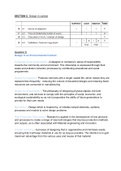
SECTION C: Design in context
Question 6:
Design in an Environmental Context
Corporate social responsibility - A designer or company's sense of responsibility
towards the community and environment. This citizenship is expressed through their
waste and pollution reduction processes by contributing educational and social
programmes
Design for longevity - Products /services with a longer usable life, which means they are
replaced less frequently - reducing the volume of discarded designs and meaning fewer
resources are consumed in manufacturing
Design for sustainability - The philosophy of designing physical objects, the built
environment, and services to comply with the principles of social, economic, and
ecological sustainability so as not to jeopardize the ability of future generations to
provide for their own needs
Biomimicry - Design which is inspired by, or imitates natural elements, systems,
processes and models to solve design problems
New Production Technology - Research is applied in the development of new products
and processes to create a range of new technologies that improve production methods
and outputs, as is often associated with Material engineering and innovation
Circular economy - A process of designing that is regenerative and minimises waste,
ensuring that it will keep materials in use for as long as possible. The intention is to gain
maximum advantage from the various uses and reuses of that material
, Green space- An area of grass, trees, or other vegetation set apart for recreational or
aesthetic purposes in an otherwise urban environment. Green spaces provide vital
health services as well as environmental services; they reduce stress, facilitate activity
and promote better mental health and well-being.
Materials engineering - Involves the generation of new materials that respond and
function in the world to address concerns around the environment, society and
affordability
Modularising - A design approach that subdivides a system into smaller parts called
modules that can be independently created and then used in different systems. As
these modules are multifunctional, they reduce the cost and their efficiency diminishes
environmental impact
Eco-psychology - Referring to the beneficial effects that exposure to the natural world
has on health, reducing stress and promoting healing. Now, designers increasingly
consider the human need for nature in how they plan and operate
Question 6:
Design in an Environmental Context
Corporate social responsibility - A designer or company's sense of responsibility
towards the community and environment. This citizenship is expressed through their
waste and pollution reduction processes by contributing educational and social
programmes
Design for longevity - Products /services with a longer usable life, which means they are
replaced less frequently - reducing the volume of discarded designs and meaning fewer
resources are consumed in manufacturing
Design for sustainability - The philosophy of designing physical objects, the built
environment, and services to comply with the principles of social, economic, and
ecological sustainability so as not to jeopardize the ability of future generations to
provide for their own needs
Biomimicry - Design which is inspired by, or imitates natural elements, systems,
processes and models to solve design problems
New Production Technology - Research is applied in the development of new products
and processes to create a range of new technologies that improve production methods
and outputs, as is often associated with Material engineering and innovation
Circular economy - A process of designing that is regenerative and minimises waste,
ensuring that it will keep materials in use for as long as possible. The intention is to gain
maximum advantage from the various uses and reuses of that material
, Green space- An area of grass, trees, or other vegetation set apart for recreational or
aesthetic purposes in an otherwise urban environment. Green spaces provide vital
health services as well as environmental services; they reduce stress, facilitate activity
and promote better mental health and well-being.
Materials engineering - Involves the generation of new materials that respond and
function in the world to address concerns around the environment, society and
affordability
Modularising - A design approach that subdivides a system into smaller parts called
modules that can be independently created and then used in different systems. As
these modules are multifunctional, they reduce the cost and their efficiency diminishes
environmental impact
Eco-psychology - Referring to the beneficial effects that exposure to the natural world
has on health, reducing stress and promoting healing. Now, designers increasingly
consider the human need for nature in how they plan and operate