Chapter 1 – country and people.
Britain has an island character.
- Great Britain: England, Scotland and Wales.
- United Kingdom: England, Scotland, Wales and Northern Ireland.
(Unified in 1800 – 1 single state. Most of Ireland became a separate state in 1992).
Official name is the United Kingdom of Great Britain and Northern Ireland.
Why is Britain Great? Used to distinguish it from the smaller area in France, which is called
‘Brittany’ in modern English.
The capital of the UK is London, near the river Thames.
The nations and their capitals. Old/Roman names.
England London Albion
Wales Cardiff Cymru
Northern Ireland Belfast -
Scotland Edinburgh Caledonia,
Cambria, Hibernia
Republic of Ireland (EIRE) Dublin Eire
The UK +
- The Channel Islands – in the channel between France and the UK.
Jersey and Guernsey are the 2 largest islands.
- The Isle of Man – in the Irish Sea.
+
- Gibraltar (southern coast of Spain – between Spain and Africa).
- The Falklands (Africa)
(The last 2 are not officially part of the UK. Each has complete self-government + own
parliament + own tax system.
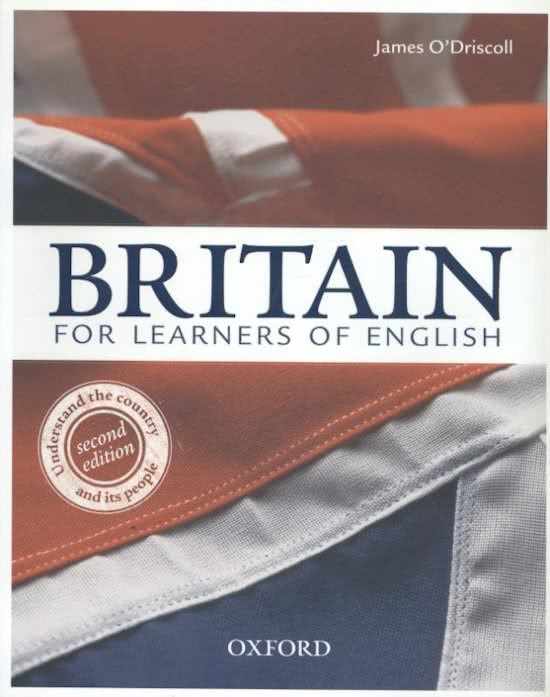
§ Union Jack – the national flag of the UK. It’s a combination of the cross of St. George, the
cross of St. Andrew and the cross of St. Patrick.
(juiste manier van ophangen: aanzicht – linkerbovenhoek dunne streep onder).
§ Albion – England or Scotland or Great Britain as a whole (according to poets and
songwriters). It comes from a Celtic word and was an early Greek word and Roman name
for Great Britain. The Romans associated GB with the Latin word ‘albus’, meaning white
(ancient name for GB).
§ Briton – is a word used in official contexts and in writing to describe a citizen of the United
Kingdom. ‘Ancient Britons’ is the name given to people who lived in southern Britain before
and during the Roman occupation.
§ Britannia – the name that the Romans gave to their southern British province.
- The name of the female embodiment of Britain (wearing a helmet + holding a trident).
- Patriotic song ‘Rule Britannia, Britannia rule the waves’.
- On the reverse side of many British coins.
§ John Bull – typical Brit – can be compared to Uncle Sam in the USA. He is a fictional
character who is supposed to personify Englishness and certain English virtues (goede
eigenschappen). “keep calm and carry on.” – stiff upper lip
o (Honesty, generosity, sincerity, exuberant nature and a willingness to stand up and fight
for what they believe - eerlijkheid, generositeit, oprechtheid, levenslustigheid en een
bereidheid om op te komen en te vechten voor waar men in gelooft.)
Names:
England Wales Scotland Ireland
Surnames Smith (also Morgan McDonald O’Brien
Scots) MacAngus O’Connor
First names for John David Ian Sean
men
, Nicknames/ Dai (refers to Jock Paddy
Insulting David) – ‘he’s
only Welsh!’
Taffy
Characteristics/ Small and Ware a kilt and Talkers &
preconceptions singers – a bit are careful drinkers.
retarded with money.
Looks/ marks Bowler hat Kilt Leprechaun
Music Harp Bagpipe Harp
instruments
Languages:
§ Gaelic: Celtic language – in Scotland and Ireland.
§ Welsh – Wales.
§ Cornish is a language spoken by people from Cornwell (‘till 1980), Cornwell – town in
Southern England.
§ Manx – language from Isle of Man – It is an official language en they still learn it at school.
§ The people who lived in England and Lower Scotland had a Germanic culture. Celtic was
the dominant culture of people in Ireland, Wales and Highland Scotland. People who lived in
the Celtic area spoke Celtic languages.
§ The difference between Germanic culture and Celtic culture was reflected in the language
they spoke.
§ Different economic, social and legal system before 1800.
Facts:
§ A billion people speak English as their mother language WW.
§ 2/3 academic and science (stuff) is in English.
§ 13% of the British population is not white.
§ UK has a population of 63 million.
Extra:
- Sport – national teams:
§ Olympics: Great Britain – Republic of Ireland.
§ Cricket: Great Britain – Northern Ireland + Republic of Ireland together.
§ Rugby union: Only Northern Ireland + Republic of Ireland together.
§ Football: each nation is individual.
- GBP – Great Britain pound.
- Names used for Britain:
- The British Isles.
- IONA (Islands of the North Atlantic).
- The Isles.
The dominance of England – because of her economic and military power over the other 3
nations:
- The system of politics is of English origin.
- English is the main language.
- Brits do not bother to distinguish between ‘Britain’ and ‘England’. They write English
next to nationality.
The dominance of England today:
- The bank of England (not bank of Britain).
- Elizabeth the II – Scotland & Northern Ireland never had an Elizabeth I.
- The term ‘Anglo’ – the Angles were a Germanic tribe who settled in England in the
5th century. The word England comes from ‘Angles’.
- The term ‘Anglo-American relations’ – relations between the governments of Britain
and the USA.
- In publications and organizations:
Times Educational Supplement vs. Times Educational Supplement (Scotland).
Trades Union Congress vs. Scottish Trades Union Congress.
, Extra info:
- Ben Nevis is the highest mountain in the UK, in the Highlands of Scotland – 1343m.
- Severn river – longest river in the UK – 354 km.
- Stratford-upon-Avon is the birthplace of William Shakespeare.
- Scotland has the Highlands and the Lowlands and the Islands.
- Snowdon is the highest mountain in Wales.
ENG +23 April. St. George.
WALES, dragon Cadwallader, 1 March St. DAVID.
Scotland, X blue, 30 November, St. Andrew.
Ireland, X red, 17 March St Patrick.
Britain has an island character.
- Great Britain: England, Scotland and Wales.
- United Kingdom: England, Scotland, Wales and Northern Ireland.
(Unified in 1800 – 1 single state. Most of Ireland became a separate state in 1992).
Official name is the United Kingdom of Great Britain and Northern Ireland.
Why is Britain Great? Used to distinguish it from the smaller area in France, which is called
‘Brittany’ in modern English.
The capital of the UK is London, near the river Thames.
The nations and their capitals. Old/Roman names.
England London Albion
Wales Cardiff Cymru
Northern Ireland Belfast -
Scotland Edinburgh Caledonia,
Cambria, Hibernia
Republic of Ireland (EIRE) Dublin Eire
The UK +
- The Channel Islands – in the channel between France and the UK.
Jersey and Guernsey are the 2 largest islands.
- The Isle of Man – in the Irish Sea.
+
- Gibraltar (southern coast of Spain – between Spain and Africa).
- The Falklands (Africa)
(The last 2 are not officially part of the UK. Each has complete self-government + own
parliament + own tax system.
§ Union Jack – the national flag of the UK. It’s a combination of the cross of St. George, the
cross of St. Andrew and the cross of St. Patrick.
(juiste manier van ophangen: aanzicht – linkerbovenhoek dunne streep onder).
§ Albion – England or Scotland or Great Britain as a whole (according to poets and
songwriters). It comes from a Celtic word and was an early Greek word and Roman name
for Great Britain. The Romans associated GB with the Latin word ‘albus’, meaning white
(ancient name for GB).
§ Briton – is a word used in official contexts and in writing to describe a citizen of the United
Kingdom. ‘Ancient Britons’ is the name given to people who lived in southern Britain before
and during the Roman occupation.
§ Britannia – the name that the Romans gave to their southern British province.
- The name of the female embodiment of Britain (wearing a helmet + holding a trident).
- Patriotic song ‘Rule Britannia, Britannia rule the waves’.
- On the reverse side of many British coins.
§ John Bull – typical Brit – can be compared to Uncle Sam in the USA. He is a fictional
character who is supposed to personify Englishness and certain English virtues (goede
eigenschappen). “keep calm and carry on.” – stiff upper lip
o (Honesty, generosity, sincerity, exuberant nature and a willingness to stand up and fight
for what they believe - eerlijkheid, generositeit, oprechtheid, levenslustigheid en een
bereidheid om op te komen en te vechten voor waar men in gelooft.)
Names:
England Wales Scotland Ireland
Surnames Smith (also Morgan McDonald O’Brien
Scots) MacAngus O’Connor
First names for John David Ian Sean
men
, Nicknames/ Dai (refers to Jock Paddy
Insulting David) – ‘he’s
only Welsh!’
Taffy
Characteristics/ Small and Ware a kilt and Talkers &
preconceptions singers – a bit are careful drinkers.
retarded with money.
Looks/ marks Bowler hat Kilt Leprechaun
Music Harp Bagpipe Harp
instruments
Languages:
§ Gaelic: Celtic language – in Scotland and Ireland.
§ Welsh – Wales.
§ Cornish is a language spoken by people from Cornwell (‘till 1980), Cornwell – town in
Southern England.
§ Manx – language from Isle of Man – It is an official language en they still learn it at school.
§ The people who lived in England and Lower Scotland had a Germanic culture. Celtic was
the dominant culture of people in Ireland, Wales and Highland Scotland. People who lived in
the Celtic area spoke Celtic languages.
§ The difference between Germanic culture and Celtic culture was reflected in the language
they spoke.
§ Different economic, social and legal system before 1800.
Facts:
§ A billion people speak English as their mother language WW.
§ 2/3 academic and science (stuff) is in English.
§ 13% of the British population is not white.
§ UK has a population of 63 million.
Extra:
- Sport – national teams:
§ Olympics: Great Britain – Republic of Ireland.
§ Cricket: Great Britain – Northern Ireland + Republic of Ireland together.
§ Rugby union: Only Northern Ireland + Republic of Ireland together.
§ Football: each nation is individual.
- GBP – Great Britain pound.
- Names used for Britain:
- The British Isles.
- IONA (Islands of the North Atlantic).
- The Isles.
The dominance of England – because of her economic and military power over the other 3
nations:
- The system of politics is of English origin.
- English is the main language.
- Brits do not bother to distinguish between ‘Britain’ and ‘England’. They write English
next to nationality.
The dominance of England today:
- The bank of England (not bank of Britain).
- Elizabeth the II – Scotland & Northern Ireland never had an Elizabeth I.
- The term ‘Anglo’ – the Angles were a Germanic tribe who settled in England in the
5th century. The word England comes from ‘Angles’.
- The term ‘Anglo-American relations’ – relations between the governments of Britain
and the USA.
- In publications and organizations:
Times Educational Supplement vs. Times Educational Supplement (Scotland).
Trades Union Congress vs. Scottish Trades Union Congress.
, Extra info:
- Ben Nevis is the highest mountain in the UK, in the Highlands of Scotland – 1343m.
- Severn river – longest river in the UK – 354 km.
- Stratford-upon-Avon is the birthplace of William Shakespeare.
- Scotland has the Highlands and the Lowlands and the Islands.
- Snowdon is the highest mountain in Wales.
ENG +23 April. St. George.
WALES, dragon Cadwallader, 1 March St. DAVID.
Scotland, X blue, 30 November, St. Andrew.
Ireland, X red, 17 March St Patrick.