Week 12 notes
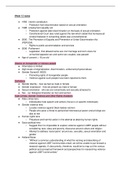
● 1993 : interim constitution
○ Protection from discrimination based on sexual orientation
● 1998 : employment equality act
○ Protection against labor discrimination on the basis of sexual orientation
○ Constitutional Court also ruled against the law which stated that homosexual
conduct between 2 consenting adults was unconstitutional
● 2000 : The Promotion of Equality and Prevention of Unfair Discrimination Act
(PEPUDA)
○ Rights to public accommodation and services
● 2006 : Parliament
○ Legislation, that allowed same-sex civil marriage and civil unions for
unmarried opposite-sex and same-sex couples, was passed
● Age of consent = 16 yrs old
Attacks on transgender or intersex people
● Information is limited
● High levels of stigmatization, discrimination, verbal and physical abuse
● Gender DynamiX (NGO)
○ Promoting rights of transgender people
○ Violence against such people have been reported to them
Definitions
● Gender identity - how we feel as male or female
● Gender expression - how we present as male or female
● Sexual orientation - who we are romantically and sexually attracted to
● Sex - our biological character as men and women
Hate Crimes, Gender Violence and Other Rights Violations
● Hate crimes lens
○ individualize hate speech and actions (focus is on specific individuals)
● Gender violence lens
○ Locates violence against black lesbian women
○ People who pose a threat to patriarchal heterosexual power and privilege are
also at risk
● Human rights lens
○ Prejuduce and harmful action in the attempt at attaining human rights
● Socio-political lens
○ Suggest that it is impossible to explore violence against LGBTI people without
considering race, class and poverty, discourse around culture and religion
○ Attempt to address 'social panic' around sex, sexuality, sexual orientation and
gender
● Holland-Muter
○ "Without a common understanding of what the naming and describing of
violence against LGBTI communities entail, we will be unable to put forward a
research agenda. A clear priority, therefore, would be to map out the various
political and conceptual framework and perspectives for researching violence
against LGBTI communities"
, Empowerment Studies
● Joint Working Group
○ National network of LGBTI organizations in RSA
● Surveys in Gauteng, KZN and Western Cape (2002 - 2006)
○ LGBT people were victims of verbal and physical abuse, sexual assault
and/or rape, domestic violence and attacks on property
○ This abuse was experienced by both men and women
○ Black women were most at risk of violent crimes in KZN and Gauteng
■ At places such as roads (59%), taxi ranks (49%), malls (45%), bus
stops (39%)
○ In the Western Cape it was found to be the colored men who were most at
risk of being a victim of violet crimes
■ At places such as homes, pubs or shebeens
● Study conducted during 2009-2010 [this was a fourth study]
○ North West Province (NWP)
■ Exploration of sexual abuse, discrimination and violence
■ Researchers showed interest in experiences of LGBTI people in
poorer context
● Many of the participants were young black people who were
still in school or just out of school and unemployed
● Although this study was not able to find a link, work done by
Graeme Reid in a township outside of Ermelo, Mpumalanga
○ Young gay black men were able to find acceptance
through their work
■ Working in hair salons and forming relationships
with their clients (who identified as straight)
■ Coming out and race have a link, however everybody agreed that
religion was not accepting of same-sex sexuality (something, that
white people felt very strongly about)
● Many of the young black, gay or lesbian people had ‘come out’
at a relatively young age - only to few peopl, meaning that they
still hid their sexual orientation from many of the people around
them
○ Black people were better accepted
● Coming out, as black person, was taken better than the white
counterparts, who ‘came out’ at an older age, and the
experience was not taken well
○ Many tended to be gender conforming but less
secretive about their sexuality at a later age
○ White people tended to feel less accepted
● Indian and Coloured women were very secretive about their
orientation
○ Rights and usage
■ Many people were aware that the constitution cared for them but
many were not sure on how to use them and what the rights were
exactly
○ Sexuality and mental health
■ Overall = good
● 1993 : interim constitution
○ Protection from discrimination based on sexual orientation
● 1998 : employment equality act
○ Protection against labor discrimination on the basis of sexual orientation
○ Constitutional Court also ruled against the law which stated that homosexual
conduct between 2 consenting adults was unconstitutional
● 2000 : The Promotion of Equality and Prevention of Unfair Discrimination Act
(PEPUDA)
○ Rights to public accommodation and services
● 2006 : Parliament
○ Legislation, that allowed same-sex civil marriage and civil unions for
unmarried opposite-sex and same-sex couples, was passed
● Age of consent = 16 yrs old
Attacks on transgender or intersex people
● Information is limited
● High levels of stigmatization, discrimination, verbal and physical abuse
● Gender DynamiX (NGO)
○ Promoting rights of transgender people
○ Violence against such people have been reported to them
Definitions
● Gender identity - how we feel as male or female
● Gender expression - how we present as male or female
● Sexual orientation - who we are romantically and sexually attracted to
● Sex - our biological character as men and women
Hate Crimes, Gender Violence and Other Rights Violations
● Hate crimes lens
○ individualize hate speech and actions (focus is on specific individuals)
● Gender violence lens
○ Locates violence against black lesbian women
○ People who pose a threat to patriarchal heterosexual power and privilege are
also at risk
● Human rights lens
○ Prejuduce and harmful action in the attempt at attaining human rights
● Socio-political lens
○ Suggest that it is impossible to explore violence against LGBTI people without
considering race, class and poverty, discourse around culture and religion
○ Attempt to address 'social panic' around sex, sexuality, sexual orientation and
gender
● Holland-Muter
○ "Without a common understanding of what the naming and describing of
violence against LGBTI communities entail, we will be unable to put forward a
research agenda. A clear priority, therefore, would be to map out the various
political and conceptual framework and perspectives for researching violence
against LGBTI communities"
, Empowerment Studies
● Joint Working Group
○ National network of LGBTI organizations in RSA
● Surveys in Gauteng, KZN and Western Cape (2002 - 2006)
○ LGBT people were victims of verbal and physical abuse, sexual assault
and/or rape, domestic violence and attacks on property
○ This abuse was experienced by both men and women
○ Black women were most at risk of violent crimes in KZN and Gauteng
■ At places such as roads (59%), taxi ranks (49%), malls (45%), bus
stops (39%)
○ In the Western Cape it was found to be the colored men who were most at
risk of being a victim of violet crimes
■ At places such as homes, pubs or shebeens
● Study conducted during 2009-2010 [this was a fourth study]
○ North West Province (NWP)
■ Exploration of sexual abuse, discrimination and violence
■ Researchers showed interest in experiences of LGBTI people in
poorer context
● Many of the participants were young black people who were
still in school or just out of school and unemployed
● Although this study was not able to find a link, work done by
Graeme Reid in a township outside of Ermelo, Mpumalanga
○ Young gay black men were able to find acceptance
through their work
■ Working in hair salons and forming relationships
with their clients (who identified as straight)
■ Coming out and race have a link, however everybody agreed that
religion was not accepting of same-sex sexuality (something, that
white people felt very strongly about)
● Many of the young black, gay or lesbian people had ‘come out’
at a relatively young age - only to few peopl, meaning that they
still hid their sexual orientation from many of the people around
them
○ Black people were better accepted
● Coming out, as black person, was taken better than the white
counterparts, who ‘came out’ at an older age, and the
experience was not taken well
○ Many tended to be gender conforming but less
secretive about their sexuality at a later age
○ White people tended to feel less accepted
● Indian and Coloured women were very secretive about their
orientation
○ Rights and usage
■ Many people were aware that the constitution cared for them but
many were not sure on how to use them and what the rights were
exactly
○ Sexuality and mental health
■ Overall = good