Generalship
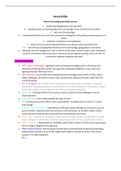
How do we judge genralship success
• leadership (delegating in later periods)
• applying tactics and strategy (become increasingly more important than tactics)
• later use of technology
• motivational ability (role went from personal to delegation with putting reward measures in
place)
• political involvement and negotiation
• keep in mind successful genralship does not always mean successful wars
• I feel the key is adaptability weather this be technology, geography or the enemy
• Although role has changed over time in tearms of the way in which troops recive motivation,
political involvement becoming more important and stratagy becoming crucial, we still see
continuities between napoleon and ww2
Tactics and planning
• NAP- Duke of Wellington. Signature tactic to hold behind ridges, both at Vimarano and
Waterloo sheltering from cannon fire agenised undefeated Napoleon army, had to go
agenised popular offensive tactics
• NAP- Napoleon. His fix flank and envelop become a paradigm tactic which he first used in
Italian campaign, still tried to copy in ww1 eg Austerlitz, plateau of Pratzan right flank fait
and left envelop
• CRI- Lord Raglan. Sent smaller British units agenised large Russian contingents, meaning
British units complete destruction, including failure of communication in the famous charge
of the light brigade, loosing 300 men for 600 strong brigade blalaklava
• ACW- Lee. Tactically brilliant first move for south to split his forces leading to a win at
Chancelorsville
• ACW- Sherman march destroyed 60x 40 miles of land
• A-P turning point junior officers more responsibility “no battle plans survives 1 st contact
with energy”
• Zulu war- Lord Chelmsford. Used different offensive tactics sending 2/3 of army to case on
group of Zulus, underestimated the enemies scale and tactics, as he didn’t adapt, shows
continuity over whole period not just tactical incompetency at the end
• WW1- Haig. criticised for disability to adapt quickly enough, Somme 430,000 British troops
dead, it takes him until battle of Amines, instead uses over the top, arguably ways of lives
• WW1 Ludendorff. Responsible for Schhliffen plan (initial invasion of France) and capturing to
forts at Liege in Belgium and capturing
• WW2 General Zhukov. Russian general particularly concerned with embracing technology,
defeating the Germans at Kursk (the largest tank battle in history) as well as final soviet
assault in 45 capturing berlin
M…k
How do we judge genralship success
• leadership (delegating in later periods)
• applying tactics and strategy (become increasingly more important than tactics)
• later use of technology
• motivational ability (role went from personal to delegation with putting reward measures in
place)
• political involvement and negotiation
• keep in mind successful genralship does not always mean successful wars
• I feel the key is adaptability weather this be technology, geography or the enemy
• Although role has changed over time in tearms of the way in which troops recive motivation,
political involvement becoming more important and stratagy becoming crucial, we still see
continuities between napoleon and ww2
Tactics and planning
• NAP- Duke of Wellington. Signature tactic to hold behind ridges, both at Vimarano and
Waterloo sheltering from cannon fire agenised undefeated Napoleon army, had to go
agenised popular offensive tactics
• NAP- Napoleon. His fix flank and envelop become a paradigm tactic which he first used in
Italian campaign, still tried to copy in ww1 eg Austerlitz, plateau of Pratzan right flank fait
and left envelop
• CRI- Lord Raglan. Sent smaller British units agenised large Russian contingents, meaning
British units complete destruction, including failure of communication in the famous charge
of the light brigade, loosing 300 men for 600 strong brigade blalaklava
• ACW- Lee. Tactically brilliant first move for south to split his forces leading to a win at
Chancelorsville
• ACW- Sherman march destroyed 60x 40 miles of land
• A-P turning point junior officers more responsibility “no battle plans survives 1 st contact
with energy”
• Zulu war- Lord Chelmsford. Used different offensive tactics sending 2/3 of army to case on
group of Zulus, underestimated the enemies scale and tactics, as he didn’t adapt, shows
continuity over whole period not just tactical incompetency at the end
• WW1- Haig. criticised for disability to adapt quickly enough, Somme 430,000 British troops
dead, it takes him until battle of Amines, instead uses over the top, arguably ways of lives
• WW1 Ludendorff. Responsible for Schhliffen plan (initial invasion of France) and capturing to
forts at Liege in Belgium and capturing
• WW2 General Zhukov. Russian general particularly concerned with embracing technology,
defeating the Germans at Kursk (the largest tank battle in history) as well as final soviet
assault in 45 capturing berlin
M…k