IOP 3701 ASSIGNMENT 1
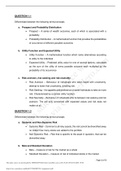
QUESTION 1.1 Differentiate between the following terms/concepts a. Prospect and Probability Distribution • Prospect – A series of wealth outcomes, each of which is associated with a probability • Probability Distribution – A mathematical function that provides the probabilities of occurrence of different possible outcomes b. Utility Function and Expected Utility • Utility Function – A mathematical function which ranks alternatives according to utility to the individual • Expected Utility – Predicted utility value for one of several options, calculated as the sum of the utility of every possible outcome each multiplied by the probability of its occurrence c. Risk aversion, risk seeking and risk neutrality • Risk Aversion – Behaviour of individuals who when faced with uncertainty, attempt to lower that uncertainty, avoiding risk. • Risk Seeking – the appetite and preference of some individuals to take on more risk. Characterised by a convex utility function • Risk Neutrality – Behvaiour of individuals who lie between risk seeking and risk aversion. The are only concerned with expected values and risk does not matter at all. QUESTION 1.2 Differentiate between the following terms/concepts a. Systemic and Non-Systemic Risk • Systemic Risk – Common to all risky assets, this risk cannot be diversified away no matter how many stocks are added to the portfolio • Non-Systemic Risk – Risk that is specific to the asset in question, that can be diversified away. b. Beta and Standard Deviation • Beta – measure of risk for the market as a whole • Standard Deviation – measure of risk of individual stocks in the market This study source was downloaded by from CourseH on :08:18 GMT -05:00 Th
Document information
- Uploaded on
- August 19, 2021
- Number of pages
- 3
- Written in
- 2021/2022
- Type
- Exam (elaborations)
- Contains
- Questions & answers