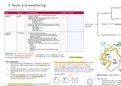
Natural selection Evolution – the modern synthesis Selection
The 4 postulates of evolution by (RA
RA Fisher
Fisher) Acts on alleles in relation to their
natural selection: Mechanisms of inheritance average contribution to their own
1. Individuals within species are combined with the concept of transmission through their action on
variable (because of mutation Natural Selection. Evolution: the individuals that carry them
creating new alleles and changes in allele and gene (additive variation). Genotypic
subsequent shuffling of alleles) frequencies over time, and the variation promotes phenotypic
2. Some of the variations are average action of selection on variation. Selection then acts to
passes on to offspring (genes are genotypes. remove the less fit variants.
passed on to offspring intact and Individuals are the units of selection.
often independently of other Fitness is used to measure
genes) reproductive success. Requires variation from mutation
3. In most generation, more Fitness(W) = 1 – S (rate = μ). Selection against rare,
offspring are produced than can S = selection coefficient. When S is recessive alleles is negligible as they
survive high, allele frequencies change persist in heterozygotes, so they
4. Survival and reproduction are rapidly. Example: estimates the tend to persist.
not random: individuals with the selection coefficient as 0.5305 Dominant alleles are always
highest reproduction success are against the light form in polluted expressed and so if frequent,
those with the most favourable sights and 0.4926 against the dark selection will remove recessive
variations ( with alleles and form in the unpolluted sights alleles even if they are beneficial.
allelic combinations that best Genetic drift contributes to rare
adapt them to the environment) allele loss or gain – it is the chance
– they are ‘naturally selected’ difference in transmission of alleles,
This gave descent with modification leading to fluctuations in allele
(evolution) through survival of the frequency.
fittest due to changes in allele Founder effect also affects allele
frequencies across generations frequencies in small populations
after a bottleneck.
Sexual selection - fitness based on Evolution Balancing selection maintains
reproductive output as well as variation despite selection
Adaptive landscapes – allele Heterozygote advantage e.g. sickle-
survivorship. Investment different
combinations form peaks of fitness cell trait. Heterozygotes selected for,
for males and females.
and selection should move so deleterious allele maintained.
Kin selection - changes in gene
populations towards the peaks. Frequency-dependent selection –
frequency across generations driven
Since the environment changes, the alleles only have an advantage when
by interactions between related
adaptive peaks shift, and the rare. Rare alleles selected for.
individuals. Relatedness coefficient
populations follow a never-ending Fluctuating selection – selection
r= (1/2)n. n= connections removed
evolutionary journey. favours opposing phenotypes/alleles
from self. If:
Muller’s over short timeframes due to a
Ratchet – changeable environment. Selection
Accumulation may also vary in space –
of deleterious environments are heterogenous –
alleles in potentially favouring different alleles
Then you should help your kin – will
asexual
increase your inclusive fitness
species
(combined representation in the
next gen’s gene pool .
Phylogenetics. Compare the gene sequence with others (aligning the
Adaptation:
genes A change
for similarities) toor thethe
infer process Micro-evolution
most related gene and hence: adaptation
a Interpreting the fossil record:
function of the gene. The phylogenetic trees are proportionalsmall,
of change by which an organism or proceeds through to step-wise Homologous structures in
species becomes
relatedness, but webetter
must suited changes
look attohomologous
its genesinand
developmental
we assume patterns extant species allow us to infer
a environment.
constant mutation rate. e.g with the peppered moths. functions in (related) extinct
(Initially Lamark and Erasmus Darwin
Speciation - lineage-splitting event that produced But perhaps,
two oroccasional,
more major species. However, analogous
argued the
separate idea Can
species. of inheritance changes
of or sympatric.
be allopatric Can(saltations), occur – leading
be reinforced structures in unrelated species
acquired characteristics – although to macro-evolutionary
by pre-mating isolation e.g. temporal isolation) or post-zygotic events. e.g. fins on fish, whales and
disproved, are still important). Arguments over
isolation e.g. hybrid sterility. (Many species concepts – e.g. eco. evolutionary speed: cuttlefish where there is no
Some individuals are fitter, better Gradualism – evolution generally common descent mean that
suited to the environment. Fitter occurs uniformly and by steady and great care must be taken in
individuals survive and produce gradual transformation establishing functions of traits in
more offspring than less fit Punctuated-equilibrium – evolution extinct species.
The 4 postulates of evolution by (RA
RA Fisher
Fisher) Acts on alleles in relation to their
natural selection: Mechanisms of inheritance average contribution to their own
1. Individuals within species are combined with the concept of transmission through their action on
variable (because of mutation Natural Selection. Evolution: the individuals that carry them
creating new alleles and changes in allele and gene (additive variation). Genotypic
subsequent shuffling of alleles) frequencies over time, and the variation promotes phenotypic
2. Some of the variations are average action of selection on variation. Selection then acts to
passes on to offspring (genes are genotypes. remove the less fit variants.
passed on to offspring intact and Individuals are the units of selection.
often independently of other Fitness is used to measure
genes) reproductive success. Requires variation from mutation
3. In most generation, more Fitness(W) = 1 – S (rate = μ). Selection against rare,
offspring are produced than can S = selection coefficient. When S is recessive alleles is negligible as they
survive high, allele frequencies change persist in heterozygotes, so they
4. Survival and reproduction are rapidly. Example: estimates the tend to persist.
not random: individuals with the selection coefficient as 0.5305 Dominant alleles are always
highest reproduction success are against the light form in polluted expressed and so if frequent,
those with the most favourable sights and 0.4926 against the dark selection will remove recessive
variations ( with alleles and form in the unpolluted sights alleles even if they are beneficial.
allelic combinations that best Genetic drift contributes to rare
adapt them to the environment) allele loss or gain – it is the chance
– they are ‘naturally selected’ difference in transmission of alleles,
This gave descent with modification leading to fluctuations in allele
(evolution) through survival of the frequency.
fittest due to changes in allele Founder effect also affects allele
frequencies across generations frequencies in small populations
after a bottleneck.
Sexual selection - fitness based on Evolution Balancing selection maintains
reproductive output as well as variation despite selection
Adaptive landscapes – allele Heterozygote advantage e.g. sickle-
survivorship. Investment different
combinations form peaks of fitness cell trait. Heterozygotes selected for,
for males and females.
and selection should move so deleterious allele maintained.
Kin selection - changes in gene
populations towards the peaks. Frequency-dependent selection –
frequency across generations driven
Since the environment changes, the alleles only have an advantage when
by interactions between related
adaptive peaks shift, and the rare. Rare alleles selected for.
individuals. Relatedness coefficient
populations follow a never-ending Fluctuating selection – selection
r= (1/2)n. n= connections removed
evolutionary journey. favours opposing phenotypes/alleles
from self. If:
Muller’s over short timeframes due to a
Ratchet – changeable environment. Selection
Accumulation may also vary in space –
of deleterious environments are heterogenous –
alleles in potentially favouring different alleles
Then you should help your kin – will
asexual
increase your inclusive fitness
species
(combined representation in the
next gen’s gene pool .
Phylogenetics. Compare the gene sequence with others (aligning the
Adaptation:
genes A change
for similarities) toor thethe
infer process Micro-evolution
most related gene and hence: adaptation
a Interpreting the fossil record:
function of the gene. The phylogenetic trees are proportionalsmall,
of change by which an organism or proceeds through to step-wise Homologous structures in
species becomes
relatedness, but webetter
must suited changes
look attohomologous
its genesinand
developmental
we assume patterns extant species allow us to infer
a environment.
constant mutation rate. e.g with the peppered moths. functions in (related) extinct
(Initially Lamark and Erasmus Darwin
Speciation - lineage-splitting event that produced But perhaps,
two oroccasional,
more major species. However, analogous
argued the
separate idea Can
species. of inheritance changes
of or sympatric.
be allopatric Can(saltations), occur – leading
be reinforced structures in unrelated species
acquired characteristics – although to macro-evolutionary
by pre-mating isolation e.g. temporal isolation) or post-zygotic events. e.g. fins on fish, whales and
disproved, are still important). Arguments over
isolation e.g. hybrid sterility. (Many species concepts – e.g. eco. evolutionary speed: cuttlefish where there is no
Some individuals are fitter, better Gradualism – evolution generally common descent mean that
suited to the environment. Fitter occurs uniformly and by steady and great care must be taken in
individuals survive and produce gradual transformation establishing functions of traits in
more offspring than less fit Punctuated-equilibrium – evolution extinct species.