NR451 POST ASSIGNMENT WEEK 6 Mental Health
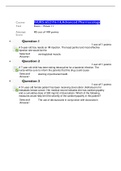
POST ASSIGNMENT WEEK 6 Mental Health 1) A client on the mental health unit is being discharge to a community base program referred to as Assertive Community Treatment. (ACT) What should the nurse explain to the client about this program? 2) What are the legal rights of a person admitted to an inpatient mental health facility? 3) A nurse is caring for a client who is admitted to the unit for selfmutilation. What type of behavioral therapy would the nurse expect to be ordered for this client? 4) A nurse is caring for a client following a traumatic experience. What manifestations would alert the nurse to the possibility that the client is suffering from posttraumatic stress disorder (PTSD)? 5) The client states that she is going through a divorce and her anxiety is extremely high. The nurse needs to assess the client’s ability to adapt and cope with this situation. What would this includes? 6) A nurse is caring for a client in the manic phase of bipolar disorder. Identify five (5) clinical manifestations associated with this phase of the bipolar disorder. 7) A nurse is providing education regarding selfmutilation behaviors. Provide one (1) reason a client might consider performing the act of selfmutilate. Identify three (3) signs of possible selfmutilation? 8) A nurse is caring for a client who is experiencing disenfranchised grief. What are some nursing interventions the nurse should use to facilitate mourning? 9) A nurse is completing a physical assessment on a child. What are three (3) potential signs of neglect? 10) A nurse is facilitating group therapy and the group is currently in the working phase of group development. What is the primary focus during this phase? 11) A nurse is caring for an adolescent client with Autism Spectrum Disorder. Define Autism Spectrum Disorder. What are common manifestations of Autism Spectrum Disorder? 12) A nurse is caring for a client with delirium. What is the onset and clinical manifestations of this disorder? 13) A nurse is caring for a client with attention seeking behaviors. Describe attention seeking behaviors commonly noted in clients diagnosed with histrionic personality disorder. 14) A nurse is caring for a client with obsessive compulsive disorder (OCD). Define this disorder and the common pharmacological therapies to assist with management of this disorder. 15) A nurse is caring for a client with alcoholism who has been admitted for detoxification. When should the nurse expect the effects of alcohol withdrawal to appear? What are the manifestations of acute alcohol withdrawal? 16) An older adult client is suspected to abuse alcohol. What questions can the nurse ask using the CAGE questionnaire? 17) A male client is contemplating suicide. Identify three (3) risk factors that increase a client's risk for suicide? 18) A nurse is caring for a client with an anger disorder. What medications are commonly prescribed during aggressive/violent episodes? Identify three (3) nursing considerations when administering these medications. 19) Shortterm memory loss, confusion, and disorientation occurs immediately following the electroconvulsive therapy (ECT) procedure. List three (3) actions the nurse will implement to maintain client safety through the procedure. 20) A client has been prescribed 50 mg of imipramine for depression. The dose ordered for is 50 mg three times a day. Available is 25 mg/tablet. How many tablets would the nurse instruct the client to take in a day? 21) The nurse is administering a benzodiazepine to a client with anxiety IV push. List two (2) adverse effects that this drug can produce. 22) A nurse obtains a health history from a mother who son is taking methylphenidate. She reports that he is having hallucinations. What would be the next action for the nurse to do? 23) A client has been prescribed risperidone for autism spectrum disorder. What should the nurse instruct the care provider about administration of this medication? 24) A client has been prescribed amitriptyline. In which class is this medication found? Identify five (5) adverse effects a client can experience while on amitriptyline. 25) A nurse is caring for a client prescribed escitalopram oxalate. Identify the classification of this medication. How does this class of medication take effect? 26) What dietary considerations must be followed for a client taking phenelzine for depression? 27) List the four (4) major groups for the antidepressant medications and the prototype of each one. What are the major differences between the four (4) classes?
Written for
Document information
- Uploaded on
- August 8, 2021
- Number of pages
- 10
- Written in
- 2021/2022
- Type
- Other
- Person
- Unknown
Subjects
-
nr451 post assignment week 6 mental health