5. BLOOD AND CIRCULATION
THE NEED FOR CICULATORY SYSTEMS
· Blood transports:
- oxygen from the lungs to all other parts of the body
- carbon dioxide from all parts of the body to the lungs
- nutrients from the gut
- urea from the liver to the kidneys
- hormones, heat
· Single-celled animals don’t need a transport system because they have a large SA to volume ratio
THE CIRCULATORY SYSTEMS OF DIFFERENT ANIMALS
· Single circulatory system is when the blood is pumped from the heart to the gas exchange organ and then
directly to the rest of the body
· Double circulatory system is when the blood is pumped from the heart to the gas exchange organ, back
to the heart and then to the rest of the body:
Pulmonary circulation: deoxygenated – heart, pulmonary arteries – the
lungs – oxygenated – heart, pulmonary veins
Systematic circulation: oxygenated – heart, aorta – all the body –
deoxygenated – heart, vena cava
More efficient, heart pumps twice, thus, higher pressures make blood
travel faster to organs
Human circulatory system:
· The heart – this is a pump
· Blood vessels – carry blood around the body
· Blood – the transport medium
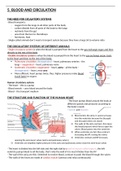
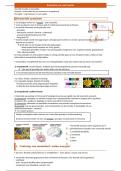
THE STRUCTURE AND FUNCTION OF THE HUMAN HEART
· The heart pumps blood around the body at
different speeds and pressures according to
the body’s needs Pulmonary vein
· Systole and diastole
Pulmonary vein
1) Blood enters the atria; it cannot yet pass
into the ventricles because the bicuspid
and tricuspid valves are closed
2) The walls of the atria contract, this raises
the blood pressure which forces open the
valves. Blood passes into the ventricles
3) When ventricles are full, they contract,
increasing the BP, closing the valves
4) Ventricles contract and BP increases,
opening the semi-lunar valves (aorta and pulmonary artery)
5) Ventricles are emptied, higher pressure in the aorta and pulmonary artery close the semi-lunar valves
· The heart is divided into the left side and the right side by a wall of muscle called septum, the left
ventricle pumps blood to all the body, that’s why the wall of it is much thicker than the RV
· The wall of the atria are thin. Stretched to receive blood, contract to push the blood through the valves
· The walls of the heart are made of cardiac muscle (contract and relax continuously)
THE NEED FOR CICULATORY SYSTEMS
· Blood transports:
- oxygen from the lungs to all other parts of the body
- carbon dioxide from all parts of the body to the lungs
- nutrients from the gut
- urea from the liver to the kidneys
- hormones, heat
· Single-celled animals don’t need a transport system because they have a large SA to volume ratio
THE CIRCULATORY SYSTEMS OF DIFFERENT ANIMALS
· Single circulatory system is when the blood is pumped from the heart to the gas exchange organ and then
directly to the rest of the body
· Double circulatory system is when the blood is pumped from the heart to the gas exchange organ, back
to the heart and then to the rest of the body:
Pulmonary circulation: deoxygenated – heart, pulmonary arteries – the
lungs – oxygenated – heart, pulmonary veins
Systematic circulation: oxygenated – heart, aorta – all the body –
deoxygenated – heart, vena cava
More efficient, heart pumps twice, thus, higher pressures make blood
travel faster to organs
Human circulatory system:
· The heart – this is a pump
· Blood vessels – carry blood around the body
· Blood – the transport medium
THE STRUCTURE AND FUNCTION OF THE HUMAN HEART
· The heart pumps blood around the body at
different speeds and pressures according to
the body’s needs Pulmonary vein
· Systole and diastole
Pulmonary vein
1) Blood enters the atria; it cannot yet pass
into the ventricles because the bicuspid
and tricuspid valves are closed
2) The walls of the atria contract, this raises
the blood pressure which forces open the
valves. Blood passes into the ventricles
3) When ventricles are full, they contract,
increasing the BP, closing the valves
4) Ventricles contract and BP increases,
opening the semi-lunar valves (aorta and pulmonary artery)
5) Ventricles are emptied, higher pressure in the aorta and pulmonary artery close the semi-lunar valves
· The heart is divided into the left side and the right side by a wall of muscle called septum, the left
ventricle pumps blood to all the body, that’s why the wall of it is much thicker than the RV
· The wall of the atria are thin. Stretched to receive blood, contract to push the blood through the valves
· The walls of the heart are made of cardiac muscle (contract and relax continuously)