Self-concept
Concept clarification
Self-concept: the mental image a person as of oneself
Self-efficacy: the degree of confidence a person has about the ability to perform
specifics activities
Self-esteem: evaluation and judgement of oneself
Self-care deficit: an impaired ability to perform or complete activities for daily living
Introduction
Body image, role performance, self-esteem and personal identity evolve as people adapt
to life change
Self-concept is dynamic and influenced by experiences and expectations
A sound self-concept is a prerequisite for mental health
The nurse’s responsibility associated with self-concept includes:
Self-knowledge
Assessment of self-concept
Promotion of adequate self-concept functioning
Interventions when self-concept is altered
A nurse who possesses a healthy self-concept will be better equipped to deal with the
unique and varied needs of the patient
Self-concept
A mental image a person has of themself
A frame of reference that influences how a person handles situations and relationships
Self-esteem is crucial to esteem and self-actualisation (Maslow)
Why is self-concept important
A person with a healthy self-concept
Exhibits a clear sense of self and others
Understands who they are in the world
Can distinguish themselves as separate individuals with strengths and weaknesses
Acknowledges their emotions
Finds constructive ways to bring meaning to life
Can handle life’s realities and problems with appropriate coping behaviours
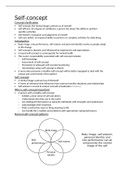
Normal self-concept patterns
Body image
Body image, self-esteem,
personal identity and
Role role performance can all
Self-esteem
performance compromise the mental
image of the self
Personal
identity
Concept clarification
Self-concept: the mental image a person as of oneself
Self-efficacy: the degree of confidence a person has about the ability to perform
specifics activities
Self-esteem: evaluation and judgement of oneself
Self-care deficit: an impaired ability to perform or complete activities for daily living
Introduction
Body image, role performance, self-esteem and personal identity evolve as people adapt
to life change
Self-concept is dynamic and influenced by experiences and expectations
A sound self-concept is a prerequisite for mental health
The nurse’s responsibility associated with self-concept includes:
Self-knowledge
Assessment of self-concept
Promotion of adequate self-concept functioning
Interventions when self-concept is altered
A nurse who possesses a healthy self-concept will be better equipped to deal with the
unique and varied needs of the patient
Self-concept
A mental image a person has of themself
A frame of reference that influences how a person handles situations and relationships
Self-esteem is crucial to esteem and self-actualisation (Maslow)
Why is self-concept important
A person with a healthy self-concept
Exhibits a clear sense of self and others
Understands who they are in the world
Can distinguish themselves as separate individuals with strengths and weaknesses
Acknowledges their emotions
Finds constructive ways to bring meaning to life
Can handle life’s realities and problems with appropriate coping behaviours
Normal self-concept patterns
Body image
Body image, self-esteem,
personal identity and
Role role performance can all
Self-esteem
performance compromise the mental
image of the self
Personal
identity