Safety needs
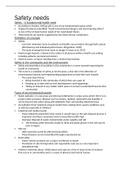
Safety – A fundamental health need
According to Maslow, feeling safe is one of our fundamental human needs
Virginia Henderson identified “Avoid environmental dangers and avoid injuring others”
as one of the 14 basic human needs of her need-based theory
These theories are further supported by the South African constitution
Definition of concepts
Safety:
Care that minimises harm to patients and health care providers through both system
effectiveness and individual performance (Mogotlane, 2018)
The state of being free from harm or danger (Craven et al, 2017)
Medico-legal hazards: a threat to the safety of all persons within a health care setting,
including patients, personal and visitors
Adverse event: an injury resulting from a medical intervention
Safety in the community and the environment
Safety and prevention of accidents in the community is a move towards improving the
health of community
The nurse is a custodian of safety as he/she plays a vital role in the detection of
environmental hazards and implementing programmes to deal with such hazards
The nurse does this by
Being involved in the community of which they are a part of
Keeping up to date with current developments and happenings
Taking an interest in any matter which poses an actual or potential threat (to that
community)
Types of environmental hazards
Water pollution: in rural areas and informal settlements in urban areas where there is no
proper water provision, diseases such as cholera, typhoid, salmonella and hepatitis A
can be found in the water along with pollutants from surrounding industrial areas
Air pollution (from industrial smog to smoke from cooking fires) causes conditions such
as asthma (especially in children)
Industrial and medical waste
Many industries dump their toxic waste in unsafe ways as the safe disposal process is
expensive and these companies want to keep their profits high
Improper disposal of waste contaminates water supplies and soil
The drinking water becomes unsafe to drink and plants grown in this soil may be
toxic to ingest
Safe sex
AIDS cannot be cured by antiretrovirals (ARVs)
Many diseases can be transmitted through unprotected sex
Road safety
Motor vehicle accidents are a major contributor to death
Promotion of safe driving habits and responsible road use is a very important
educational task
Violence: domestic abuse, (child) abuse and rape are a few of many forms of violence
that occurs in communities and is a cause of physical and mental trauma
, Safety in the home
Poorly designed dwellings for dwellings in a bad state of repair can pose safety hazards
for residents
Open staircases without handrails/railings can be extremely dangerous
Rough, uneven, slippery/wet floors or poorly secured rugs and carpets can cause elderly
patients to trip/fall
Unsafe electrical appliances/connections, exposed wires and illegal electricity
connections are extremely dangerous and can cause fires
Buildings which are fire hazards include shack dwellings as they are flimsy, made of
flammable material and are built close together
Unsafe use of paraffin, gas, coal stoves, heaters as well as open or unprotected
fireplaces are fire hazards
Poisonous substances such as paraffin are often kept in unmarked containers or are
decanted into empty cooldrink bottles – this is a hazard for curious children
All hazardous/poisonous materials should either be locked away or kept out of reach
of children and should be kept in correctly marked containers
Medicine cabinets should remain locked and kept out of reach of children
Lack of supervision of children on homes often leads to a disaster
E.g. burs, cuts or drownings
Pool areas should be fenced/covered by a pool net when not in use
Nurses should be able to give supervisory support
Safety – A fundamental health need
According to Maslow, feeling safe is one of our fundamental human needs
Virginia Henderson identified “Avoid environmental dangers and avoid injuring others”
as one of the 14 basic human needs of her need-based theory
These theories are further supported by the South African constitution
Definition of concepts
Safety:
Care that minimises harm to patients and health care providers through both system
effectiveness and individual performance (Mogotlane, 2018)
The state of being free from harm or danger (Craven et al, 2017)
Medico-legal hazards: a threat to the safety of all persons within a health care setting,
including patients, personal and visitors
Adverse event: an injury resulting from a medical intervention
Safety in the community and the environment
Safety and prevention of accidents in the community is a move towards improving the
health of community
The nurse is a custodian of safety as he/she plays a vital role in the detection of
environmental hazards and implementing programmes to deal with such hazards
The nurse does this by
Being involved in the community of which they are a part of
Keeping up to date with current developments and happenings
Taking an interest in any matter which poses an actual or potential threat (to that
community)
Types of environmental hazards
Water pollution: in rural areas and informal settlements in urban areas where there is no
proper water provision, diseases such as cholera, typhoid, salmonella and hepatitis A
can be found in the water along with pollutants from surrounding industrial areas
Air pollution (from industrial smog to smoke from cooking fires) causes conditions such
as asthma (especially in children)
Industrial and medical waste
Many industries dump their toxic waste in unsafe ways as the safe disposal process is
expensive and these companies want to keep their profits high
Improper disposal of waste contaminates water supplies and soil
The drinking water becomes unsafe to drink and plants grown in this soil may be
toxic to ingest
Safe sex
AIDS cannot be cured by antiretrovirals (ARVs)
Many diseases can be transmitted through unprotected sex
Road safety
Motor vehicle accidents are a major contributor to death
Promotion of safe driving habits and responsible road use is a very important
educational task
Violence: domestic abuse, (child) abuse and rape are a few of many forms of violence
that occurs in communities and is a cause of physical and mental trauma
, Safety in the home
Poorly designed dwellings for dwellings in a bad state of repair can pose safety hazards
for residents
Open staircases without handrails/railings can be extremely dangerous
Rough, uneven, slippery/wet floors or poorly secured rugs and carpets can cause elderly
patients to trip/fall
Unsafe electrical appliances/connections, exposed wires and illegal electricity
connections are extremely dangerous and can cause fires
Buildings which are fire hazards include shack dwellings as they are flimsy, made of
flammable material and are built close together
Unsafe use of paraffin, gas, coal stoves, heaters as well as open or unprotected
fireplaces are fire hazards
Poisonous substances such as paraffin are often kept in unmarked containers or are
decanted into empty cooldrink bottles – this is a hazard for curious children
All hazardous/poisonous materials should either be locked away or kept out of reach
of children and should be kept in correctly marked containers
Medicine cabinets should remain locked and kept out of reach of children
Lack of supervision of children on homes often leads to a disaster
E.g. burs, cuts or drownings
Pool areas should be fenced/covered by a pool net when not in use
Nurses should be able to give supervisory support