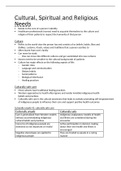
Cultural, Spiritual and Religious
Needs
Relate to the core of a person’s identity
Healthcare professionals (nurses) need to acquaint themselves to the culture and
religion of their patients to respect the humanity of that person
Culture
Refers to the world view the person has and consists of os beliefs, habits, likes and
dislikes, customs, rituals, values and traditions that a person ascribes to
Often learnt from one’s family
Can never be static
One can move into different cultures and ger assimilated into new cultures
Nurses need to be sensitive to the cultural backgrounds of patients
Culture has major effects on the following aspects of life:
Gender roles
Language and communication
Dietary habits
Social patterns
Biological inheritance
Healing practices
Culturally safe care
Most cultures have traditional healing practices
Western approaches to health often ignore and render invisible indigenous health
beliefs and practices
Culturally safe care is the cultural awareness that leads to actively promoting self-empowerment
of indigenous people to influence their care and support positive health outcomes
Culturally unsafe VS. culturally safe care
Culturally unsafe Culturally safe
Care is generalised from Western models Indigenous explanatory models of health
without accommodating indigenous and illness are considered during the
cultural beliefs and practices encounter
Concerns of indigenous people are Active participation in decision making
dismissed as not important or invalid about their own health and illness is
encouraged
Negative stereotypes are applied to They are treated as equals in a caring
indigenous people manner
Needs
Relate to the core of a person’s identity
Healthcare professionals (nurses) need to acquaint themselves to the culture and
religion of their patients to respect the humanity of that person
Culture
Refers to the world view the person has and consists of os beliefs, habits, likes and
dislikes, customs, rituals, values and traditions that a person ascribes to
Often learnt from one’s family
Can never be static
One can move into different cultures and ger assimilated into new cultures
Nurses need to be sensitive to the cultural backgrounds of patients
Culture has major effects on the following aspects of life:
Gender roles
Language and communication
Dietary habits
Social patterns
Biological inheritance
Healing practices
Culturally safe care
Most cultures have traditional healing practices
Western approaches to health often ignore and render invisible indigenous health
beliefs and practices
Culturally safe care is the cultural awareness that leads to actively promoting self-empowerment
of indigenous people to influence their care and support positive health outcomes
Culturally unsafe VS. culturally safe care
Culturally unsafe Culturally safe
Care is generalised from Western models Indigenous explanatory models of health
without accommodating indigenous and illness are considered during the
cultural beliefs and practices encounter
Concerns of indigenous people are Active participation in decision making
dismissed as not important or invalid about their own health and illness is
encouraged
Negative stereotypes are applied to They are treated as equals in a caring
indigenous people manner