Voluntary manslaughter
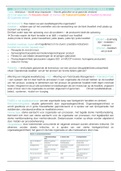
D’s recognised medical condition led to an abnormality of mind and caused her to kill.
Homicide Act 1957, s2, as amended by Coroners and Justice Act 2009.
Wilcocks [2016] EWCA Crim 2043
Partial Detachment therefore only a partial offence.
Diminished responsibility was amended and updated in 2009 to make it more consistent
and make it more available to the kind of defendants and circumstances that it should be
Reverse Burden of Proof: So, it falls on the D rather than the prosecution to prove
diminished responsibility. (Reverse of normal situation where the onus is on the prosecution
to prove DR)
Willcocks
Homicide Act 1957
2(1) A person (“D”) who kills or is a party to the killing of another is not to be convicted of murder if D
was suffering from an abnormality of mental functioning which —
(a) arose from a recognised medical condition,
(b) substantially impaired D's ability to do one or more of the things mentioned in subsection (1A), and
(c) provides an explanation for D's acts and omissions in doing or being a party to the killing.
(1A) Those things are—
(a) to understand the nature of D's conduct;
(b) to form a rational judgment;
(c) to exercise self-control.
Homicide Act 1957
s2(1) D must demonstrate an abnormality of mental functioning.
S2(1) There has to be link between medical condition that the defendant has and the behaviour.
Requires expert witnesses to testify to the defendant’s abnormality of ental function.
Homicide Act 1957
s2(1)(a) The abnormality must have arisen from a recognised medical condition.
Dowds [2012] EWCA Crim 281
Courts look to medical glossary produced by WHO and the DSM or to bodies of expect negative opinion.
But even some recognised med conditions recognised by experts will not necessarily be accepted by
courts for the purpose of
D killed partner whilst unhealthily intoxicated.
Attempted to use D R defence relying on acute intoxication.
D’s recognised medical condition led to an abnormality of mind and caused her to kill.
Homicide Act 1957, s2, as amended by Coroners and Justice Act 2009.
Wilcocks [2016] EWCA Crim 2043
Partial Detachment therefore only a partial offence.
Diminished responsibility was amended and updated in 2009 to make it more consistent
and make it more available to the kind of defendants and circumstances that it should be
Reverse Burden of Proof: So, it falls on the D rather than the prosecution to prove
diminished responsibility. (Reverse of normal situation where the onus is on the prosecution
to prove DR)
Willcocks
Homicide Act 1957
2(1) A person (“D”) who kills or is a party to the killing of another is not to be convicted of murder if D
was suffering from an abnormality of mental functioning which —
(a) arose from a recognised medical condition,
(b) substantially impaired D's ability to do one or more of the things mentioned in subsection (1A), and
(c) provides an explanation for D's acts and omissions in doing or being a party to the killing.
(1A) Those things are—
(a) to understand the nature of D's conduct;
(b) to form a rational judgment;
(c) to exercise self-control.
Homicide Act 1957
s2(1) D must demonstrate an abnormality of mental functioning.
S2(1) There has to be link between medical condition that the defendant has and the behaviour.
Requires expert witnesses to testify to the defendant’s abnormality of ental function.
Homicide Act 1957
s2(1)(a) The abnormality must have arisen from a recognised medical condition.
Dowds [2012] EWCA Crim 281
Courts look to medical glossary produced by WHO and the DSM or to bodies of expect negative opinion.
But even some recognised med conditions recognised by experts will not necessarily be accepted by
courts for the purpose of
D killed partner whilst unhealthily intoxicated.
Attempted to use D R defence relying on acute intoxication.