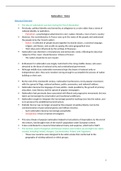
Nationalism – Notes
Historical Overview
The idea of nationalism was born during the French Revolution.
Previously, political identity was formed by an allegiance to a ruler rather than a sense of
national identity or patriotism.
- Patriotism: a psychological attachment to one’s nation, literally a ‘love of one’s country
However, the revolutionaries in France rose up in the name of the people and understood
the people to be the ‘French nation’.
- Nation: A collection of people bound together by shared values, a common language,
religion, and history, and usually occupying the same geographical area
- Their ideas were influenced by the writings of Rousseau
Nationalism was therefore a revolutionary and democratic creed, reflecting the idea that
‘subjects of the crown’ should become ‘citizens of France’.
- The nation should be its own master.
Enthusiasm for nationalism was largely restricted to the rising middle classes, who were
attracted to the ideas of national unity and constitutional government.
Although middle-class nationalist movements kept the dream of national unity or
independence alive, they were nowhere strong enough to accomplish the process of nation
building on their own.
By the end of the nineteenth century, nationalism had become a truly popular movement,
with the spread of flags, national anthems, public ceremonies, and national holidays.
Nationalism became the language of mass politics, made possible by the growth of primary
education, mass literacy and the spread of popular newspapers.
Nationalism had previously been associated with liberal and progressive movements but was
taken up increasingly by conservative and reactionary politicians.
Nationalism sought to integrate the increasingly powerful working class into the nation, and
so to preserve the established social structure.
Patriotic fervour was no longer aroused by the prospect of political liberty, but by the
commemoration of past national glories and military victories.
- Such nationalism became increasingly xenophobic.
- Xenophobia: A fear or hatred of foreigners
This new climate of popular nationalism helped to fuel policies of imperialism, by the end of
the century, had brought most of the world’s population under European control.
It also contributed to a mood of international rivalry and suspicion, which led to WW1
The German, Austro-Hungarian and Russian empires were broken up and eight new states
created, including Finland, Hungary, Czechoslovakia, Poland, and Yugoslavia.
- These new countries were designed to be nation-states that conformed to the
geography of existing national or ethnic groups.
1
, Core Ideas and Principles
The Nation
The basic belief of nationalism is that the nation is, or should be, the central principle of
political organisation.
Nations are collections of people bound together by shared traditions, in particular a
common language, religion and history, and usually occupying the same geographical area.
- The nation can be defined by ‘objective’ factors: people who satisfy a set of cultural
criteria belong to a nation; those who do not are non-nationals
Although particular cultural features are commonly associated with nationhood, there is no
blueprint nor any objective criteria that can establish where and when a nation exists.
Language is often taken to be the clearest symbol of nationhood.
A language embodies distinctive attitudes, values and forms of expression that produce a
sense of familiarity and belonging.
German nationalism, has traditionally been founded on a sense of cultural unity, reflected in
the purity and survival of the German language.
There are also some who share a language but don’t have a common national identity:
Americans and Aussies may speak English, but don’t think they are an ‘English nation’.
Other nations have enjoyed a substantial measure of national unity without possessing a
national language
- In Switzerland, three major languages are spoken: French, German, and Italian
Religion is another major component of nationhood.
Religion expresses common moral values and spiritual beliefs.
Islam has been a major factor in forming national consciousness in much of the Middle East.
On the other hand, religious beliefs do not always coincide with a sense of nationhood.
- Divisions between Catholics and Protestants in mainland UK do not inspire rival
nationalisms
At the same time, countries such as Italy, Brazil, and the Philippines share a common
Catholic faith but do not feel that they belong to a unified ‘Catholic nation’
Nations have also been based on a sense of ethnic or, racial unity.
- This was particularly evident in Germany during the Nazi period.
However, nationalism usually has a cultural rather than a biological basis; it reflects an
ethnic unity that may be based on race, but more usually draws on shared values
- Nationalism of US blacks is based less on colour than on their distinctive history/culture.
Nations usually share common history and traditions.
While all nationalists agree that nations are a blend of cultural and psycho-political factors,
they disagree strongly about where the balance between the two lies.
On the one hand, ‘exclusive’ concepts of the nation stress the importance of ethnic unity
and a shared history.
- This implies that nations are characterised by common descent and so blurs the
distinction between nations and races.
- To different degrees, conservatives and fascists adopt such a view of the nation.
On the other hand, ‘inclusive’ concepts of the nation, as found in civic nationalism, highlight
the importance of civic consciousness and patriotic loyalty.
2
Historical Overview
The idea of nationalism was born during the French Revolution.
Previously, political identity was formed by an allegiance to a ruler rather than a sense of
national identity or patriotism.
- Patriotism: a psychological attachment to one’s nation, literally a ‘love of one’s country
However, the revolutionaries in France rose up in the name of the people and understood
the people to be the ‘French nation’.
- Nation: A collection of people bound together by shared values, a common language,
religion, and history, and usually occupying the same geographical area
- Their ideas were influenced by the writings of Rousseau
Nationalism was therefore a revolutionary and democratic creed, reflecting the idea that
‘subjects of the crown’ should become ‘citizens of France’.
- The nation should be its own master.
Enthusiasm for nationalism was largely restricted to the rising middle classes, who were
attracted to the ideas of national unity and constitutional government.
Although middle-class nationalist movements kept the dream of national unity or
independence alive, they were nowhere strong enough to accomplish the process of nation
building on their own.
By the end of the nineteenth century, nationalism had become a truly popular movement,
with the spread of flags, national anthems, public ceremonies, and national holidays.
Nationalism became the language of mass politics, made possible by the growth of primary
education, mass literacy and the spread of popular newspapers.
Nationalism had previously been associated with liberal and progressive movements but was
taken up increasingly by conservative and reactionary politicians.
Nationalism sought to integrate the increasingly powerful working class into the nation, and
so to preserve the established social structure.
Patriotic fervour was no longer aroused by the prospect of political liberty, but by the
commemoration of past national glories and military victories.
- Such nationalism became increasingly xenophobic.
- Xenophobia: A fear or hatred of foreigners
This new climate of popular nationalism helped to fuel policies of imperialism, by the end of
the century, had brought most of the world’s population under European control.
It also contributed to a mood of international rivalry and suspicion, which led to WW1
The German, Austro-Hungarian and Russian empires were broken up and eight new states
created, including Finland, Hungary, Czechoslovakia, Poland, and Yugoslavia.
- These new countries were designed to be nation-states that conformed to the
geography of existing national or ethnic groups.
1
, Core Ideas and Principles
The Nation
The basic belief of nationalism is that the nation is, or should be, the central principle of
political organisation.
Nations are collections of people bound together by shared traditions, in particular a
common language, religion and history, and usually occupying the same geographical area.
- The nation can be defined by ‘objective’ factors: people who satisfy a set of cultural
criteria belong to a nation; those who do not are non-nationals
Although particular cultural features are commonly associated with nationhood, there is no
blueprint nor any objective criteria that can establish where and when a nation exists.
Language is often taken to be the clearest symbol of nationhood.
A language embodies distinctive attitudes, values and forms of expression that produce a
sense of familiarity and belonging.
German nationalism, has traditionally been founded on a sense of cultural unity, reflected in
the purity and survival of the German language.
There are also some who share a language but don’t have a common national identity:
Americans and Aussies may speak English, but don’t think they are an ‘English nation’.
Other nations have enjoyed a substantial measure of national unity without possessing a
national language
- In Switzerland, three major languages are spoken: French, German, and Italian
Religion is another major component of nationhood.
Religion expresses common moral values and spiritual beliefs.
Islam has been a major factor in forming national consciousness in much of the Middle East.
On the other hand, religious beliefs do not always coincide with a sense of nationhood.
- Divisions between Catholics and Protestants in mainland UK do not inspire rival
nationalisms
At the same time, countries such as Italy, Brazil, and the Philippines share a common
Catholic faith but do not feel that they belong to a unified ‘Catholic nation’
Nations have also been based on a sense of ethnic or, racial unity.
- This was particularly evident in Germany during the Nazi period.
However, nationalism usually has a cultural rather than a biological basis; it reflects an
ethnic unity that may be based on race, but more usually draws on shared values
- Nationalism of US blacks is based less on colour than on their distinctive history/culture.
Nations usually share common history and traditions.
While all nationalists agree that nations are a blend of cultural and psycho-political factors,
they disagree strongly about where the balance between the two lies.
On the one hand, ‘exclusive’ concepts of the nation stress the importance of ethnic unity
and a shared history.
- This implies that nations are characterised by common descent and so blurs the
distinction between nations and races.
- To different degrees, conservatives and fascists adopt such a view of the nation.
On the other hand, ‘inclusive’ concepts of the nation, as found in civic nationalism, highlight
the importance of civic consciousness and patriotic loyalty.
2