Historical
interpretations:
What explains the
outbreak and
development of the
Cold War in the years
1943-1953?
, Background,
podcast,
Ideology and
Cold War -
Marxist and
Capitalism
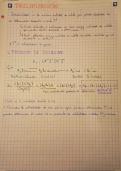
• Russian empire was industrialising
very quickly in early 20th century,
needed money. After first revolution in
February, Russian 1917, 20 million
dollars debt to USA. USSR leaves war.
After the second revolution, the
Bolshevik government renounced the
debt of the previous government. All
foreign companies are nationalised at
beginning of 1918.
• Wilson’s open door policy (countries
are allowed free trade, basic capitalist
approach). He thought everyone
should be able to develop by their own
means and better themselves, and
through this society becomes better.
, Background,
podcast,
Ideology and
Cold War -
Marxist and
history Capitalism
• Marx saw the history of the world as the
of development. Rights and needs of
individual must be second to the country.
Through interest of social classes. Marx says
proletariat is most advanced class, and was
heavily oppressed by bourgeoisie (whose
goal is profit, so pay the proletariat as little
and charge them as much as they can).
Historical determinist, he believed it was
inevitable, like Stalin and Khrushchev.,
‘capitalism is going to end anyway.’
‘Proletariat are the gravediggers of the
bourgeoisie.’ If there is collectivisation,
there is no need for bourgeoisie.
Proletariats will revolutionise, because
technology develops, they become
educated and will have political opinion, so
it will mean inevitability for the end of the
bourgeoisie and capitalism. Labour would
let you find yourself in theory. ‘From each
according to his ability, to each according
to his needs.’ Private property will be
abolished, international revolution,
therefore no more conflict.
• Capitalism replaces feudalism when
feudalism fails.
, podcast,
Ideology and
Cold War -
Marxist and
Capitalism
Leninism: Imperialism/Colonialism the
last stage of Capitalism
• Imperialism is the same model as
Marx saw inside a country. Once the
previously oppressed colonies rise up
the imperialistic countries will fight
against each other.
• The victorious proletariat must help
them in their revolution
interpretations:
What explains the
outbreak and
development of the
Cold War in the years
1943-1953?
, Background,
podcast,
Ideology and
Cold War -
Marxist and
Capitalism
• Russian empire was industrialising
very quickly in early 20th century,
needed money. After first revolution in
February, Russian 1917, 20 million
dollars debt to USA. USSR leaves war.
After the second revolution, the
Bolshevik government renounced the
debt of the previous government. All
foreign companies are nationalised at
beginning of 1918.
• Wilson’s open door policy (countries
are allowed free trade, basic capitalist
approach). He thought everyone
should be able to develop by their own
means and better themselves, and
through this society becomes better.
, Background,
podcast,
Ideology and
Cold War -
Marxist and
history Capitalism
• Marx saw the history of the world as the
of development. Rights and needs of
individual must be second to the country.
Through interest of social classes. Marx says
proletariat is most advanced class, and was
heavily oppressed by bourgeoisie (whose
goal is profit, so pay the proletariat as little
and charge them as much as they can).
Historical determinist, he believed it was
inevitable, like Stalin and Khrushchev.,
‘capitalism is going to end anyway.’
‘Proletariat are the gravediggers of the
bourgeoisie.’ If there is collectivisation,
there is no need for bourgeoisie.
Proletariats will revolutionise, because
technology develops, they become
educated and will have political opinion, so
it will mean inevitability for the end of the
bourgeoisie and capitalism. Labour would
let you find yourself in theory. ‘From each
according to his ability, to each according
to his needs.’ Private property will be
abolished, international revolution,
therefore no more conflict.
• Capitalism replaces feudalism when
feudalism fails.
, podcast,
Ideology and
Cold War -
Marxist and
Capitalism
Leninism: Imperialism/Colonialism the
last stage of Capitalism
• Imperialism is the same model as
Marx saw inside a country. Once the
previously oppressed colonies rise up
the imperialistic countries will fight
against each other.
• The victorious proletariat must help
them in their revolution