CR1011 REVISION
<><><><><><><><><><><><><><><><><><><><><><><>><><><><><><><><><><><><><><><><><><><><><><><><><><><><><><><><><><><><><><><><>
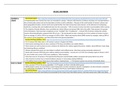
GENDER & - The Corston report: (https://webarchive.nationalarchives.gov.uk/20130206102659/http:/www.justice.gov.uk/publications/docs/corston-report-march-2007.pdf)
CRIME = Proportionately more women than men are remanded in custody. = Women with histories of violence and abuse are overrepresented in
the criminal justice system and can be described as victims as well as offenders. = Because of the small number of women’s prisons and
their geographical location, women tend to be located further from their homes than male prisoners, to the detriment of maintaining
family ties, receiving visits and resettlement back into the community. = 30% of women in prison lose their accommodation while in prison.
= The majority of female offenders have committed non-violent offences and present little risk to the public. Many present a far greater
risk to themselves. They have been recognised as more “troubled” than “troublesome”. = Around 70% of women coming into custody
require clinical detoxification compared with 50% of men. = The last decade has seen a dramatic rise in the numbers of women in prison
from an average of 1,560 in 1993 to an average of 4,500 in 2006. = Black and minority ethnic (BME) women for example, make up 28% of
the women’s prison population, over three times that in the general population. =
- Bromley Briefings (Halliday, 2021): (http://www.prisonreformtrust.org.uk/Portals/0/Documents/Bromley%20Briefings/Winter%202021%20Factfile%20final.pdf)
= On 15 January 2021 there were 3,130 women in prison in England and Wales.
= Most women entering prison to serve a sentence (77%) have committed a non-violent offence.
= More women are sent to prison to serve a sentence for theft than for violence against the person, robbery, sexual offences, fraud, drugs,
and motoring offences combined.
= Women released from prison are more likely to reoffend, and reoffend sooner, than those serving community sentences.#
= Nearly half of women (49%) left prison without settled accommodation—around one in 25 (4%) were sleeping rough on release in 2019–
20, and a further one in seven (14%) were classified as “other homeless”.
= More than seven in 10 women (71%) reported that they had a mental health problem compared with nearly half of men (47%).
= 53% of women in prison have survived emotional, physical, or sexual abuse during childhood.
= 9/10 children have to leave home due to their mother’s imprisonment. = 7/10 women in prison are survivors of domestic abuse.
RACE & CRIME - Bromley Briefings (Halliday, 2021): (http://www.prisonreformtrust.org.uk/Portals/0/Documents/Bromley%20Briefings/Winter%202021%20Factfile%20final.pdf
= Over a quarter (27%) of the prison population, 21,574 people, are from a minority ethnic group.
= BAME people in prison are more likely to report having been recently restrained or placed in segregation.133 Discrimination complaints
are inadequately investigated “all too often” according to the Prisons and Probation Ombudsman.
- The Lammy Review: (https://assets.publishing.service.gov.uk/government/uploads/system/uploads/attachment_data/file/643001/lammy-review-final-report.pdf)
= Black women were 63% more likely to be proceeded to the Crown Court than White women, and Asian women were 108% more likely
<><><><><><><><><><><><><><><><><><><><><><><>><><><><><><><><><><><><><><><><><><><><><><><><><><><><><><><><><><><><><><><><>
GENDER & - The Corston report: (https://webarchive.nationalarchives.gov.uk/20130206102659/http:/www.justice.gov.uk/publications/docs/corston-report-march-2007.pdf)
CRIME = Proportionately more women than men are remanded in custody. = Women with histories of violence and abuse are overrepresented in
the criminal justice system and can be described as victims as well as offenders. = Because of the small number of women’s prisons and
their geographical location, women tend to be located further from their homes than male prisoners, to the detriment of maintaining
family ties, receiving visits and resettlement back into the community. = 30% of women in prison lose their accommodation while in prison.
= The majority of female offenders have committed non-violent offences and present little risk to the public. Many present a far greater
risk to themselves. They have been recognised as more “troubled” than “troublesome”. = Around 70% of women coming into custody
require clinical detoxification compared with 50% of men. = The last decade has seen a dramatic rise in the numbers of women in prison
from an average of 1,560 in 1993 to an average of 4,500 in 2006. = Black and minority ethnic (BME) women for example, make up 28% of
the women’s prison population, over three times that in the general population. =
- Bromley Briefings (Halliday, 2021): (http://www.prisonreformtrust.org.uk/Portals/0/Documents/Bromley%20Briefings/Winter%202021%20Factfile%20final.pdf)
= On 15 January 2021 there were 3,130 women in prison in England and Wales.
= Most women entering prison to serve a sentence (77%) have committed a non-violent offence.
= More women are sent to prison to serve a sentence for theft than for violence against the person, robbery, sexual offences, fraud, drugs,
and motoring offences combined.
= Women released from prison are more likely to reoffend, and reoffend sooner, than those serving community sentences.#
= Nearly half of women (49%) left prison without settled accommodation—around one in 25 (4%) were sleeping rough on release in 2019–
20, and a further one in seven (14%) were classified as “other homeless”.
= More than seven in 10 women (71%) reported that they had a mental health problem compared with nearly half of men (47%).
= 53% of women in prison have survived emotional, physical, or sexual abuse during childhood.
= 9/10 children have to leave home due to their mother’s imprisonment. = 7/10 women in prison are survivors of domestic abuse.
RACE & CRIME - Bromley Briefings (Halliday, 2021): (http://www.prisonreformtrust.org.uk/Portals/0/Documents/Bromley%20Briefings/Winter%202021%20Factfile%20final.pdf
= Over a quarter (27%) of the prison population, 21,574 people, are from a minority ethnic group.
= BAME people in prison are more likely to report having been recently restrained or placed in segregation.133 Discrimination complaints
are inadequately investigated “all too often” according to the Prisons and Probation Ombudsman.
- The Lammy Review: (https://assets.publishing.service.gov.uk/government/uploads/system/uploads/attachment_data/file/643001/lammy-review-final-report.pdf)
= Black women were 63% more likely to be proceeded to the Crown Court than White women, and Asian women were 108% more likely