Title: Descartes' ontological argument and Kant's objection to the ontological argument
Learning objectives: (i) To understand Descartes' ontological argument for the existence of
God.
(ii) To understand Kant's objection to the ontological argument for the existence of God.
Complete the following tasks using 'AQA A-Level Philosophy for A-Level Year 1 and AS:
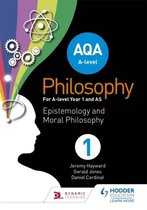
Epistemology and Moral Philosophy' by Cardinal, Jones and Hayward
1) Read pages 144-145 on Descartes' ontological argument.
2) Read pages 146-148 on Kant's objection based on existence not being a predicate.
3) Answer the following exam-style question:
Outline Descartes’ ontological argument and explain Kant’s objection to it. [12 marks]
Descartes proposes a version of ontological argument in his Meditations. The Ontological
argument is purely a priori/deductive. It also attempts to demonstrate existence through
pure reason (i.e.rationalism). God’s existence is a necessary truth, not a contingent one
according to the ontological argument. It is also important to keep in mind that Descartes’
ontological argument attempts to account for the existence of a supremely perfect being,
God. He carefully considers and examines intelligible objects in order to determine which
ideas of that object are clear and which are distinct in his mind (e.g a triangle having three
sides and straight lines). Since he cannot conceivable a triangle not having three sides, he
concludes that having three sides is an essential feature for a figure to be called a triangle.
He also claimed that since he is aware of these features clearly and distinctly they must be
true. He then considers whether this method can be applied to prove the existence of God.
Tere are many complexities characterising Descartes’ ontological argument, however, the
crux of his argument is the claim that it is a contradiction to suppose that God does not
exist, in the same way that it is a contradiction to suppose that a triangle has five sides. In
the case of God, the contradiction arises as follows: if God does not exist, then he is not a
supremely perfect being. That is, if God does not exist, we can imagine a being that is more
perfect than God. But this a contradiction, since our idea of God is the idea of the most
perfect being of all. Therefore, God must exist. This argument takes the form of a reductio
ad absurdum, meaning the type of argument that attempts to establish a claim by showing
that the opposite scenario would lead to absurdity or contradiction. Descartes shows how
the supposition that God does not exist leads to a contradiction, and he then conclude that
God must therefore exist.
Descartes builds up his argument by claiming that some predicates (i.e. meaning a
describing term) are necessary apart of their subject (e.g. having three sides is part of the
concept of a triangle). He takes a clear stand by considering existence as a predicate which is
part of the definition or concept of God. By maintaining this point of view, stating that God
exists would result in a tautology (God, who exists, exist); whereas stating that god does not
exist would result in a contradiction. In other words, God does not exists means God, who
exists, does not exist.
With regard to the Descartes’ ontological argument, Kant claims that existence is not a
property or predicate. We do not add to conceptual content when we say something exists.
The subject-predicate form of a sentence does not necessarily reflect its underlying logical
Learning objectives: (i) To understand Descartes' ontological argument for the existence of
God.
(ii) To understand Kant's objection to the ontological argument for the existence of God.
Complete the following tasks using 'AQA A-Level Philosophy for A-Level Year 1 and AS:
Epistemology and Moral Philosophy' by Cardinal, Jones and Hayward
1) Read pages 144-145 on Descartes' ontological argument.
2) Read pages 146-148 on Kant's objection based on existence not being a predicate.
3) Answer the following exam-style question:
Outline Descartes’ ontological argument and explain Kant’s objection to it. [12 marks]
Descartes proposes a version of ontological argument in his Meditations. The Ontological
argument is purely a priori/deductive. It also attempts to demonstrate existence through
pure reason (i.e.rationalism). God’s existence is a necessary truth, not a contingent one
according to the ontological argument. It is also important to keep in mind that Descartes’
ontological argument attempts to account for the existence of a supremely perfect being,
God. He carefully considers and examines intelligible objects in order to determine which
ideas of that object are clear and which are distinct in his mind (e.g a triangle having three
sides and straight lines). Since he cannot conceivable a triangle not having three sides, he
concludes that having three sides is an essential feature for a figure to be called a triangle.
He also claimed that since he is aware of these features clearly and distinctly they must be
true. He then considers whether this method can be applied to prove the existence of God.
Tere are many complexities characterising Descartes’ ontological argument, however, the
crux of his argument is the claim that it is a contradiction to suppose that God does not
exist, in the same way that it is a contradiction to suppose that a triangle has five sides. In
the case of God, the contradiction arises as follows: if God does not exist, then he is not a
supremely perfect being. That is, if God does not exist, we can imagine a being that is more
perfect than God. But this a contradiction, since our idea of God is the idea of the most
perfect being of all. Therefore, God must exist. This argument takes the form of a reductio
ad absurdum, meaning the type of argument that attempts to establish a claim by showing
that the opposite scenario would lead to absurdity or contradiction. Descartes shows how
the supposition that God does not exist leads to a contradiction, and he then conclude that
God must therefore exist.
Descartes builds up his argument by claiming that some predicates (i.e. meaning a
describing term) are necessary apart of their subject (e.g. having three sides is part of the
concept of a triangle). He takes a clear stand by considering existence as a predicate which is
part of the definition or concept of God. By maintaining this point of view, stating that God
exists would result in a tautology (God, who exists, exist); whereas stating that god does not
exist would result in a contradiction. In other words, God does not exists means God, who
exists, does not exist.
With regard to the Descartes’ ontological argument, Kant claims that existence is not a
property or predicate. We do not add to conceptual content when we say something exists.
The subject-predicate form of a sentence does not necessarily reflect its underlying logical