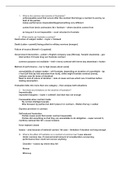
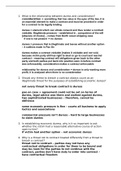
1. What is the difference between a term implied ‘in fact’ and ‘in law’?
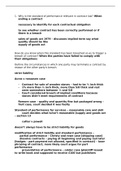
terms implied in fact are very specific to particular transaction
and can be generalised – parties failed to specify particular term
in contract
because term so obvious should have been in there – officious
bystander test
business efficiency – for of necessity [comes from Moorcock
case]
terms implied in law are going to be applied in all contracts of
particular type of legal relationship – courts likely to imply term
- parties failed to specify what would happen if specific event
happened
2. How do the courts decide whether a term has been incorporated into
(a) a signed, and l’estrange – if signed, then bound to contract
exceptions – modification [Curtis] case
- misrepresentations
court of dealing,
incorporation of terms via notice – requirements [must be given
at or before confirmation [thornton v shoelane parking, olley v
Marlborough court] – whatever comes after is not included
requirement – need to give sufficient reasonable notice [parker v
south eastern case] – if give notice in such a way that customer
did not know of writing and notice on ticket, then will not be
bound
customer has to be aware of notice
requirement – term must be contained/referred to in doc intended
to have contractual effect [chapelton v barry] – receipt prove
payment, not relevant in this sense
also have statutes – unfair contract terms act and consumer
rights acts
(b) an unsigned contract?
3. In The Moorcock, did the wharfingers impliedly promise (a) that the berth
was safe; (b) that they had taken reasonable steps to make it safe; (c)
that they had taken reasonable steps to find out whether it was safe? C
Does the Court imply only the minimum term necessary to give the
contract business efficacy? court will only imply minimum term
because Minimum term necessary – jetty owner had taken
reasonable care to ensure berth was safe
Was that particular term necessary? Yes, necessary to imply that
term
terms implied in fact are very specific to particular transaction
and can be generalised – parties failed to specify particular term
in contract
because term so obvious should have been in there – officious
bystander test
business efficiency – for of necessity [comes from Moorcock
case]
terms implied in law are going to be applied in all contracts of
particular type of legal relationship – courts likely to imply term
- parties failed to specify what would happen if specific event
happened
2. How do the courts decide whether a term has been incorporated into
(a) a signed, and l’estrange – if signed, then bound to contract
exceptions – modification [Curtis] case
- misrepresentations
court of dealing,
incorporation of terms via notice – requirements [must be given
at or before confirmation [thornton v shoelane parking, olley v
Marlborough court] – whatever comes after is not included
requirement – need to give sufficient reasonable notice [parker v
south eastern case] – if give notice in such a way that customer
did not know of writing and notice on ticket, then will not be
bound
customer has to be aware of notice
requirement – term must be contained/referred to in doc intended
to have contractual effect [chapelton v barry] – receipt prove
payment, not relevant in this sense
also have statutes – unfair contract terms act and consumer
rights acts
(b) an unsigned contract?
3. In The Moorcock, did the wharfingers impliedly promise (a) that the berth
was safe; (b) that they had taken reasonable steps to make it safe; (c)
that they had taken reasonable steps to find out whether it was safe? C
Does the Court imply only the minimum term necessary to give the
contract business efficacy? court will only imply minimum term
because Minimum term necessary – jetty owner had taken
reasonable care to ensure berth was safe
Was that particular term necessary? Yes, necessary to imply that
term