BIOS 135 Lab Report Format for ModelChem Labs
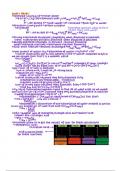
BIOS 135 Lab Report Format for ModelChem Labs I. Title Fly Lab Week 6 iLab II. Introduction FlyLab will allow you to play the role of a research geneticist. You will use FlyLab to study important introductory principles of genetics by developing hypotheses and designing and conducting matings between fruit flies with different mutations that you have selected. Once you have examined the results of a simulated cross, you can perform a statistical test of your data by chi-square analysis and apply these statistics to accept or reject your hypothesis for the predicted phenotypic ratio of offspring for each cross. With FlyLab, it is possible to study multiple generations of offspring, and perform testcrosses and backcrosses. FlyLab is a very versatile program; it can be used to learn elementary genetic principles such as dominance, recessiveness, and Mendelian ratios, or more complex concepts such as sex-linkage, epistasis, recombination, and genetic mapping. The purpose of this laboratory is to: • Simulate basic principles of genetic inheritance based on Mendelian genetics by designing and performing crosses between fruit flies. • Help you understand the relationship between an organism's genotype and its phenotype. • Demonstrate the importance of statistical analysis to accept or reject a hypothesis. • Use genetic crosses and recombination data to identify the location of genes on a chromosome by genetic mapping. ( I will be working with monohybrid and di-hybrid crossbreeding with fruit flies. The main intention is to see how Mendel’s first and second laws of breeding with different recessive trais and hypothesizing different phenotype results. I had a homozygous female fruit fly that had certain physical traits, while I changed the eye types, colors, body colors, and wing shapes with other male types. III. Procedure 1) Open iLab and read through the introduction 2) Cross a WT Female With a WT Male Fly - To design a wild-type (WT) female fly, click the design button below the gray image of the female fly. Click the button for the eye color trait on the left side of the design view. The small button next to the words wild type should already be selected (bolded). To choose this phenotype, click the select button below the image of the fly at the bottom of the design screen. Remember that this fly represents a true-breeding parent that is homozygous for wild-type alleles. The selected female fly now appears on the screen with a + symbol indicating the wild-type phenotype. Do the same for the male fly.
Written for
- Institution
-
Devry University
- Course
-
BIOS 135
Document information
- Uploaded on
- June 15, 2021
- Number of pages
- 7
- Written in
- 2020/2021
- Type
- Case
- Professor(s)
- Professor
- Grade
- A
Subjects
-
bios 135 lab report format for modelchem labs i title fly lab week 6 ilab ii introduction flylab will allow you to play the role of a research geneticist you will use flylab to study importan