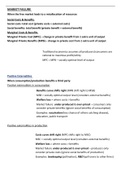
MARKET FAILURE
When the free market leads to a misallocation of resources
Social Costs & Benefits
Social costs: total cost (private costs + external costs)
Social benefits: total benefit (private benefit + external benefit)
Marginal Costs & Benefits
Marginal Private Cost (MPC) – change in private benefit from 1 extra unit of output
Marginal Private Benefits (MPB) – change in private cost from 1 extra unit of output
Traditional economics assumes all producers/consumers are
rational to maximise profit/utility
MPC = MPB – socially optimal level of output
Positive Externalities
When consumption/production benefits a third party
Positive externalities in consumption
Benefits curve shifts right (MPB shift right to MSB)
MSB = socially optimal output level (considers external benefits)
Welfare loss = where costs > benefits
Market failure: under-produced & over-priced – consumers only
consider private benefits (ignore social benefits of consumption)
Examples: vaccination (less chance of others catching disease),
education, public transport
Positive externalities in production
Costs curve shift right (MPC shifts right to MSC)
MSC = socially optimal output level (considers external benefits)
Welfare loss = where costs > benefits
Market failure under-produced & over-priced – producers only
consider private costs (ignore social benefits of production)
Examples: beekeeping (pollination), R&D (spill overs to other firms)
,Negative Externalities
When consumption/production costs a third party
Negative externalities in consumption
Benefits curve shifts left (MPB shifts left to MSC)
MSB = socially optimal output level (considers external costs)
Welfare loss = where costs > benefits
Marker failure over-produced & under-priced – consumers only
consider private benefits (ignore social costs of consumption)
Example: cigarettes release passive smoke cause health problems
to a third party – burdens NHS; traffic congestion, gambling, litter
Negative externalities in production
Costs curve shifts left (MPC shifts left to MSC)
MSC = socially optimal output level (considers external benefits)
Welfare loss = where costs > benefits
Market failure: over-produced & under-priced – producers only
consider private costs (ignore external costs of production)
Examples: air/noise pollution, industrial waste, over-fishing
Merit Goods
Social benefits of consumption greater than private benefits of consumption (MSB >MPB)
Generate positive externalities in consumption
Market failure: under-consumed/produced – consumers only
consider private benefits (ignore social benefits of consumption)
Caused by imperfect information: information failure +
asymmetric information (unequal)
Examples: healthcare, education, healthy foods, solar panels
Demerit goods
Social costs of consumption greater than private costs of consumption (MSC > MPB)
Generate negative externalities in consumption
Market failure: over-consumed/produced – consumers only
consider private benefits (ignore social costs of consumption)
Caused by imperfect information: information failure +
asymmetric information (unequal)
Examples: cigarettes, alcohol, unhealthy foods, cars
, Public Goods
Non excludable – can’t prevent others consuming them
Non-rivalrous – consumption doesn’t reduce quantity to consume
Examples: flood defences (annual flood damage cost of £1.1bn), streetlights, lighthouses
Market failure: free-rider problem
Non-excludable = incentive to consume without paying = public goods under-provided in
the free-market as firms cannot make profit = missing market
Quasi-Public Goods
Public good that shares characteristics of a public and private good
Semi non-excludable: difficult/expensive to exclude non-paying consumers
Semi-non rival: eventually consumption diminishes quantity to consume
Example: roads can be excludable through toll roads or electronic road pricing (Singapore)
and can be rivalrous during peak travel times (congestion) where road space diminishes
Suggests private sector provision can correct market failure instead of gov intervention
Tragedy of the Commons
Common access resources = natural resources with no private ownership
Examples: forest (timber, pulp), seas (seafood, minerals), air (oxygen)
When left to the free-market common access resources have no private ownership as it is
costly and inefficient to exclude other producers accessing the resources
Lack of private ownership leads to the tragedy of the
commons – producers self-interest to exploit common
access resources resulting in resource depletion
(profit motive + even if individual consumers stop other
producers will just take the resources instead)
Market failure = over-production
Resource depletion has significant negative production
externalities e.g. reduce income
Government Failure
Government intervention results in the worsening of the allocation of scarce resources
Causes:
Information failure – valuing externalities – right level of policy required
Examples: drug addiction, knowledge nutritional content of foods, complex pension scheme
High admin/enforcement costs – regulation, subsidies, state provision, price controls
Black markets – opportunity cost of policing, health (unregulated), lost tax revenue
Burdens poor (i.e. regressive tax, minimum prices) – increases inequity
Burdens firms – increases production costs – reduce supply = high unemployment
Disincentive to be efficient (i.e. subsidies) – in a free-market profit incentive to
innovate/cut costs – efficient production – inefficient firms dissolve (creative destruction)
When the free market leads to a misallocation of resources
Social Costs & Benefits
Social costs: total cost (private costs + external costs)
Social benefits: total benefit (private benefit + external benefit)
Marginal Costs & Benefits
Marginal Private Cost (MPC) – change in private benefit from 1 extra unit of output
Marginal Private Benefits (MPB) – change in private cost from 1 extra unit of output
Traditional economics assumes all producers/consumers are
rational to maximise profit/utility
MPC = MPB – socially optimal level of output
Positive Externalities
When consumption/production benefits a third party
Positive externalities in consumption
Benefits curve shifts right (MPB shift right to MSB)
MSB = socially optimal output level (considers external benefits)
Welfare loss = where costs > benefits
Market failure: under-produced & over-priced – consumers only
consider private benefits (ignore social benefits of consumption)
Examples: vaccination (less chance of others catching disease),
education, public transport
Positive externalities in production
Costs curve shift right (MPC shifts right to MSC)
MSC = socially optimal output level (considers external benefits)
Welfare loss = where costs > benefits
Market failure under-produced & over-priced – producers only
consider private costs (ignore social benefits of production)
Examples: beekeeping (pollination), R&D (spill overs to other firms)
,Negative Externalities
When consumption/production costs a third party
Negative externalities in consumption
Benefits curve shifts left (MPB shifts left to MSC)
MSB = socially optimal output level (considers external costs)
Welfare loss = where costs > benefits
Marker failure over-produced & under-priced – consumers only
consider private benefits (ignore social costs of consumption)
Example: cigarettes release passive smoke cause health problems
to a third party – burdens NHS; traffic congestion, gambling, litter
Negative externalities in production
Costs curve shifts left (MPC shifts left to MSC)
MSC = socially optimal output level (considers external benefits)
Welfare loss = where costs > benefits
Market failure: over-produced & under-priced – producers only
consider private costs (ignore external costs of production)
Examples: air/noise pollution, industrial waste, over-fishing
Merit Goods
Social benefits of consumption greater than private benefits of consumption (MSB >MPB)
Generate positive externalities in consumption
Market failure: under-consumed/produced – consumers only
consider private benefits (ignore social benefits of consumption)
Caused by imperfect information: information failure +
asymmetric information (unequal)
Examples: healthcare, education, healthy foods, solar panels
Demerit goods
Social costs of consumption greater than private costs of consumption (MSC > MPB)
Generate negative externalities in consumption
Market failure: over-consumed/produced – consumers only
consider private benefits (ignore social costs of consumption)
Caused by imperfect information: information failure +
asymmetric information (unequal)
Examples: cigarettes, alcohol, unhealthy foods, cars
, Public Goods
Non excludable – can’t prevent others consuming them
Non-rivalrous – consumption doesn’t reduce quantity to consume
Examples: flood defences (annual flood damage cost of £1.1bn), streetlights, lighthouses
Market failure: free-rider problem
Non-excludable = incentive to consume without paying = public goods under-provided in
the free-market as firms cannot make profit = missing market
Quasi-Public Goods
Public good that shares characteristics of a public and private good
Semi non-excludable: difficult/expensive to exclude non-paying consumers
Semi-non rival: eventually consumption diminishes quantity to consume
Example: roads can be excludable through toll roads or electronic road pricing (Singapore)
and can be rivalrous during peak travel times (congestion) where road space diminishes
Suggests private sector provision can correct market failure instead of gov intervention
Tragedy of the Commons
Common access resources = natural resources with no private ownership
Examples: forest (timber, pulp), seas (seafood, minerals), air (oxygen)
When left to the free-market common access resources have no private ownership as it is
costly and inefficient to exclude other producers accessing the resources
Lack of private ownership leads to the tragedy of the
commons – producers self-interest to exploit common
access resources resulting in resource depletion
(profit motive + even if individual consumers stop other
producers will just take the resources instead)
Market failure = over-production
Resource depletion has significant negative production
externalities e.g. reduce income
Government Failure
Government intervention results in the worsening of the allocation of scarce resources
Causes:
Information failure – valuing externalities – right level of policy required
Examples: drug addiction, knowledge nutritional content of foods, complex pension scheme
High admin/enforcement costs – regulation, subsidies, state provision, price controls
Black markets – opportunity cost of policing, health (unregulated), lost tax revenue
Burdens poor (i.e. regressive tax, minimum prices) – increases inequity
Burdens firms – increases production costs – reduce supply = high unemployment
Disincentive to be efficient (i.e. subsidies) – in a free-market profit incentive to
innovate/cut costs – efficient production – inefficient firms dissolve (creative destruction)