Moleculaire Biologie
H9 Cell Signaling
9.1 External signals are converted to responses within the cell
Evolution of Cell Signaling
Bacterial cells secrete molecules that can be detected by other bacterial cells. Sensing the
concentration of such signaling molecules allows bacteria to monitor their own local density; a
phenomenon called quorum sensing. Quorum sensing allows bacterial populations to coordinate the
behavior of all cells at activities that require a given density of cells acting at the same time.
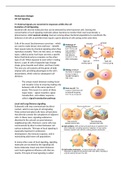
Cells of the yeast Saccharomyces cerevisae – which
are used to make bread, wine and bear – identify
their sexual mates by chemical signaling when they
reproduce sexually. There are two sexes, or mating
types, called a and α. Each type secretes a specific
factor that binds only to receptors on the other
type of cell. When exposed to each other’s mating
factors, a pair of cells of opposite type change
shape, grow towards each other, and fuse (mate).
The new a/α cell contains all the genes of both
original cells, providing advantages to the cell’s
descendants, which arise by subsequent cell
divisions.
- The unique match between mating factor
and receptor is key to ensuring mating only
between cells of the same species of
yeasts. This occurs in a series of three
major steps – signal reception, signal
transduction, and cellular response –
called a signal transduction pathway.
Local and Long-Distance signaling
Eukaryotic cells may communicate by direct
contact, which is one type of cell signaling.
Many animal and plant cells have cell junctions
that directly connect the cytoplasms of adjacent
cells. In these cases, signaling substances
dissolved in the cytosol can pass between
neighbouring cells. Moreover, some cells may
communicate by direct contact between cell
surface molecules. This type of local signaling is
especially important in embryonic
development, the immune response, and in
maintaining adult stem cell populations.
In many other cases of local signaling, signaling
molecules are secreted by the signaling cell.
Some molecules travel only short distances:
such local regulators influence cells that are
nearby. This type of local signaling is called
, paracrine signaling. One class of local regulators in animals, growth factors, consists of compounds
that simulate nearby target cells to grow and divide. Numerous cells can simultaneously receive and
respond to the growth factors produced by a single cell in their vicinity.
A highly specialized type of local signaling called synaptic signaling occurs in the animal nervous
system. An electrical signal along a nerve cell triggers the secretion of neurotransmitter molecules.
These molecules act as chemical signals diffusing across the synapse – the narrow space between
the nerve cell and its target cell – triggering a response in the target cell.
Both animals and plants use molecules called hormones for long-distance signaling. In hormonal
signaling in animals, also known as endocrine signaling, specialized cells release hormones, which
travel through the circulatory system to other parts of the body, where they reach target cells that
can recognize and respond to them. Many plant hormones reach distant targets by traveling through
cells. Like local regulators, plant hormones vary widely in size and type. What happens when a
potential target cell is exposed to a secreted signaling molecule? The ability of a cell to respond is
determined by whether it has a specific receptor molecule that can bind to the signaling molecule.
The information conveyed by this binding, the signal, must then be changed into another form –
transduced – inside the cell before the cell can respond.
The Three Stages of Cell Signaling: A Preview
Cellular communication can be dissected into three stages: signal reception, signal transduction, and
cellular response.
1. Signal reception. Reception is the target cells detection of a signaling molecule coming from
outside the cell. A chemical signal is ‘’detected’’ when the signaling molecule binds to a
receptor protein located at the cell’s surface (or inside the cell, to be discussed later.
2. Signal transduction. The binding of the signaling molecule changes the receptor protein in
some way, initiating the process of transduction. The transduction stage converts the signal
to a form that can bring about a specific cellular response. Transduction sometimes occurs in
a single step but more often requires a
sequence of changes in a series of different
molecules – a signal transduction pathway.
The molecules in the pathway are often
called relay molecules; three are shown as
an example.
H9 Cell Signaling
9.1 External signals are converted to responses within the cell
Evolution of Cell Signaling
Bacterial cells secrete molecules that can be detected by other bacterial cells. Sensing the
concentration of such signaling molecules allows bacteria to monitor their own local density; a
phenomenon called quorum sensing. Quorum sensing allows bacterial populations to coordinate the
behavior of all cells at activities that require a given density of cells acting at the same time.
Cells of the yeast Saccharomyces cerevisae – which
are used to make bread, wine and bear – identify
their sexual mates by chemical signaling when they
reproduce sexually. There are two sexes, or mating
types, called a and α. Each type secretes a specific
factor that binds only to receptors on the other
type of cell. When exposed to each other’s mating
factors, a pair of cells of opposite type change
shape, grow towards each other, and fuse (mate).
The new a/α cell contains all the genes of both
original cells, providing advantages to the cell’s
descendants, which arise by subsequent cell
divisions.
- The unique match between mating factor
and receptor is key to ensuring mating only
between cells of the same species of
yeasts. This occurs in a series of three
major steps – signal reception, signal
transduction, and cellular response –
called a signal transduction pathway.
Local and Long-Distance signaling
Eukaryotic cells may communicate by direct
contact, which is one type of cell signaling.
Many animal and plant cells have cell junctions
that directly connect the cytoplasms of adjacent
cells. In these cases, signaling substances
dissolved in the cytosol can pass between
neighbouring cells. Moreover, some cells may
communicate by direct contact between cell
surface molecules. This type of local signaling is
especially important in embryonic
development, the immune response, and in
maintaining adult stem cell populations.
In many other cases of local signaling, signaling
molecules are secreted by the signaling cell.
Some molecules travel only short distances:
such local regulators influence cells that are
nearby. This type of local signaling is called
, paracrine signaling. One class of local regulators in animals, growth factors, consists of compounds
that simulate nearby target cells to grow and divide. Numerous cells can simultaneously receive and
respond to the growth factors produced by a single cell in their vicinity.
A highly specialized type of local signaling called synaptic signaling occurs in the animal nervous
system. An electrical signal along a nerve cell triggers the secretion of neurotransmitter molecules.
These molecules act as chemical signals diffusing across the synapse – the narrow space between
the nerve cell and its target cell – triggering a response in the target cell.
Both animals and plants use molecules called hormones for long-distance signaling. In hormonal
signaling in animals, also known as endocrine signaling, specialized cells release hormones, which
travel through the circulatory system to other parts of the body, where they reach target cells that
can recognize and respond to them. Many plant hormones reach distant targets by traveling through
cells. Like local regulators, plant hormones vary widely in size and type. What happens when a
potential target cell is exposed to a secreted signaling molecule? The ability of a cell to respond is
determined by whether it has a specific receptor molecule that can bind to the signaling molecule.
The information conveyed by this binding, the signal, must then be changed into another form –
transduced – inside the cell before the cell can respond.
The Three Stages of Cell Signaling: A Preview
Cellular communication can be dissected into three stages: signal reception, signal transduction, and
cellular response.
1. Signal reception. Reception is the target cells detection of a signaling molecule coming from
outside the cell. A chemical signal is ‘’detected’’ when the signaling molecule binds to a
receptor protein located at the cell’s surface (or inside the cell, to be discussed later.
2. Signal transduction. The binding of the signaling molecule changes the receptor protein in
some way, initiating the process of transduction. The transduction stage converts the signal
to a form that can bring about a specific cellular response. Transduction sometimes occurs in
a single step but more often requires a
sequence of changes in a series of different
molecules – a signal transduction pathway.
The molecules in the pathway are often
called relay molecules; three are shown as
an example.