Major depressive disorder (MDD)
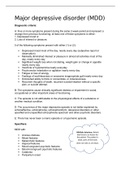
Diagnostic criteria:
A: Five or more symptoms present during the same 2-week period and represent a
change from previous functioning; at least one of these symptoms is either:
1. Depressed mood or
2. Loss of interest or pleasure.
5 of the following symptoms present with either (1) or (2):
Depressed mood most of the day, nearly every day (subjective report or
observation)
Markedly diminished interest or pleasure in almost all activities most of the
day, nearly every day
Significant weight loss when not dieting, weight gain or change in appetite
nearly every day
Insomnia or hypersomnia nearly everyday
Psychomotor retardation or agitation nearly every day
Fatigue or loss of energy
Feelings of worthlessness or excessive inappropriate guilt nearly every day
Diminished ability to think or concentrate, or indecisiveness.
Recurrent thoughts of death, recurrent suicidal ideation without a specific
plan, or suicide attempt.
B: The symptoms cause clinically significant distress or impairment in social,
occupational or other important areas of functioning.
C: The episode is not attributable to the physiological effects of a substance or
another medical condition.
D: The occurrence of the major depressive episode is not better explained by
schizoaffective, schizophrenia, schizophreniform, delusional disorders or other
specified and unspecified schizophrenia spectrum and other psychotic disorders.
E: There has never been a manic episode or a hypomanic episode.
Specifiers:
MDD with:
Nihilistic delusions: Beliefs
Anxious distress that there is no future for
Mixed features the patient. The patient is
dead, parts of the body
Melancholic features
Atypical features does not exist or are dead.
Mood-congruent psychotic features
Mood-incongruent psychotic features
Catatonia
Peripartum onset
, Seasonal pattern
Diagnostic criteria:
A: Five or more symptoms present during the same 2-week period and represent a
change from previous functioning; at least one of these symptoms is either:
1. Depressed mood or
2. Loss of interest or pleasure.
5 of the following symptoms present with either (1) or (2):
Depressed mood most of the day, nearly every day (subjective report or
observation)
Markedly diminished interest or pleasure in almost all activities most of the
day, nearly every day
Significant weight loss when not dieting, weight gain or change in appetite
nearly every day
Insomnia or hypersomnia nearly everyday
Psychomotor retardation or agitation nearly every day
Fatigue or loss of energy
Feelings of worthlessness or excessive inappropriate guilt nearly every day
Diminished ability to think or concentrate, or indecisiveness.
Recurrent thoughts of death, recurrent suicidal ideation without a specific
plan, or suicide attempt.
B: The symptoms cause clinically significant distress or impairment in social,
occupational or other important areas of functioning.
C: The episode is not attributable to the physiological effects of a substance or
another medical condition.
D: The occurrence of the major depressive episode is not better explained by
schizoaffective, schizophrenia, schizophreniform, delusional disorders or other
specified and unspecified schizophrenia spectrum and other psychotic disorders.
E: There has never been a manic episode or a hypomanic episode.
Specifiers:
MDD with:
Nihilistic delusions: Beliefs
Anxious distress that there is no future for
Mixed features the patient. The patient is
dead, parts of the body
Melancholic features
Atypical features does not exist or are dead.
Mood-congruent psychotic features
Mood-incongruent psychotic features
Catatonia
Peripartum onset
, Seasonal pattern