Child Soldiers
By
On March 14th, 2012, Thomas Lubanga, minister of defence of Congo, was found guilty of the war
crimes of recruiting and conscripting children under the age of 15. He used them to participate actively
in hostilities. Lubanga got a sentenced to a total of 14 years of imprisonment (ICC, 2012). Lubanga is
one of the many people and organisations who use children in their hostile activities. Around 300.000
children are recruited or being used as soldiers around the world (Berents, 2009).
During this paper, the recruitment or the use of child
soldiers will be the centre of attention. Recruiting and
the use of child soldiers will lead to other problems
like sexual violence, abduction of children and more.
Association
There are different ways children get associated with
armed conflicts. Some are abducted and are abused
until they submit. Others join these conflicts to escape
from the poverty they were living in before, they want
to defend their community or they join due to the need
for revenge (United Nations, n.d.). In a lot of these
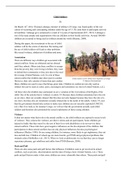
armed conflict the children take direct part in combat. Child soldiers in the Democratic Republic of Congo.
However, their role consists of more than just combat. © Amnesty International
Many children are used in ways that brings great risks. Children in combat are not only used as
soldiers but can be used as cooks, spies, messengers and sometimes sex slaves (United Nations, n.d.).
All these roles the children may participate in are a violation of the Convention of the Rights of the
child. One of the articles that is violated, is article 34. Because these children sometimes have the role
as sex slave, there are sexually abused. But this does not only happen because they have the role of a
sex slave, but they also are sometimes sexually abused due to the needs of the adults. Article 34, says
that the government should take actions to make sure children are not sexually exploited (UNICEF,
n.d.). But if we look at, for instance Congo, we will see that the government actually used child
soldiers and therefore also promoted the sexual exploitation of these young children.
Violence
It does not matter what their role in the armed conflict is, the child soldiers are exposed to acute levels
of violence. They witness the violence, are direct victims and are participants. Some children get
injured so badly that they must live the rest of their lives with disabilities or do not survive these
armed conflicts. These risks have great negative influences on the development of the children. But
participation in these armed conflicts has not only physical influences but also psychological
influences (Maslen, 1998). So are young children, for instance, more likely to get nightmares, they eat
less and talk less. Children of school age are more hostile, get PTSD and get physical problems like
stomach aches (McMullen et al., 2013). When we look at adolescents we see that they can no longer
experience pleasure, get rebellious and suffer from PTSD (Berents, 2009).
Push and Pull
There are also some push and pull factors that influence if children want to get involved in armed
conflicts, such as poverty, discrimination and the idea of being a hero (United Nations, n.d.). These
push and pull factors make it that some children are more vulnerable than others. These push and pull
1
By
On March 14th, 2012, Thomas Lubanga, minister of defence of Congo, was found guilty of the war
crimes of recruiting and conscripting children under the age of 15. He used them to participate actively
in hostilities. Lubanga got a sentenced to a total of 14 years of imprisonment (ICC, 2012). Lubanga is
one of the many people and organisations who use children in their hostile activities. Around 300.000
children are recruited or being used as soldiers around the world (Berents, 2009).
During this paper, the recruitment or the use of child
soldiers will be the centre of attention. Recruiting and
the use of child soldiers will lead to other problems
like sexual violence, abduction of children and more.
Association
There are different ways children get associated with
armed conflicts. Some are abducted and are abused
until they submit. Others join these conflicts to escape
from the poverty they were living in before, they want
to defend their community or they join due to the need
for revenge (United Nations, n.d.). In a lot of these
armed conflict the children take direct part in combat. Child soldiers in the Democratic Republic of Congo.
However, their role consists of more than just combat. © Amnesty International
Many children are used in ways that brings great risks. Children in combat are not only used as
soldiers but can be used as cooks, spies, messengers and sometimes sex slaves (United Nations, n.d.).
All these roles the children may participate in are a violation of the Convention of the Rights of the
child. One of the articles that is violated, is article 34. Because these children sometimes have the role
as sex slave, there are sexually abused. But this does not only happen because they have the role of a
sex slave, but they also are sometimes sexually abused due to the needs of the adults. Article 34, says
that the government should take actions to make sure children are not sexually exploited (UNICEF,
n.d.). But if we look at, for instance Congo, we will see that the government actually used child
soldiers and therefore also promoted the sexual exploitation of these young children.
Violence
It does not matter what their role in the armed conflict is, the child soldiers are exposed to acute levels
of violence. They witness the violence, are direct victims and are participants. Some children get
injured so badly that they must live the rest of their lives with disabilities or do not survive these
armed conflicts. These risks have great negative influences on the development of the children. But
participation in these armed conflicts has not only physical influences but also psychological
influences (Maslen, 1998). So are young children, for instance, more likely to get nightmares, they eat
less and talk less. Children of school age are more hostile, get PTSD and get physical problems like
stomach aches (McMullen et al., 2013). When we look at adolescents we see that they can no longer
experience pleasure, get rebellious and suffer from PTSD (Berents, 2009).
Push and Pull
There are also some push and pull factors that influence if children want to get involved in armed
conflicts, such as poverty, discrimination and the idea of being a hero (United Nations, n.d.). These
push and pull factors make it that some children are more vulnerable than others. These push and pull
1