Hoorcollege 1
Introductie
Information management
→ The management of IT+ business processes + people, to obtain a strategic objective
→ Objective: develop better information systems that support realizing the strategic
objectives
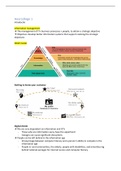
DIKW model
Getting to know your customer
Digital divide
→ We are very dependent on information and ICTs
- Those who are information savvy have the upperhand
- Outages can cause significant disruptions
→ People can be left behind in the information age
- Strong linage between computer literacy and a person’s ability to compete in the
information age
- People in rural communities, the elderly, people with disabilities, and minorities lag
behind national averages for internet access and computer literacy
, - The challenges in overcoming the digital divide are even greater in developing
countries
Technology helps us to:
→ Gather (large quantities) data
- Manually & automatically
- From different sources
→ Analyze the data and it into information
- Structure, clean and store the data
- Develop profiles and new insights
→ Provide the information to people when making decisions
- Consciously and unconsciously
- Anytime, anywhere
Decisions
→ To build effective information systems we need to understand what knowledge is needed
- What decisions are being made?
- By whom, when and where?
- What information helps to make better decisions?
- Where can we get?
- How should it be analyzed/delivered?
Designing information systems
Taking the building blocks and putting them together
- Data: the root and purpose of information systems
- Hardware, software and telecommunications networks: the components of
information systems
- People: the builders, managers and users of information systems
- Organizations: the context of information systems
Data omzetten in strategisch voordeel
,Hoorcollege 2
Trends in IT: business applications
1. Mobile computing
→ Traditional PCs vs. Mobile
→ Implications:
- Increased collaboration
- Manage business in real time
- New ways to reach customers
- Different organization of work
- Different payment methods
2. Social Media
→ Organizations use social media to encourage employee collaboration or to connect with
their customers
3. The internet of Things
→ Devices have embedded computers and sensors, enabling connectivity over the internet
→ Applications:
- Smart homes with intelligent appliances
- Parking spaces
- Traffic control
4. Cloud computing
→ Web technologies enable the internet as the platform for applications and data
, → Applications that used to be installed on individual computers are increasingly kept in the
cloud
5. Big data/ business analytics
→ Analysis of click-stream data
→ Supply chain visibility
6. E-commerce
Dynamic prices: flexible prices for products or services based on current market demands
Introductie
Information management
→ The management of IT+ business processes + people, to obtain a strategic objective
→ Objective: develop better information systems that support realizing the strategic
objectives
DIKW model
Getting to know your customer
Digital divide
→ We are very dependent on information and ICTs
- Those who are information savvy have the upperhand
- Outages can cause significant disruptions
→ People can be left behind in the information age
- Strong linage between computer literacy and a person’s ability to compete in the
information age
- People in rural communities, the elderly, people with disabilities, and minorities lag
behind national averages for internet access and computer literacy
, - The challenges in overcoming the digital divide are even greater in developing
countries
Technology helps us to:
→ Gather (large quantities) data
- Manually & automatically
- From different sources
→ Analyze the data and it into information
- Structure, clean and store the data
- Develop profiles and new insights
→ Provide the information to people when making decisions
- Consciously and unconsciously
- Anytime, anywhere
Decisions
→ To build effective information systems we need to understand what knowledge is needed
- What decisions are being made?
- By whom, when and where?
- What information helps to make better decisions?
- Where can we get?
- How should it be analyzed/delivered?
Designing information systems
Taking the building blocks and putting them together
- Data: the root and purpose of information systems
- Hardware, software and telecommunications networks: the components of
information systems
- People: the builders, managers and users of information systems
- Organizations: the context of information systems
Data omzetten in strategisch voordeel
,Hoorcollege 2
Trends in IT: business applications
1. Mobile computing
→ Traditional PCs vs. Mobile
→ Implications:
- Increased collaboration
- Manage business in real time
- New ways to reach customers
- Different organization of work
- Different payment methods
2. Social Media
→ Organizations use social media to encourage employee collaboration or to connect with
their customers
3. The internet of Things
→ Devices have embedded computers and sensors, enabling connectivity over the internet
→ Applications:
- Smart homes with intelligent appliances
- Parking spaces
- Traffic control
4. Cloud computing
→ Web technologies enable the internet as the platform for applications and data
, → Applications that used to be installed on individual computers are increasingly kept in the
cloud
5. Big data/ business analytics
→ Analysis of click-stream data
→ Supply chain visibility
6. E-commerce
Dynamic prices: flexible prices for products or services based on current market demands