Superpowers – Human Geography Notes Paper 2
The Power of Superpowers
• Superpower: a nation with the ability to project its influence anywhere in the world
and to be a dominant force
• Hyper power: an unchallenged superpower that is dominant in all aspects of power
(political, economic, cultural, military); examples include the USA from 1990 to 2010
and Britain from 1850 to 1910
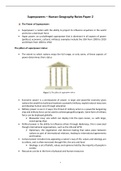
The pillars of superpower status:
• The extent to which nations enjoy the full range, or only some, of these aspects of
power determines their status
• Economic power is a prerequisite of power. A large and powerful economy gives
nations the wealth to build and maintain a powerful military, exploit natural resources
and develop human ones through education
• Military power is use in 2 ways: the threat of military action is a powerful bargaining
chip and military force can be used to achieve geopolitical goals. Some form of military
force can be deployed globally:
Ø Bluewater navy: one which can deploy into the open ocean, i.e. with large,
ocean-going ships
• Political power is the ability to influence others through diplomacy, this is exercised
though international organisations, such as the UN and WTO
Ø Diplomacy: the negotiation and decision-making that takes place between
nations as part of international relations, leading to international agreements
and treaties
• Cultural power includes how appealing a nation’s way of life, values and ideology are
to others, and is often exercised through film, the arts and food
Ø Ideology: a set of beliefs, values and opinions held by the majority of people in
society
• Resources can be in the form of physical and human resources
1
,The power spectrum of countries:
Hard vs. soft power:
• Soft power is the power of persuasion
• Hard power means getting your own way by force
• Many countries use both soft and hard power because:
Ø Invasions, war and conflict don’t often go as planned and fail to achieve the
aims of those exercising hard power
Ø Soft power alone may not persuade one nation to do as another says
• Geo-strategic policies: policies that attempt to meet the global and regional policy
aims of a country by combining diplomacy with the movement and positioning of
military assets
• The ‘Heartland’ area is a continental land area, protected by invasion from the sea,
stretched from Russia to China. It was argued that the Heartland was the key geo-
strategic location in the world because control of it commanded a huge portion of the
world’s physical and human resources
2
, Changing Patterns and Polarity
Types of polarity:
• Unipolar – a world dominated by one superpower, e.g. the British Empire
• Bipolar – a world in which two superpowers, with opposing ideologies, vie for power,
e.g. the USA and the USSR during the Cold War
• A multipolar world is where many superpowers and emerging powers compete for
power in different regions
The British Empire:
• By 1920, Britain ruled over 20% of the world’s population and 25% of its land area
• The Royal Navy dominated the world’s ocean, protecting the colonies and trade routes
between them and Britain
• In 1914, Britain’s navy was about twice the size of Germany
Colonial control:
• Colonial control refers to the direct control exerted over the territories conquered by
mainly European powers in the period of 1600 to 1900. They were ruled by force, with
almost no power or influence being given to the original population
• Colonial India is an example of how colonies were controlled directly:
Ø British military personnel, civil servants and entrepreneurs emigrated to India
to run the Raj
Ø Educated Indians (speaking English) occupied many lower administrative
positions
Ø A process of acculturation (a process of cultural change that takes place when
two different cultures meet and interact) was undertaken as British traditions
were introduce
Ø India was modernised, especially through the construction of 61,000km
railways by 1920
Multipolar period:
• USA, Germany and France and other European countries also have colonies oversea
• The period from 1919 to 1939 was an increasingly multipolar one:
Ø Germany became more powerful during the 1930s
Ø Imperial Japan began to be an increasing power in Asia
Ø The USA became economically and militarily stronger
3
, The post-colonial era:
• After WW2, most colonial powers had lost their colonies by 1970, the reasons include:
Ø Post-war bankruptcy
Ø The focus was one reconstruction their own country
Ø Anti-colonial movements
• The era from 1945 to 1990 was dominated by the Cold War (bipolar era of the USA
and the USSR)
Arguments against different types of polarity:
• A unipolar world dominated by one hyperpower might appear stable, but it is unlikely
to be able to maintain control everywhere, which could lead to frequent challenges
by rogue states
• A bipolar could be stable, as it is divided into 2 opposing blocs. However, stability will
depend on diplomatic channels of communication between blocs remaining open and
each superpower having the ability to control countries in its bloc
• Multi-polar systems involve many players and so the opportunities to misjudge the
intentions of others, or fears over alliances creating more powerful blocs, are high and
may increase the risk of conflict
The cold war:
• Proxy wars occurred when the USA and/or the USSR supported one side in a conflict
but didn’t directly fight:
Ø The 1950-53 Korean War, which led to the division of Korea
Ø The 1955-75 Vietnam War
Ø The Cuban Missile Crisis in 1962
Comparing the 2 superpowers:
4
The Power of Superpowers
• Superpower: a nation with the ability to project its influence anywhere in the world
and to be a dominant force
• Hyper power: an unchallenged superpower that is dominant in all aspects of power
(political, economic, cultural, military); examples include the USA from 1990 to 2010
and Britain from 1850 to 1910
The pillars of superpower status:
• The extent to which nations enjoy the full range, or only some, of these aspects of
power determines their status
• Economic power is a prerequisite of power. A large and powerful economy gives
nations the wealth to build and maintain a powerful military, exploit natural resources
and develop human ones through education
• Military power is use in 2 ways: the threat of military action is a powerful bargaining
chip and military force can be used to achieve geopolitical goals. Some form of military
force can be deployed globally:
Ø Bluewater navy: one which can deploy into the open ocean, i.e. with large,
ocean-going ships
• Political power is the ability to influence others through diplomacy, this is exercised
though international organisations, such as the UN and WTO
Ø Diplomacy: the negotiation and decision-making that takes place between
nations as part of international relations, leading to international agreements
and treaties
• Cultural power includes how appealing a nation’s way of life, values and ideology are
to others, and is often exercised through film, the arts and food
Ø Ideology: a set of beliefs, values and opinions held by the majority of people in
society
• Resources can be in the form of physical and human resources
1
,The power spectrum of countries:
Hard vs. soft power:
• Soft power is the power of persuasion
• Hard power means getting your own way by force
• Many countries use both soft and hard power because:
Ø Invasions, war and conflict don’t often go as planned and fail to achieve the
aims of those exercising hard power
Ø Soft power alone may not persuade one nation to do as another says
• Geo-strategic policies: policies that attempt to meet the global and regional policy
aims of a country by combining diplomacy with the movement and positioning of
military assets
• The ‘Heartland’ area is a continental land area, protected by invasion from the sea,
stretched from Russia to China. It was argued that the Heartland was the key geo-
strategic location in the world because control of it commanded a huge portion of the
world’s physical and human resources
2
, Changing Patterns and Polarity
Types of polarity:
• Unipolar – a world dominated by one superpower, e.g. the British Empire
• Bipolar – a world in which two superpowers, with opposing ideologies, vie for power,
e.g. the USA and the USSR during the Cold War
• A multipolar world is where many superpowers and emerging powers compete for
power in different regions
The British Empire:
• By 1920, Britain ruled over 20% of the world’s population and 25% of its land area
• The Royal Navy dominated the world’s ocean, protecting the colonies and trade routes
between them and Britain
• In 1914, Britain’s navy was about twice the size of Germany
Colonial control:
• Colonial control refers to the direct control exerted over the territories conquered by
mainly European powers in the period of 1600 to 1900. They were ruled by force, with
almost no power or influence being given to the original population
• Colonial India is an example of how colonies were controlled directly:
Ø British military personnel, civil servants and entrepreneurs emigrated to India
to run the Raj
Ø Educated Indians (speaking English) occupied many lower administrative
positions
Ø A process of acculturation (a process of cultural change that takes place when
two different cultures meet and interact) was undertaken as British traditions
were introduce
Ø India was modernised, especially through the construction of 61,000km
railways by 1920
Multipolar period:
• USA, Germany and France and other European countries also have colonies oversea
• The period from 1919 to 1939 was an increasingly multipolar one:
Ø Germany became more powerful during the 1930s
Ø Imperial Japan began to be an increasing power in Asia
Ø The USA became economically and militarily stronger
3
, The post-colonial era:
• After WW2, most colonial powers had lost their colonies by 1970, the reasons include:
Ø Post-war bankruptcy
Ø The focus was one reconstruction their own country
Ø Anti-colonial movements
• The era from 1945 to 1990 was dominated by the Cold War (bipolar era of the USA
and the USSR)
Arguments against different types of polarity:
• A unipolar world dominated by one hyperpower might appear stable, but it is unlikely
to be able to maintain control everywhere, which could lead to frequent challenges
by rogue states
• A bipolar could be stable, as it is divided into 2 opposing blocs. However, stability will
depend on diplomatic channels of communication between blocs remaining open and
each superpower having the ability to control countries in its bloc
• Multi-polar systems involve many players and so the opportunities to misjudge the
intentions of others, or fears over alliances creating more powerful blocs, are high and
may increase the risk of conflict
The cold war:
• Proxy wars occurred when the USA and/or the USSR supported one side in a conflict
but didn’t directly fight:
Ø The 1950-53 Korean War, which led to the division of Korea
Ø The 1955-75 Vietnam War
Ø The Cuban Missile Crisis in 1962
Comparing the 2 superpowers:
4