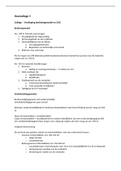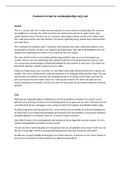
Obedience- Milgram’s Research
Key Terms
Obedience- A form of social influence in which an individual follows a
direct order. The person issuing the order is usually a figure of authority,
who has the power to punish when obedient behaviour is not forthcoming.
Milgram’s original obedience study
Milgram (1963) wanted to know why a high proportion of the German
people supported Hitler’s plan to slaughter over 6 million Jews in the
Holocaust.
Procedure
- 40 male participants, between the ages of 20 and 50 years, through
newspaper adverts and flyers in the post.
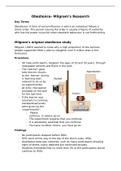
- The ‘teacher’ gave
fake electric shocks
to the ‘learner’ during
a ‘learning task’,
ordered to do so by
an experimenter.
- At 315v, the learner
pounded on the wall
for the last time.
- If the learner was
reluctant to continue,
standardised prods
were given by the
‘experimenter’:
→ Please
continue, or please go on
→ The experiment requires that you continue.
→ It is absolutely essential that you continue
→ You have no other choice, you must go on.
Findings
- No participants stopped before 300v.
- 65% went all the way to the top of the shock scale, 450v.
- Qualitative data was collected, such as many participants showing
signs of stress, many objected but continued anyway.
- Students estimated that no more than 3% of the participants would
continue to 450v.
Key Terms
Obedience- A form of social influence in which an individual follows a
direct order. The person issuing the order is usually a figure of authority,
who has the power to punish when obedient behaviour is not forthcoming.
Milgram’s original obedience study
Milgram (1963) wanted to know why a high proportion of the German
people supported Hitler’s plan to slaughter over 6 million Jews in the
Holocaust.
Procedure
- 40 male participants, between the ages of 20 and 50 years, through
newspaper adverts and flyers in the post.
- The ‘teacher’ gave
fake electric shocks
to the ‘learner’ during
a ‘learning task’,
ordered to do so by
an experimenter.
- At 315v, the learner
pounded on the wall
for the last time.
- If the learner was
reluctant to continue,
standardised prods
were given by the
‘experimenter’:
→ Please
continue, or please go on
→ The experiment requires that you continue.
→ It is absolutely essential that you continue
→ You have no other choice, you must go on.
Findings
- No participants stopped before 300v.
- 65% went all the way to the top of the shock scale, 450v.
- Qualitative data was collected, such as many participants showing
signs of stress, many objected but continued anyway.
- Students estimated that no more than 3% of the participants would
continue to 450v.