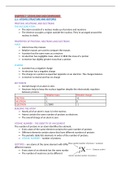
CHAPTER 2 - ATOMS,IONS AND COMPOUNDS
2.1 - ATOMIC STRUCTURE AND ISOTOPES
PROTONS, NEUTRONS, AND ELECTRONS
THE NUCLEAR ATOM
The atom consists of a nucleus made up of protons and neutrons
The electron occupies a region outside the nucleus. They’re arranged around the
nucleus in shells.
PROPERTIES OF PROTONS, NEUTRONS AND ELECTRONS
MASS
Atoms have tiny masses
Relative masses are used to compare the masses
A proton has the same mass as a neutron
An electron has negligible mass, about 1/1836 the mass of a proton
A neutron has slightly greater mass than a proton.
CHARGE
A proton has a negative charge
An electron has a negative charge
The charge on a proton is equal but opposite on an electron. The charges balance.
A neutron is neutral and has no charge
KEY POINTS
Overall charge of an atom is zero.
Neutrons help to keep the nucleus together despite the electrostatic repulsion
between protons.
Relative mass Relative charge
PROTON 1 +1
NEUTRON 1 0
ELECTRON 1/1840 -1
BUILDING THE ATOM
Nearly all of an atom’s mass is in the nucleus
Atoms contain the same number of protons as electrons
The overall charge of an atom is zero
ATOMIC NUMBER – THE IDENTITY OF AN ELEMENT
The number of protons in an atom identifies the element.
Every atom of the same element contains the same number of protons
Different elements contain atoms that have different numbers of protons
The periodic table lists elements in order of the number of protons.
ATOMIC NUMBER – number of protons
ISOTOPES – are atoms of the same element with different numbers of neutrons and
different masses.
Every atom of an element has the same number of protons
The number of neutrons can be different
,WILL ISOTOPES BEHAVE IN THE SAME WAY?
Physically – Small differences such as mp/bp and density, mass.
Chemically – Isotopes will react in the same way as they have the same number of
electrons.
WE COMPARE THE MASS OF AN ATOM TO THAT OF A STANDARD ISOTOPE…
Carbon-12 is used for this, and one atom of carbon-12 has a mass of 1.99 x 10 -26
Carbon-12 is exactly 12u.
1u is the mass of 1/12th of an atom of Carbon-12.
1u is approximately the mass of a proton or a neutron.
ATOMIC STRUCTURE OF IONS
ION – a charged atom
The number of electrons is different from the number of protons
POSITIVE IONS (CATIONS) – atoms with fewer electrons than protons.
Positive charge
NEGATIVE IONS (ANIONS) – atoms with more electrons than protons.
Negative charge
The transition metals can form several ions with different charges, a roman numeral is used
to indicate the charge on the ion.
2.2 – RELATIVE MASS
CARBON-12
How do chemists calculate the mass of atoms if some mass is lost to hold the nucleus
together?
A standard isotope is needed on which to base all atomic masses
Carbon-12 isotope used
MASS OF A CARBON-12 ISOTOPE – exactly 12 atomic mass units (12u)
STANDARD MASS FOR ATOMIC MASS is 1u, the mass of 1/12th of an atom of carbon-12
RELATIVE ISOTOPIC MASS - the mass of an isotope relative to 1/12 the of the mass of an
atom of carbon-12.
RELATIVE ATOMIC MASS Ar – the weighted mean mass of an atom of an element relative to
1/12th of the mass of an atom of carbon-12.
The weighted mean mass takes account of:
The percentage abundance of each isotope
The relative isotopic mass of each isotope
DETERMINATION OF RELATIVE ATOMIC MASSES
The percentage abundances of the isotopes in a sample of an element are found
experimentally using a MASS SPECTROMETER
HOW DOES A MASS SPECTROMETER WORK?
VAPORISATION
, The sample material is introduced into the spectrometer as a gas.
Solid samples first need to be heated and vapourised.
IONISATION
As the sample vapour passes across the electron beam, high-energy electrons in the
beam knock out electrons in the sample atoms, ionising them into positive ions.
ACCELERATION
An electric field is created using a series of negatively-charged plates. The positive
ions are attracted towards the plates and accelerated towards an electromagnet.
DEFLECTION
The electromagnet creates an electromagnetic field (EMF) that deflects the ions. The
amount by which they are deflected depends on their mass-to-charge ratio ratio:m/z.
Ions with low m/z are deflected a large amount.
Ions with a specific m/z are deflected to the collection plate.
Ions with a high m/z are deflected a small amount.
DETECTION
Once ions strike the collector they introduce a current, which is amplified and
converted into a mass spectrum.
The more ions of a particular m/z, the greater the current and the larger the peak.
2.3 - FORMULAE AND EQUATIONS
SIMPLE IONS
Atoms of metals on the left lose electrons to form CATIONS (positive ions)
Atoms of non-metals on the right gain electrons to form ANIONS (negative ions)
BINARY COMPOUND IONS – two elements
For all ionic compounds.
To name: use the name of the first element but change the ending of the second
element’s name to -ide.
For ionic compounds, the metal ion always comes first
POLYATOMIC IONS – where an ion contains more than one element bonded together.
e.g. hydroxide, carbonate, dichromate
WRITING FORMULAE FROM IONS
Overall charge is zero so charges must balance
sum of positive charges = sum of negative ions
The number of each ion present is shown as a subscript after the ion
The ionic charges are usually omitted in the completed formula
Brackets are used if there is more than one polyatomic ion
COMPOUNDS
Covalent compounds do not contain ions
STATE SYMBOLS!!!
(s) (l) (g) (aq)
2.1 - ATOMIC STRUCTURE AND ISOTOPES
PROTONS, NEUTRONS, AND ELECTRONS
THE NUCLEAR ATOM
The atom consists of a nucleus made up of protons and neutrons
The electron occupies a region outside the nucleus. They’re arranged around the
nucleus in shells.
PROPERTIES OF PROTONS, NEUTRONS AND ELECTRONS
MASS
Atoms have tiny masses
Relative masses are used to compare the masses
A proton has the same mass as a neutron
An electron has negligible mass, about 1/1836 the mass of a proton
A neutron has slightly greater mass than a proton.
CHARGE
A proton has a negative charge
An electron has a negative charge
The charge on a proton is equal but opposite on an electron. The charges balance.
A neutron is neutral and has no charge
KEY POINTS
Overall charge of an atom is zero.
Neutrons help to keep the nucleus together despite the electrostatic repulsion
between protons.
Relative mass Relative charge
PROTON 1 +1
NEUTRON 1 0
ELECTRON 1/1840 -1
BUILDING THE ATOM
Nearly all of an atom’s mass is in the nucleus
Atoms contain the same number of protons as electrons
The overall charge of an atom is zero
ATOMIC NUMBER – THE IDENTITY OF AN ELEMENT
The number of protons in an atom identifies the element.
Every atom of the same element contains the same number of protons
Different elements contain atoms that have different numbers of protons
The periodic table lists elements in order of the number of protons.
ATOMIC NUMBER – number of protons
ISOTOPES – are atoms of the same element with different numbers of neutrons and
different masses.
Every atom of an element has the same number of protons
The number of neutrons can be different
,WILL ISOTOPES BEHAVE IN THE SAME WAY?
Physically – Small differences such as mp/bp and density, mass.
Chemically – Isotopes will react in the same way as they have the same number of
electrons.
WE COMPARE THE MASS OF AN ATOM TO THAT OF A STANDARD ISOTOPE…
Carbon-12 is used for this, and one atom of carbon-12 has a mass of 1.99 x 10 -26
Carbon-12 is exactly 12u.
1u is the mass of 1/12th of an atom of Carbon-12.
1u is approximately the mass of a proton or a neutron.
ATOMIC STRUCTURE OF IONS
ION – a charged atom
The number of electrons is different from the number of protons
POSITIVE IONS (CATIONS) – atoms with fewer electrons than protons.
Positive charge
NEGATIVE IONS (ANIONS) – atoms with more electrons than protons.
Negative charge
The transition metals can form several ions with different charges, a roman numeral is used
to indicate the charge on the ion.
2.2 – RELATIVE MASS
CARBON-12
How do chemists calculate the mass of atoms if some mass is lost to hold the nucleus
together?
A standard isotope is needed on which to base all atomic masses
Carbon-12 isotope used
MASS OF A CARBON-12 ISOTOPE – exactly 12 atomic mass units (12u)
STANDARD MASS FOR ATOMIC MASS is 1u, the mass of 1/12th of an atom of carbon-12
RELATIVE ISOTOPIC MASS - the mass of an isotope relative to 1/12 the of the mass of an
atom of carbon-12.
RELATIVE ATOMIC MASS Ar – the weighted mean mass of an atom of an element relative to
1/12th of the mass of an atom of carbon-12.
The weighted mean mass takes account of:
The percentage abundance of each isotope
The relative isotopic mass of each isotope
DETERMINATION OF RELATIVE ATOMIC MASSES
The percentage abundances of the isotopes in a sample of an element are found
experimentally using a MASS SPECTROMETER
HOW DOES A MASS SPECTROMETER WORK?
VAPORISATION
, The sample material is introduced into the spectrometer as a gas.
Solid samples first need to be heated and vapourised.
IONISATION
As the sample vapour passes across the electron beam, high-energy electrons in the
beam knock out electrons in the sample atoms, ionising them into positive ions.
ACCELERATION
An electric field is created using a series of negatively-charged plates. The positive
ions are attracted towards the plates and accelerated towards an electromagnet.
DEFLECTION
The electromagnet creates an electromagnetic field (EMF) that deflects the ions. The
amount by which they are deflected depends on their mass-to-charge ratio ratio:m/z.
Ions with low m/z are deflected a large amount.
Ions with a specific m/z are deflected to the collection plate.
Ions with a high m/z are deflected a small amount.
DETECTION
Once ions strike the collector they introduce a current, which is amplified and
converted into a mass spectrum.
The more ions of a particular m/z, the greater the current and the larger the peak.
2.3 - FORMULAE AND EQUATIONS
SIMPLE IONS
Atoms of metals on the left lose electrons to form CATIONS (positive ions)
Atoms of non-metals on the right gain electrons to form ANIONS (negative ions)
BINARY COMPOUND IONS – two elements
For all ionic compounds.
To name: use the name of the first element but change the ending of the second
element’s name to -ide.
For ionic compounds, the metal ion always comes first
POLYATOMIC IONS – where an ion contains more than one element bonded together.
e.g. hydroxide, carbonate, dichromate
WRITING FORMULAE FROM IONS
Overall charge is zero so charges must balance
sum of positive charges = sum of negative ions
The number of each ion present is shown as a subscript after the ion
The ionic charges are usually omitted in the completed formula
Brackets are used if there is more than one polyatomic ion
COMPOUNDS
Covalent compounds do not contain ions
STATE SYMBOLS!!!
(s) (l) (g) (aq)