1 of 11
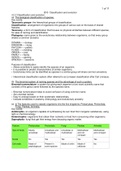
B10- Classification and evolution
4.2.2 Classification and evolution
(a) The biological classification of species.
Key words:
Taxonomic groups- the hierarchical groups of classification.
Classification- arrangement of organisms into groups of various size on the basis of shared
features
Taxonomy- a form of classification that focuses on physical similarities between different species,
for ease of naming and identification.
Phylogeny- name given to the evolutionary relationship between organisms, so that every group
shares a common ancestor.
DOMAIN——donkey
KINGDOM——kong
PHYLUM——prefers
CLASS——clubbing
ORDER——over
FAMILY——family
GENUS——gaming
SPECIES——sessions
Purpose of classification
• Allows scientists to easily identify the species of an organism.
• It is possible to predict characteristics of similar organisms.
• Evolutionary links can be identified as species in a similar group will share common ancestors.
• Hierarchical classification system often referred to as Linnaean classification after Carl Linnaeus.
(b) The binomial system of naming species and the advantage of such a system.
Binomial nomenclature- a system for giving each organism a two-word scientific name that
consists of the genus name followed by the species name.
• Binomial nomenclature helps to avoid confusion of using common name.
• Are universal names.
• Easy to arrange based on their systematic relationships.
• Indicate similarities in anatomy, embryology and evolutionary ancestry.
(c) (i) The features used to classify organisms into the five kingdoms: Prokaryotae, Protoctista,
Fungi, Plantae, Animalia.
Key words:
Autotrophic- an organism capable of synthesising its own food from inorganic substances, using
light or chemical energy.
Heterotrophic- organisms that obtain their nutrients or food from consuming other organisms.
Saprophytic- fungi that get their energy from decaying organic matter.
Feature Prokaryotae Protoctista Fungi Plantae Animalia
Type of body Mostly Unicellular and Unicellular or Multicellular Multicellular
unicellular multicellular multicellular and not and compact
compact
Nuclei No Yes Yes Yes Yes
Cell walls Made of Present in Made of chitin Made of No
peptidoglycan some species cellulose
, 2 of 11
Organelles and No membrane- Has Has Has Has
fibres bound membrane- membrane- membrane- membrane-
organelles bound bound bound bound
organelles organelles organelles organelles
Type of nutrition Autotrophic and Autotrophic and Autotrophic/ Autotrophic Heterotrophic
heterotrophic heterotrophic saprophytic
Motility (motion) Some bacteria Some have No No Muscle tissue
have flagella undulipodia or
cilia
Nervous No No No No Yes
coordination
Examples Cyanobacteria Amoeba, Algae Yeast Flowering Mammals,
plants, ferns anemones
(ii) The evidence that has led to new classification systems, such as the three domains of life,
which clarifies relationships.
To include the more recent use of similarities in biological molecules and other genetic evidence
AND
details of the three domains and a comparison of the kingdom and domain classification systems.
Recent uses of similarities in biological molecules and other genetic evidence
• By comparing the similarities in the DNA and proteins of different species, scientists can
discover the evolutionary relationship between them.
• E.g. haemoglobin has four polypeptide chains, each made up of a fixed number of amino acids.
Human haemoglobin differs by only one amino acid in chimpanzees and three from gorillas. The
structure is remarkably similar, indicating a common ancestry.
The third domain
• Until 1990 there were two accepted domains- prokaryotes and eukaryotes.
• Uses differences in the sequences of nucleotides in the cell’s ribosomal RNA (rRNA), as well as
the cells’ membrane lipid structure and their sensitivity to antibiotics.
• Research by Carl Woese on RNA suggested that prokaryotes should be split into two groups-
bacteria and archaea as there were fundamental differences between the two and the archaea
have some similarities to eukaryotic.
Differences between the three domains
• Eukarya have 80s ribosomes and RNA polymerase contains 12 proteins.
• Archaea have 70s ribosomes and have RNA polymerase which is made from 8-12 proteins.
• Bacteria have 70s ribosomes and RNA polymerase has 5 proteins.
• Rather than following 5 kingdoms as previously we now split Prokaryotae into two kingdoms,
Eubacteria and Archaebacteria.
Early systems
• First known attempt at classification was by Aristotle who classified organisms as plants or
animals. He further classified by where they lived.
• Until relatively recently the animal kingdom contained single cell organisms that had animal-like
features and some that had plant-like features. Modern microscopes indicated that the species
often had features of both. Fungi were also a problem as they didn't move like plants but fed in
a completely different way. This led to the development of the 5 kingdom system.
Archaebacteria Eubacteria
- Known as ancient bacteria - Known as true bacteria
- Live in extreme environments - Found in all environments
- E.g. methanogens live in anaerobic
environments
B10- Classification and evolution
4.2.2 Classification and evolution
(a) The biological classification of species.
Key words:
Taxonomic groups- the hierarchical groups of classification.
Classification- arrangement of organisms into groups of various size on the basis of shared
features
Taxonomy- a form of classification that focuses on physical similarities between different species,
for ease of naming and identification.
Phylogeny- name given to the evolutionary relationship between organisms, so that every group
shares a common ancestor.
DOMAIN——donkey
KINGDOM——kong
PHYLUM——prefers
CLASS——clubbing
ORDER——over
FAMILY——family
GENUS——gaming
SPECIES——sessions
Purpose of classification
• Allows scientists to easily identify the species of an organism.
• It is possible to predict characteristics of similar organisms.
• Evolutionary links can be identified as species in a similar group will share common ancestors.
• Hierarchical classification system often referred to as Linnaean classification after Carl Linnaeus.
(b) The binomial system of naming species and the advantage of such a system.
Binomial nomenclature- a system for giving each organism a two-word scientific name that
consists of the genus name followed by the species name.
• Binomial nomenclature helps to avoid confusion of using common name.
• Are universal names.
• Easy to arrange based on their systematic relationships.
• Indicate similarities in anatomy, embryology and evolutionary ancestry.
(c) (i) The features used to classify organisms into the five kingdoms: Prokaryotae, Protoctista,
Fungi, Plantae, Animalia.
Key words:
Autotrophic- an organism capable of synthesising its own food from inorganic substances, using
light or chemical energy.
Heterotrophic- organisms that obtain their nutrients or food from consuming other organisms.
Saprophytic- fungi that get their energy from decaying organic matter.
Feature Prokaryotae Protoctista Fungi Plantae Animalia
Type of body Mostly Unicellular and Unicellular or Multicellular Multicellular
unicellular multicellular multicellular and not and compact
compact
Nuclei No Yes Yes Yes Yes
Cell walls Made of Present in Made of chitin Made of No
peptidoglycan some species cellulose
, 2 of 11
Organelles and No membrane- Has Has Has Has
fibres bound membrane- membrane- membrane- membrane-
organelles bound bound bound bound
organelles organelles organelles organelles
Type of nutrition Autotrophic and Autotrophic and Autotrophic/ Autotrophic Heterotrophic
heterotrophic heterotrophic saprophytic
Motility (motion) Some bacteria Some have No No Muscle tissue
have flagella undulipodia or
cilia
Nervous No No No No Yes
coordination
Examples Cyanobacteria Amoeba, Algae Yeast Flowering Mammals,
plants, ferns anemones
(ii) The evidence that has led to new classification systems, such as the three domains of life,
which clarifies relationships.
To include the more recent use of similarities in biological molecules and other genetic evidence
AND
details of the three domains and a comparison of the kingdom and domain classification systems.
Recent uses of similarities in biological molecules and other genetic evidence
• By comparing the similarities in the DNA and proteins of different species, scientists can
discover the evolutionary relationship between them.
• E.g. haemoglobin has four polypeptide chains, each made up of a fixed number of amino acids.
Human haemoglobin differs by only one amino acid in chimpanzees and three from gorillas. The
structure is remarkably similar, indicating a common ancestry.
The third domain
• Until 1990 there were two accepted domains- prokaryotes and eukaryotes.
• Uses differences in the sequences of nucleotides in the cell’s ribosomal RNA (rRNA), as well as
the cells’ membrane lipid structure and their sensitivity to antibiotics.
• Research by Carl Woese on RNA suggested that prokaryotes should be split into two groups-
bacteria and archaea as there were fundamental differences between the two and the archaea
have some similarities to eukaryotic.
Differences between the three domains
• Eukarya have 80s ribosomes and RNA polymerase contains 12 proteins.
• Archaea have 70s ribosomes and have RNA polymerase which is made from 8-12 proteins.
• Bacteria have 70s ribosomes and RNA polymerase has 5 proteins.
• Rather than following 5 kingdoms as previously we now split Prokaryotae into two kingdoms,
Eubacteria and Archaebacteria.
Early systems
• First known attempt at classification was by Aristotle who classified organisms as plants or
animals. He further classified by where they lived.
• Until relatively recently the animal kingdom contained single cell organisms that had animal-like
features and some that had plant-like features. Modern microscopes indicated that the species
often had features of both. Fungi were also a problem as they didn't move like plants but fed in
a completely different way. This led to the development of the 5 kingdom system.
Archaebacteria Eubacteria
- Known as ancient bacteria - Known as true bacteria
- Live in extreme environments - Found in all environments
- E.g. methanogens live in anaerobic
environments