Test Bank Exam 2 Public Policy
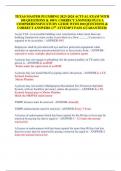
Test Bank1 for Exam 2 (Chapters 6-8) Community Nutrition in Action 6e True/False2 1. Before a problem can be addressed, a majority of people must be convinced that it is public issue. a. true b. false ANS: a REF: 172 OBJ: 6.1 2. Using the Internet and other media sources is not an appropriate method of building community awareness of an issue. a. true b. false ANS: b REF: 173-174 OBJ: 6.1 3. The purpose of policy termination is to determine whether a program is achieving its stated goals and reaching its intended audience. a. true b. false ANS: b REF: 178 OBJ: 6.1 4. Evaluation of a public policy needs to occur after the policy has been terminated. a. true b. false ANS: b REF: 177-178 OBJ: 6.1 5. A community nutritionist will make policy decisions in his or her practice. a. true b. false ANS: a REF: 178 OBJ: 6.1 6. The progression of a bill that originated in the House is significantly different than the progression of the bill originated in the Senate. a. true b. false ANS: b REF: 180 OBJ: 6.2 1 By Melanie Tracy Burns of Eastern Illinois University 2 ANS = correct answer; REF = page reference; OBJ = learning objective 7. While Congress sets the policy, the enforcing agencies, such as the USDA and DHHS, are responsible for interpreting the law and providing detailed rules that put the policy into place. a. true b. false ANS: a REF: 180 OBJ: 6.2 8. For entitlement programs, Congress provides whatever money is required from year to year to maintain benefits for eligible people. a. true b. false ANS: a REF: 183 OBJ: 6.3 9. Before money can be released to a program, an appropriation bill must be passed. a. true b. false ANS: a REF: 184 OBJ: 6.3 10. Medical nutrition therapy is a service provided by a registered dietitian that includes counseling, nutrition support, and nutrition assessment and screening to improve people’s health and quality of life. a. true b. false ANS: a REF: 185 OBJ: 6.4 11. Licensure is a state regulatory action that establishes and enforces minimum competency standards for individuals working in regulated professions, such as dietetics. a. true b. false ANS: a REF: 188 OBJ: 6.4 12. All states have state licensure laws for practicing dietitians. a. true b. false ANS: b REF: 188 OBJ: 6.4 13. Currently, food safety efforts are consolidated into one independent agency. a. true b. false ANS: b REF: 189 OBJ: 6.4 (Government Agencies with Roles Related to Food Safety: Food and Drug Administration (FDA), USDA Food Safety and Inspection Service (FSIS), NOAA Seafood Inspection Program, Environmental Protection Agency (EPA), Alcohol and Tobacco Tax and Trade Bureau (TTB), Federal Trade Commission (FTC), Center for Disease Control (CDC), US Customs and Border Protection.) 14. A functional food is one that may provide health benefits beyond basic nutrition. a. true b. false ANS: a REF: 191 OBJ: 6.4 15. In the grassroots pyramid, there are more power players than fence sitters. a. true b. false ANS: b REF: 193 OBJ: 6.5 16. The Academy of Nutrition and Dietetics has a PAC (political action committee) that has the legal authority to raise funds to support a given Presidential candidate. a. true b. false ANS: a REF: 194 OBJ: 6.6 17. Bread for the World is an example of trade association interest group. a. true b. false ANS: b REF: 194 OBJ: 6.6 ( A trade association, is an organization founded and funded by business that operate in a specific industry.) 18. Lobbying is an ineffective method of communicating with elected officials. a. true b. false ANS: b REF: 195 OBJ: 6.6 19.E-mailing your legislators can be an effective way to communicate with them. a. true b. false ANS: a REF: 198 OBJ: 6.5 Multiple Choice 1. The first step in the policy cycle is a. formulation of alternatives. b. policy implementation. c. problem definition and agenda setting. d. policy adoption. ANS: c REF: 172 OBJ: 6.1 2. is the process in which people concerned about an issue work to bring the issue to the attention of government officials. a. Agenda setting b. Entitlement c. Policy making d. Policy adoption ANS: a REF: 172 OBJ: 6.1 3. Which is the most creative phase of the policy-making process? a. Formulation of alternatives b. Policy adoption c. Policy termination d. Problem definition and agenda setting ANS: a REF: 174 OBJ: 6.1 4. In the United States, policy is formulated by which branch(es) of the federal government? a. Executive b. Judicial c. Legislative d. All of these ANS: d REF: 174 OBJ: 6.1 5. In which phase of the policy-making process are tools/instruments for dealing with the problem chosen? a. Formulation of alternatives b. Policy adoption c. Policy termination d. Problem definition and agenda setting ANS: b REF: 174 OBJ: 6.1 6. What two agencies sanction most nutrition programs at the federal level? a. USDA and FDA b. DHHS and USDA c. DHHS and NIH d. NIH and FDA ANS: b REF: 174-177 OBJ: 6.1 7. The overall mission of the Department of Health and Human Services is to: a. reduce hunger in America and in other parts of the world. b. support the production of agriculture. c. ensure a safe, affordable, nutritious, and accessible food supply. d. promote, protect, and advance the nation’s physical and mental health. ANS: d REF: 174|175 OBJ: 6.1 8. The Food and Drug Administration is an agency of the a. National Institutes of Health. b. Food and Nutrition Service. c. Department of Health and Human Services. d. Department of Agriculture. ANS: c REF: 174|175 OBJ: 6.1 9. Which of the following agencies is not part of the U.S. Department of Health and Human Services? a. Centers for Disease Control and Prevention b. Food and Drug Administration c. National Institutes of Health d. Food and Nutrition Service ANS: d REF: 175|177 OBJ: 6.1 10. The USDA agency responsible for administering the Supplemental Nutrition Assistance Program is the a. Food Safety and Inspection Service. b. Health Resources and Services Administration. c. National Institutes of Health. d. Food and Nutrition Service. ANS: d REF: 177 OBJ: 6.1 11. Which federal department houses the Agricultural Research Service, the agency that oversees research related to nutrient needs, food trends, composition of the diet, nutrient interactions, and bioavailability of nutrients? a. Department of Health and Human Services b. Department of Agriculture c. National Academy of Sciences d. Food and Drug Administration ANS: b REF: 177 OBJ: 6.1 12. Which is not a street-level bureaucrat? a. Police officer b. School teacher c. Judge d. Your state Senator ANS: d REF: 178 OBJ: 6.1 13. Rules for day-to-day operation that are established so that laws can be carried out are called a. legislation. b. bills. c. appropriations. d. regulations. ANS: d REF: 180 OBJ: 6.2 14. The rules of day-to-day operations necessary to carry out laws are found in the a. Federal Register. b. Catalog of Federal Assistance. c. Congressional Journal. d. Congressional Record. ANS: a REF: 180 OBJ: 6.2 15. After a bill is introduced in either body of Congress, the bill is sent a. to the President. b. from the House to the Senate or vice versa. c. to a committee. d. to the systemic agenda. ANS: c REF: 180-181 OBJ: 6.2 16. After a bill has been introduced in Congress, the bill is published in the a. Federal Register. b. Code of Federal Regulations. c. White House Journal. d. Congressional Record. ANS: d REF: 181 OBJ: 6.2 17. Once a bill has been sent from the Congress to the President, the President may a. sign it into law, at which point it becomes an act. b. veto it, which means it cannot become law. c. allow it to become law without his signature, at which point it is given an “H.R.” or “S.” designation. d. All of the above ANS: a REF: 181 OBJ: 6.2 18. The bill authorizing the WIC supplemental feeding program became Public Law 92-433. The numbers 92-433 stand for: a. bill number 433, approved by a margin of 92. b. bill number 92, enacted by the 433rd Congress. c. bill number 433, enacted by the 92nd Congress. d. bill number 92, approved by 433 votes. ANS: c REF: 181 OBJ: 6.2 19. Medical nutrition therapy for which disease state is currently reimbursed by Medicare? a. Hypertension b. Obesity c. Diabetes d. Pre-diabetes ANS: c REF: 187 OBJ: 6.4 20. What is the most important time for constituent involvement in the legislative process? a. Bill introduction b. Committee stage c. Floor stage d. Subcommittee stage ANS: d REF: 182 OBJ: 6.2 21. In the federal budget process, the amounts of money that government agencies are allowed to spend in implementing their programs are called a. budget revenue. b. budget outlays. c. budget authority. d. entitlements. ANS: c REF: 183 OBJ: 6.3 22. The federal fiscal year runs from a. January 1 to December 31. b. July 1 to June 30. c. September 1 to August 31. d. October 1 to September 30. ANS: d REF: 183 OBJ: 6.3 23. Which is not an entitlement? a. Social Security benefits b. Medicare benefits c. Agricultural subsidies d. Funding for elderly nutrition programs ANS: d REF: 183 OBJ: 6.3 24. A(n) defines the scope of a program and sets a maximum or ceiling on how much money can be spent on it. a. appropriation b. authorization c. budget overlay d. budget authority ANS: b REF: 184 OBJ: 6.3 25. In the House of Representatives, which committee has jurisdiction over revenue bills? a. Executive Committee b. Economic Development Committee c. Ways and Means Committee d. Economic Stimulus Committee ANS: c REF: 184 OBJ: 6.3 26. Which of the following is not a public policy priority issue for the Academy of Nutrition and Dietetics? a. Aging b. Child nutrition c. Nutrition monitoring and research d. Increased funding for WIC ANS: d REF: 187 OBJ: 6.4 27. Which of the following federal agencies is not involved in food safety? a. Environmental Protection Agency b. Centers for Disease Control and Prevention c. Federal Trade Commission d. Food and Nutrition Service ANS: d REF: 189 OBJ: 6.4 28. means talking to public officials and legislators to persuade them to consider information you provide on an issue you believe is important. a. Policy making b. Lobbying c. PACs d. Coalition building ANS: b REF: 195 OBJ: 6.5|6.6 29. Which of the following is an appropriate method of communicating with elected officials? a. Lobbying b. Sending an e-mail c. Making a telephone call d. Sending a letter e. All of these are appropriate methods. ANS: e REF: 195-198 OBJ: 6.5|6.6 30. Which of the following should be avoided when issuing a press release to the media? a. Writing the release in first person b. Keeping the content of the release brief c. Making a strong opening statement d. Sending a fact sheet to accompany the release ANS: a REF: 201 OBJ: 6.7 Test Bank3 for Community Nutrition in Action 6e Chapter 7 – A National Nutrition Agenda for the Public’s Health 1. The determination of the adverse effects of excessive amounts of nutrients is an example of nutrition monitoring. a. true b. false ANS: b REF: 208 OBJ: 7.1 2. A systematic method of data collection to prevent the spread of disease in the U.S. has only been in place for the past 50 years. a. true b. false 3 By Melanie Tracy Burns of Eastern Illinois University ANS: b REF: 208 OBJ: 7.1 3. The NNMRRP includes more than 50 surveillance activities that monitor and evaluate the health and nutritional status of Americans. a. true b. false ANS: a REF: 209 OBJ: 7.1 4. The health examination portion of the current NHANES is performed in one of 12 locations throughout the U.S. a. true b. false ANS: b REF: 215 OBJ: 7.2 5. In 2000, the NHANES and CSFII merged into a single, more cost-effective survey. a. true b. false ANS: a REF: 215 OBJ: 7.2 6. The Department of Health and Human Services compiles and disseminates data on the nutrient composition of foods. a. true b. false ANS: b REF: 218 OBJ: 7.2 7. Food disappearance data represents the food that “disappears” into the marketplace and is available for human consumption. a. true b. false ANS: a REF: 218 OBJ: 7.2 8. The Institute of Medicine (IOM) acts as an adviser to the federal government on issues of medical care, research, and education. a. true b. false ANS: a REF: 220 OBJ: 7.3 9. The Food and Nutrition Board is responsible for evaluating emerging knowledge of nutrient requirements and (with Health Canada) establishing the DRIs. a. true b. false ANS: a REF: 220 OBJ: 7.3 10. The focus of the nutrition and weight status objectives for Healthy People 2020 was expanded to include a broader range of policies and environmental factors that support eating a healthful diet and maintaining a healthy body weight. a. true b. false ANS: a REF: 222 OBJ: 7.1 11. Nongovernment, nonprofit health organizations issue dietary recommendations. a. true b. false ANS: a REF: 227 OBJ: 7.4 12. Food group plans promoted in the first half of the 20th century focused on limiting of key nutrients, such as fat and sodium. a. true b. false ANS: b REF: 228 OBJ: 7.4 13. Even with the abundance of research that has been conducted, there is still a considerable gap between current nutrition recommendations and consumers’ practices. a. true b. false ANS: a REF: 230 OBJ: 7.4 14. A community nutritionist will need to break down the policy into applicable food choices for the public. a. true b. false ANS: a REF: 230-232 OBJ: 7.4 Multiple Choice 1. The United States utilizes a approach with no single Federal Nutrition Office coordinating its nutrition policy efforts. a. centralized b. focused c. decentralized d. food assistance ANS: c REF: 207 OBJ: 7.1 2. The National Nutrition Monitoring and Related Research Program is operated by a. the USDA. b. the DHHS. c. the Centers for Disease Control and Prevention. d. a and b e. b and c ANS: d REF: 209 OBJ: 7.1 3. The nation’s first comprehensive nutrition survey was the a. Ten-State Nutrition Survey. b. CSFII. c. NHANES I. d. Total Diet Study. ANS: a REF: 209 OBJ: 7.1 4. A set of nationwide guidelines that specify how the nutritional needs of the population will be met is a. food disappearance data. b. a national nutrition policy. c. nutrition screening. d. nutrition assessment. ANS: b REF: 206 OBJ: 7.1 5. Which of the following surveys uses clinical, anthropometric, biochemical, and dietary data to assess the nutrition status of Americans? a. American Epidemiological Survey b. Ten-State Nutrition Survey c. National Health and Nutrition Examination Surveys d. Nationwide Food Consumption Surveys ANS: c REF: 214 OBJ: 7.2 6. The NHANES III assessed dietary intakes of its participants by using a. 24-hour recalls. b. 3-day food records. c. food frequency questionnaires. d. a and c e. b and c ANS: d REF: 214 OBJ: 7.2 7. The first National Health and Nutrition Examination Survey (HNANES I) was conducted in a. . b. . c. . d. . ANS: b REF: 214 OBJ: 7.2 8. The NHANES series a. uses a sample that is not representative of the civilian, noninstitutionalized population. b. uses a sample that has not had a good response rate. c. influenced the development of the CDC Growth Charts in 2000. d. is poorly designed and is in need of revision. ANS: c REF: 214 OBJ: 7.2 9. The sample studied in the HHANES included a. all Mexican Americans living in America. b. all Mexican Americans, Puerto Ricans, and Cubans living in America over the age of 2. c. Mexican Americans, Puerto Ricans, and Cubans living in select areas of the U.S. d. None of these ANS: c REF: 214 OBJ: 7.2 10. Which of the following is not a health measurement taken during NHANES testing? a. Bone density b. Fitness test c. Physician’s exam d. Protein in the urine ANS: d REF: 215|217 OBJ: 7.2 11. The has the responsibility for processing the dietary data derived from the food recalls within the What We Eat in America survey. a. National Center for Health Statistics b. Agricultural Research Service c. National Institutes of Health d. Centers for Disease Control and Prevention ANS: b REF: 215 OBJ: 7.2 12. The is the dietary interview component of the current NHANES program. a. Diet and Health Knowledge Survey b. Total Diet Survey c. What We Eat in America Survey d. Youth Risk Behavior Survey ANS: c REF: 215|217 OBJ: 7.2 13. Which of the following statements about the Total Diet Study is false? a. The survey is conducted annually by the FDA. b. It is designed to assess organic and elemental contaminants of the U.S. food supply. c. The Selected Minerals in Food Survey is a component. d. The TDS only focuses on the food consumption by children and adolescents. ANS: d REF: 217 OBJ: 7.2 14. Which of the following is not an example of a survey used to determine knowledge, attitudes, and behaviors related to nutrition? a. Behavioral Risk Factor Surveillance System b. Diet and Health Knowledge Survey c. Weight Loss Practices Survey d. Nutrition Assessment and Practices Survey ANS: d REF: 217 OBJ: 7.2 15. The primary purpose of the National Nutrition Monitoring and Related Research Program is to a. provide health care to the community. b. obtain information needed to ensure the population’s adequate nutrition. c. establish Dietary Reference Intakes. d. educate the public about nutrition issues. ANS: b REF: 218 OBJ: 7.2 16. All of the following statements regarding food disappearance data are accurate except: a. they are determined by the USDA’s Food Supply Series surveys. b. they exclude amounts of food which are exported. c. they represent food that is available for human consumption. d. they have been available annually since 1939. ANS: d REF: 218 OBJ: 7.2 17. Data collected for monitoring purposes are used for a. health planning. b. program management and evaluation. c. intervention efforts to prevent acute food shortages. d. All of these ANS: d REF: 218 OBJ: 7.2 18. Acceptable uses of the Dietary Reference Intakes include all of the following except a. establishment of standards for food assistance programs. b. design of nutrition education programs. c. development of new food products. d. assessment of an individual’s overall health status. ANS: d REF: 220 OBJ: 7.3|7.4 19. Which of the following Dietary Reference Intake values represents the amount of a nutrient that is estimated to meet the requirement for the nutrient in half of the people of a specific age and gender? a. Adequate Intake b. Estimated Average Requirement c. Recommended Dietary Allowance d. Tolerable Upper Intake Level ANS: b REF: 220 OBJ: 7.3 20. Which of the following behaviors is not one of those identified as linked with leading causes of death in the U.S., and thus a focus of the BRFSS? a. Eating a high-fiber, low-fat diet b. Not getting enough physical activity c. Using tobacco and alcohol d. Not getting medical services known to save lives ANS: a REF: 221 OBJ: 7.2 21. Which of the following nutrients has/have been classified as current public health issues as demonstrated by several nutrition surveys? a. Calcium b. Iron c. Thiamin d. a and b e. b and c ANS: d REF: 222 OBJ: 7.1 22. For which of the following Healthy People 2010 targets was there some improvement? a. Calcium intake b. Whole grain intake c. Food security d. Obesity prevalence ANS: a REF: 222 OBJ: 7.1 23. The Dietary Guidelines for Americans are revised every years. a. 3 b. 5 c. 7 d. 10 ANS: b REF: 225 OBJ: 7.4 24. The current edition of the Dietary Guidelines for Americans has key recommendations that are grouped into general topics. a. 23, 18 b. 41, 23 c. 41, 18 d. 29, 4 ANS: d REF: 225 OBJ: 7.4 25. Which of the following is not characteristic of the Dietary Guidelines for Americans? a. They emphasize variety. b. They include general guidelines for physical activity. c. They emphasize calorie control. d. They apply to a single meal or food. ANS: d REF: 226-227 OBJ: 7.4 26. Which of the following is not an example of putting the Dietary Guidelines for Americans into action? a. Eat more fish weekly. b. Eat fewer whole grains daily. c. Eat foods rich in vitamins and minerals. d. Eat more low-fat dairy products. ANS: b REF: 226|230-232 OBJ: 7.4 27. How would you rate the effectiveness of the dietary guidance information disseminated by the U.S. government to the population? a. It has been ineffective, and has resulted in poorer dietary habits among consumers by failing to address the need to limit dietary fat and sodium b. It has been so effective that it has prevented trends such as eating away from home or increased portion sizes from affecting consumers’ nutritional status c. There is still much room for improvement, because a considerable gap remains between current nutrition recommendations and consumers’ practices ANS: c REF: 230 OBJ: 7.4 28. The current food guidance system is called a. the Basic Four Food Groups. b. the Food Guide Pyramid. c. MyPyramid. d. MyPlate. ANS: d REF: 230 OBJ: 7.4 29. In order for the Dietary Guidelines for Americans to be implemented, they must be a. glamorized by the media. b. translated into food-specific behaviors for consumers. c. compared with the Dietary Reference Intakes. d. reduced in number so they are easier to remember. ANS: b REF: 230-232 OBJ: 7.4 30. One of the key recommendations from the Dietary Guidelines is: “Reduce daily sodium intake to less than 2,300 mg per day.” This could be translated into a food-specific behavior such as: a. Be able to read food product labels. b. Choose whole, fresh foods instead of processed foods. c. Know how to adapt recipes. d. All of the above ANS: d REF: 231-232 OBJ: 7.4 True/False4 1. A BMI of 30 translates into about 30 extra pounds for an adult. a. true b. false ANS: a REF: 245 OBJ: 8.1 2. Extremely obese is the same as obese. a. true b. false ANS: b REF: 245 OBJ: 8.1 4 ANS = correct answer; REF = page reference; OBJ = learning objective 3. Excessive body weight in children is associated with increased morbidity and mortality just as in adults. a. true b. false ANS: a REF: 246 OBJ: 8.2 4. As weight is often underreported in self-report surveys, we can assume that the actual prevalence of overweight and obesity is somewhat higher than that ascertained from BRFSS data. a. true b. false ANS: a REF: 246 OBJ: 8.3 5. The total economic cost of overweight and obesity in the United States is $270 billion a year. a. true b. false ANS: a REF: 248 OBJ: 8.2 6. Mexican-Americans have a higher prevalence rate for metabolic syndrome than whites. a. true b. false ANS: a REF: 249 OBJ: 8.2 7. Research suggests that childhood depression is associated with an increased BMI in adulthood. a. true b. false ANS: a REF: 250 OBJ: 8.4 8. An obesogenic environment is one that promotes weight gain. a. true b. false ANS: a REF: 250 OBJ: 8.4 9. All energy-dense foods are associated with weight gain. a. true b. false ANS: b REF: 251 OBJ: 8.4 10. Physical activity data trends are not as clear as those related to energy intake due to a lack of adequate surveillance activities. a. true b. false ANS: a REF: 251 OBJ: 8.4 11. Food portion sizes have remained steady over the past 50 years. a. true b. false ANS: b REF: 253 OBJ: 8.4 12. There is an inverse relationship between the income level and obesity prevalence within a given neighborhood, state, or legislative district. a. true b. false ANS: a REF: 255 OBJ: 8.4 13. Public health interventions target lifestyle approaches, such as dietary changes and physical activity. a. true b. false ANS: a REF: 256 OBJ: 8.5|8.6 14. Most community-based weight-loss initiatives have been effective. a. true b. false ANS: b REF: 256 OBJ: 8.5 15. A family component is thought to be of importance in obesity prevention interventions targeting young children. a. true b. false ANS: a REF: 257 OBJ: 8.5 16. The Let’s Move! campaign is the most significant and widespread governmental public awareness campaign for preventing childhood obesity. a. true b. false ANS: a REF: 260 OBJ: 8.6 17. One of the major components of the We Can! campaign initiated by the National Heart, Lung, and Blood Institute is to increase physical activity and decrease screen time. a. true b. false ANS: a REF: 262 OBJ: 8.6 18. A low Healthy Eating Index (HEI) score is associated with overweight and obesity. a. true b. false ANS: a REF: 263 OBJ: 8.6 19. The USDA oversees deceptive marketing of foods and food-related products. a. true b. false ANS: b REF: 264 OBJ: 8.6 20. The Patient Protection and Affordable Care Act of 2010 requires certain restaurants to list calorie content information for standard menu items on menu boards. a. true b. false ANS: a REF: 266 OBJ: 8.6 Multiple Choice 1. Obesity in adults is defined as a BMI a. less than 24. b. between 25 and 29.9. c. greater than 30. d. Obesity in adults is not defined by using BMI. ANS: c REF: 244-245 OBJ: 8.1 2. Overweight in adults is defined as a BMI a. less than 24. b. between 25 and 29.9. c. greater than 30. d. Overweight in adults is not defined by using BMI. ANS: b REF: 244-245 OBJ: 8.1 3. Obesity for adults is divided into classes based on the degree of obesity. a. 2 b. 3 c. 4 d. 5 ANS: b REF: 245 OBJ: 8.1 4. , or body fat distributed around the abdomen, is more highly associated with metabolic disturbances and health problems. a. Subcutaneous fat b. Central obesity c. Gynoid fat d. Peripheral obesity ANS: b REF: 245 OBJ: 8.1 5. Excessive fat is indicated by a waist circumference of for men and for women. a. 30 inches, 25 inches b. 30 inches, 25 inches c. 40 inches, 35 inches d. None of these ANS: c REF: 245 OBJ: 8.1 6. Obesity in children is defined as having a BMI a. below the 50th percentile on the CDC growth chart. b. between the 85th and 95th percentile on the CDC growth chart. c. at or above the 95th percentile on the CDC growth chart. d. BMI is not used to define obesity in children. ANS: c REF: 245 OBJ: 8.1 7. Overweight in children is defined as having a BMI a. below the 50th percentile on the CDC growth chart. b. between the 85th and 95th percentile on the CDC growth chart. c. at or above the 95th percentile on the CDC growth chart. d. BMI is not used to define overweight in children. ANS: b REF: 245 OBJ: 8.1 8. The use of the BMI calculation is limited in a. those who are underweight. b. those who live in developing countries. c. children. d. the older population. ANS: d REF: 245 OBJ: 8.1 9. Which of the following national surveys is/are used most frequently to assess obesity data for Americans? a. BRFSS b. CSFII c. NHANES d. a and c e. b and c ANS: d REF: 246 OBJ: 8.3 10. Between and , in U.S. adults, the prevalence of a. both overweight and obesity increased. b. obesity increased while the prevalence of overweight remained stable. c. obesity increased while the prevalence of overweight decreased. d. obesity remained stable while the prevalence of overweight increased. ANS: b REF: 246 OBJ: 8.2 11. Which region of the United States has the highest rate for obesity in children? a. East b. Midwest c. South d. West ANS: c REF: 246 OBJ: 8.2 12. Self-report weight and height are classified as measures. a. objective b. outcome c. subjective d. desirable ANS: c REF: 246 OBJ: 8.3 13. Which of the following states have obesity prevalence rates ≥ 30 percent? a. Illinois and Indiana b. Mississippi and Tennessee c. West Virginia and Indiana d. Alabama and Texas e. b and d ANS: e REF: 247 OBJ: 8.2 14. Which of the following is characteristic of the Youth Risk Behavior Surveillance System? a. Data are self-reported. b. Data are limited to junior high and high school students. c. Data provide prevalence of obesity by high school. d. a and b ANS: a REF: 248 OBJ: 8.3 15. Compared to people of normal weight, obese people spent approximately more on health care costs in 2001. a. 15% b. 27% c. 32% d. 37% ANS: d REF: 248 OBJ: 8.2 16. Of the increased cost of health care for obese individuals, the largest single contributor to the health care cost is for treatment related to a. diabetes. b. cardiovascular disease. c. renal disease. d. hyperlipidemia. ANS: b REF: 248-249 OBJ: 8.2 17. Efforts to control obesity at the public policy level in the United States are a. in need of improvement. b. sufficient. c. over-funded. d. successful. ANS: a REF: 244|250 OBJ: 8.6 18. is the largest influence on energy expenditure. a. Basal metabolic rate b. Body mass index c. Thermic effect of food d. Volitional physical activity ANS: a REF: 250 OBJ: 8.4 19. National data suggest that calorie consumption has increased by calories daily since 1985. a. 100 b. 200 c. 300 d. 400 ANS: c REF: 251 OBJ: 8.4 20. is the amount of energy able to be metabolized per unit weight or volume of food. a. Nutrient density b. Food weight c. Energy density d. Energy expenditure ANS: c REF: 251 OBJ: 8.4 21. Increased consumption of accounts for the greatest proportion of the overall increase in U.S. energy intake. a. alcohol b. carbohydrates c. fat d. protein ANS: b REF: 251 OBJ: 8.4 22. Which of the following represents the activities contributing most to energy expenditure (excluding sleep), ranked from most to least, for adults participating in the National Human Activity Pattern Survey? a. Driving a car, office work, watching TV b. Office work, watching TV, driving a car c. Housework, yard work, watching TV d. Walking, housework, driving a car ANS: a REF: 252 OBJ: 8.4 23. Which of the following environmental factors has not been linked to obesity? a. Increased portion sizes b. Poverty c. Urban sprawl d. Availability of interactive video games, such as the Wii or X-box ANS: d REF: 253-255 OBJ: 8.4 24. Which of the following is not part of the “built environment?” a. Public green spaces, including walking paths b. After-school programming for at-risk children c. Street layout and adequate lighting d. Transportation options that promote physical activity ANS: b REF: 255 OBJ: 8.4 25. Which of the following would be an environmental strategy for a worksite weight-loss program? a. An educational dietary intervention b. A seminar about personal goal setting c. Encouraging physical activity d. Organizational practices which change the physical environment ANS: d REF: 253-255 OBJ: 8.5 26. Recent research indicates that breastfed babies are likely to be overweight as compared with formula-fed babies. a. more b. less c. equally ANS: b REF: 254 OBJ: 8.4 27. A more effective worksite-based intervention would integrate which of the following? a. Economic support b. Education c. Behavioral modification strategies d. The integration of all of these would lead to the most effective intervention. ANS: d REF: 257 OBJ: 8.5 28. Many of the policy initiatives related to obesity address a. overweight pregnant women. b. middle-aged to older adults with hypertension. c. children rather than adults. d. Hispanics and African American families. ANS: c REF: 259 OBJ: 8.6 29. The , with the USDA’s division of Food, Nutrition, and Consumer Services, target(s) obesity-related programs and policies. a. Center for Nutrition Policy and Promotion b. Food and Drug Administration c. Food and Nutrition Service d. a and b e. a and c ANS: e REF: 262 OBJ: 8.6 30. The oversees claims of health effects and labeling of food. a. Center for Nutrition Policy and Promotion b. Food and Drug Administration c. Federal Trade Commission d. United States Department of Agriculture ANS: c REF: 264 OBJ: 8.6 31. The Food, Drug, and Cosmetic Act exempts from having to disclose nutrition information to consumers. a. candy confectioners b. restaurants c. commercial bakeries d. vending machine snacks ANS: b REF: 266 OBJ: 8.6 32. The developed the Healthy Eating Index. a. Food and Drug Administration b. Federal Trade Commission c. Center for Nutrition Policy and Promotion d. Centers for Disease Control and Prevention ANS: c REF: 263 OBJ: 8.6 33. The built environment could be regulated to enhance physical activity and increase access to fresh, nutritious food through zoning. a. mixed-use b. subsidized c. residential d. creative ANS: a REF: 270 OBJ: 8.6 34. Potential problems with taxes on less nutritious foods include all of the following except a. they may not appreciably alter food consumption patterns. b. they might disproportionately affect low-income people, who spend a greater percentage of total income on foods. c. they target manufacturers of food instead of consumers. d. public opinion on the issue is divided. ANS: c REF: 271-272 OBJ: 8.6 35. Recently, the WHO declared one of the world’s top ten health risks. a. metabolic syndrome b. central adiposity c. overabundant leisure time d. overweight ANS: d REF: 272 OBJ: 8.2 36. Environmental and social trends that have been identified as possible contributors to the global obesity epidemic include all of the following except a. fewer opportunities for recreational physical activity. b. increased safety measures to protect walkers and cyclists. c. replacement of water with soft drinks. d. globalization of markets. ANS: b REF: 272 OBJ: 8.4 37. If public health approaches to address obesity are implemented, the obesity epidemic can be expected to follow a pattern similar to smoking rates, which a. dropped sharply. b. rose sharply, then dropped gradually. c. reached a plateau, then started to drop. d. dropped and then rose again repeatedly. ANS: c REF: 273 OBJ: 8.6 38. The first step for the community nutritionist interested in addressing the obesity epidemic is to build awareness of all the following except the a. magnitude of the obesity problem. b. association of obesity with chronic diseases. c. ultimate financial costs of obesity to the taxpayer. d. role the media plays in the portrayal of the overweight individual. ANS: d REF: 274 OBJ: 8.6 39. Immediate steps a community nutritionist may take to reduce obesity rates include all of the following except a. discouraging health care professionals from measuring and tracking BMI of their patients. b. writing to state legislators or members of Congress regarding upcoming obesity- related legislation. c. encouraging funding for walking trails and safe routes to schools. d. implementing effective behaviorally based interventions through community-based clinics and organizations. ANS: a REF: 274 OBJ: 8.6
Written for
- Institution
- Test Bank Exam 2 Public Policy
- Course
- Test Bank Exam 2 Public Policy
Document information
- Uploaded on
- May 9, 2021
- Number of pages
- 24
- Written in
- 2020/2021
- Type
- Exam (elaborations)
- Contains
- Questions & answers
Subjects
-
test bank1 for exam 2 chapters 6 8 community nutrition in action 6e truefalse2 1 before a problem can be addressed
-
a majority of people must be convinced that it is public issue a true b fals