

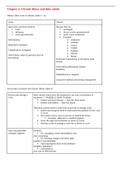
Chapter 5: Chronic illness and older adults
Illness: either acute or chronic (slide 3 + 4)
Acute Chronic
rapid onset and short duration diseases that are:
Cold prolonged
influenza do not resolve spontaneously
acute gastroenteritis rarely cured completely
Example:
Self-limiting o Alzheimer
o Arthritis
Respond to treatment o Cancer
o COBD
Complications infrequent o Diabetes
o Obesity
After illness, return to previous level of o Stroke
functioning
Permanent impairments or deviations from
normal
Irreversible pathological changes
Disability
Rehabilitation is required
Long term medical and nursing management
Seven tasks of people with chronic illness (slide 5)
Prevent and manage a Most chronic illness have the potential for an acute exacerbation of
crisis symptoms -> disability or death. Example:
Patient with heart disease -> later has heart attack
Patient with asthma -> later has attack
Therefore, patient needs to learn how to prevent or manage crisis.
1. patient and caregiver need to understand the potential for the crisis
to occur
2. they need to know ways to prevent or modify the threat
1. Example: adherence to medical regimen
b. know the signs and symptoms of onset of a crisis
c. develop a plan to manage a crisis that is likely to occur
carry out prescribed Difficult
treatment regimen Ex: managing a home hemodialysis unit
time consuming
Ex: dressing changes four times daily
painful or uncomfortable
injecting heparin daily in the abdomen
unsightly appearance
tracheostomy
slow rate of effectiveness
, lower blood cholesterol level with medication or diet
control symptoms patient learns to control symptoms (typical onset, duration, severity) so that
desired activities can continue.
Redesign lifestyle/ plan ahead of time:
patients with irritable bowel syndrome go to events with restroom
nearby
reorder time patients with chronic illness often report having too little time. treatment
plans can interfere with their schedules.
adjust to changes in some diseases, such as multiple sclerosis, have unpredictable courses that
course of disease make planning activities difficult.
it's important for the patient to develop an identity that includes chronic
illness
prevent social isolation individual choose to withdraw from previous activities or because others
withdraw from the patient.
man who has aphasia unwilling to go out in public because he is
embarrassed of communication problem
attempt to normalize patient tried to manage symptoms by hiding their disabilities or
interaction with others disfigurement and pretend they are normal
man with chronic lung problems stop walking to catch his breath,
but pretending inspecting a plant or looking in a store window.
Prevention of chronic illness (slide 5)
primary prevention proper diet, exercise, immunizations that prevent the occurrence of a specific
disease
secondary actions aimed at early detection of disease to intervene to prevent disease
prevention progression
tertiary prevention activities that limit disease progression, such as rehabilitation
Nursing management (slide 6)
course of illness is often unpredictable
assessment of health status
o ADLs: bathing, dressing, eating, toileting, and transfer
o instrumental ADLs: using a phone, shopping, preparing food, housekeeping, doing laundry, arranging
transportation, taking medications, handling finances.
Nurse:
o planning care
o teaching patient and caregiver about treatment plan, implementing strategies for symptom management
o assessing patient outcomes
Family caregivers:
o work together with patient to manage illness
o begins under the direction of health care team at the time of diagnosis
Gerontological Assessment of Cognitive Function (slide 7)
, improves with crystallized intelligence (accumulation of knowledge, facts, and skills that are
aging acquired throughout life)
vocabulary and verbal reasoning
decline with middle fluid intelligence (using logical to solve problem)
age
synthesis of new information
mental performance speed
decline with old age short-term recall memory
constant spatial perception
long-term recall memory
Scales: Nutritional assessment of older adults (slide 8)
Sadness, or mood change
Cholesterol, high
Albumin, low
Loss or gain of weight
Eating problems: imparied swallowing, poor dentition
Shopping and food preparation problems
Social support (slide 9)
1st level: family members (primary and preferred providers of social support)
2st level: semiformal of clubs, religious, neighborhoods, senior citizen centers.
3rd level: formal systems of social welfare agencies, health facilities, government support. Nurse belongs here.
Elder Abuse or Elder Mistreatment (EM) (Slide 10)
EM: intentional acts by caregivers that cause harm or serious risk to vulnerable older adult.
Majority victims are women
Victims of EM have mortality risk of 3x that their peers due to stress-related illness associated with prolonged
mistreatment
EM is a hidden problem, 5 out of 1 case is unreported due to:
o Impaired cognitive or physical function
o Feelings of shame, guilt, self-blame
o Fear of reprisal
o Pressure from family members
o Fear of nursing home placement
o Cultural norms
Underreport from health care providers are due to:
o Failure to suspect or recognize EM
o Perceived inability to successfully intervene
o Desire to avoid responsibility for further action
o Ageism
Risk factors for EM:
1. Physical or cognitive dysfunction that leads to an inability to perform ADLs, therefore depend on others for care
2. Psychiatric diagnoses
1. Dementia
2. Depression
Illness: either acute or chronic (slide 3 + 4)
Acute Chronic
rapid onset and short duration diseases that are:
Cold prolonged
influenza do not resolve spontaneously
acute gastroenteritis rarely cured completely
Example:
Self-limiting o Alzheimer
o Arthritis
Respond to treatment o Cancer
o COBD
Complications infrequent o Diabetes
o Obesity
After illness, return to previous level of o Stroke
functioning
Permanent impairments or deviations from
normal
Irreversible pathological changes
Disability
Rehabilitation is required
Long term medical and nursing management
Seven tasks of people with chronic illness (slide 5)
Prevent and manage a Most chronic illness have the potential for an acute exacerbation of
crisis symptoms -> disability or death. Example:
Patient with heart disease -> later has heart attack
Patient with asthma -> later has attack
Therefore, patient needs to learn how to prevent or manage crisis.
1. patient and caregiver need to understand the potential for the crisis
to occur
2. they need to know ways to prevent or modify the threat
1. Example: adherence to medical regimen
b. know the signs and symptoms of onset of a crisis
c. develop a plan to manage a crisis that is likely to occur
carry out prescribed Difficult
treatment regimen Ex: managing a home hemodialysis unit
time consuming
Ex: dressing changes four times daily
painful or uncomfortable
injecting heparin daily in the abdomen
unsightly appearance
tracheostomy
slow rate of effectiveness
, lower blood cholesterol level with medication or diet
control symptoms patient learns to control symptoms (typical onset, duration, severity) so that
desired activities can continue.
Redesign lifestyle/ plan ahead of time:
patients with irritable bowel syndrome go to events with restroom
nearby
reorder time patients with chronic illness often report having too little time. treatment
plans can interfere with their schedules.
adjust to changes in some diseases, such as multiple sclerosis, have unpredictable courses that
course of disease make planning activities difficult.
it's important for the patient to develop an identity that includes chronic
illness
prevent social isolation individual choose to withdraw from previous activities or because others
withdraw from the patient.
man who has aphasia unwilling to go out in public because he is
embarrassed of communication problem
attempt to normalize patient tried to manage symptoms by hiding their disabilities or
interaction with others disfigurement and pretend they are normal
man with chronic lung problems stop walking to catch his breath,
but pretending inspecting a plant or looking in a store window.
Prevention of chronic illness (slide 5)
primary prevention proper diet, exercise, immunizations that prevent the occurrence of a specific
disease
secondary actions aimed at early detection of disease to intervene to prevent disease
prevention progression
tertiary prevention activities that limit disease progression, such as rehabilitation
Nursing management (slide 6)
course of illness is often unpredictable
assessment of health status
o ADLs: bathing, dressing, eating, toileting, and transfer
o instrumental ADLs: using a phone, shopping, preparing food, housekeeping, doing laundry, arranging
transportation, taking medications, handling finances.
Nurse:
o planning care
o teaching patient and caregiver about treatment plan, implementing strategies for symptom management
o assessing patient outcomes
Family caregivers:
o work together with patient to manage illness
o begins under the direction of health care team at the time of diagnosis
Gerontological Assessment of Cognitive Function (slide 7)
, improves with crystallized intelligence (accumulation of knowledge, facts, and skills that are
aging acquired throughout life)
vocabulary and verbal reasoning
decline with middle fluid intelligence (using logical to solve problem)
age
synthesis of new information
mental performance speed
decline with old age short-term recall memory
constant spatial perception
long-term recall memory
Scales: Nutritional assessment of older adults (slide 8)
Sadness, or mood change
Cholesterol, high
Albumin, low
Loss or gain of weight
Eating problems: imparied swallowing, poor dentition
Shopping and food preparation problems
Social support (slide 9)
1st level: family members (primary and preferred providers of social support)
2st level: semiformal of clubs, religious, neighborhoods, senior citizen centers.
3rd level: formal systems of social welfare agencies, health facilities, government support. Nurse belongs here.
Elder Abuse or Elder Mistreatment (EM) (Slide 10)
EM: intentional acts by caregivers that cause harm or serious risk to vulnerable older adult.
Majority victims are women
Victims of EM have mortality risk of 3x that their peers due to stress-related illness associated with prolonged
mistreatment
EM is a hidden problem, 5 out of 1 case is unreported due to:
o Impaired cognitive or physical function
o Feelings of shame, guilt, self-blame
o Fear of reprisal
o Pressure from family members
o Fear of nursing home placement
o Cultural norms
Underreport from health care providers are due to:
o Failure to suspect or recognize EM
o Perceived inability to successfully intervene
o Desire to avoid responsibility for further action
o Ageism
Risk factors for EM:
1. Physical or cognitive dysfunction that leads to an inability to perform ADLs, therefore depend on others for care
2. Psychiatric diagnoses
1. Dementia
2. Depression


