Pamela Govender
Student No: 62754327
Module code: SAE3701
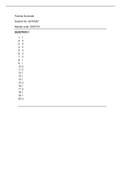
QUESTION 1
1. 1
2. 3
3. 3
4. 2
5. 4
6. 4
7. 2
8. 1
9. 1
10. 2
11. 2
12. 1
13. 1
14. 1
15. 3
16. 1
17. 4
18. 1
19. 1
20. 3
, QUESTION 2
1. Briefly illustrate the various aspects which oral history focused on when
teaching children, men and women morality.
Oral history taught men, women and children about politics, wisdom and religion.
Pre-colonial education was oral in nature and was taught through the peoples own
languages. Through this, children learned the virtues of their community and
appreciated the power and beauty of their own languages before colonization took
place. People became familiar with the community and formed lifelong bonds.
Eventually, oral history included everything that was to be taught to the younger
generations in order to ensure their survival within the changing environment.
2. How would you explain the social activities in which song and dance
played a significant role for the precolonial societies?
Music involves a rhythmic feature and atmosphere which engages everyone in a
group to respond in a social way, whether it be talking together, singing and
ultimately dancing. The combination of different but synchronized rhythms created a
sense of community and a great environment for learning. Music and dance was a
way for people to express their emotions to emphasize their cultural beliefs and
values.
3. How does formal learning differ from informal learning in the precolonial
context?
Formal learning was taught by teachers and where assisted by books. It was
particularly known as the “hierarchically controlled educational system”. Formal
education had an emphasis on literacy and facts. Whereas, informal learning was
taught through the elders and parents in the society, village and tribal members
through a practice of socialization(interacting with others). Informal learning was to
equip the younger generations with the knowledge necessary for survival and to
prepare them for their responsibilities within their homes and society.
4. Describe five main activities which were carried out at mission schools
- Basic reading and writing
- Needlework and cooking
- Bible readings
- hymn singing
- Manual work like farming
Student No: 62754327
Module code: SAE3701
QUESTION 1
1. 1
2. 3
3. 3
4. 2
5. 4
6. 4
7. 2
8. 1
9. 1
10. 2
11. 2
12. 1
13. 1
14. 1
15. 3
16. 1
17. 4
18. 1
19. 1
20. 3
, QUESTION 2
1. Briefly illustrate the various aspects which oral history focused on when
teaching children, men and women morality.
Oral history taught men, women and children about politics, wisdom and religion.
Pre-colonial education was oral in nature and was taught through the peoples own
languages. Through this, children learned the virtues of their community and
appreciated the power and beauty of their own languages before colonization took
place. People became familiar with the community and formed lifelong bonds.
Eventually, oral history included everything that was to be taught to the younger
generations in order to ensure their survival within the changing environment.
2. How would you explain the social activities in which song and dance
played a significant role for the precolonial societies?
Music involves a rhythmic feature and atmosphere which engages everyone in a
group to respond in a social way, whether it be talking together, singing and
ultimately dancing. The combination of different but synchronized rhythms created a
sense of community and a great environment for learning. Music and dance was a
way for people to express their emotions to emphasize their cultural beliefs and
values.
3. How does formal learning differ from informal learning in the precolonial
context?
Formal learning was taught by teachers and where assisted by books. It was
particularly known as the “hierarchically controlled educational system”. Formal
education had an emphasis on literacy and facts. Whereas, informal learning was
taught through the elders and parents in the society, village and tribal members
through a practice of socialization(interacting with others). Informal learning was to
equip the younger generations with the knowledge necessary for survival and to
prepare them for their responsibilities within their homes and society.
4. Describe five main activities which were carried out at mission schools
- Basic reading and writing
- Needlework and cooking
- Bible readings
- hymn singing
- Manual work like farming