PROPERTY LAW 271:
NOTES BY: ALETTE DU TOIT
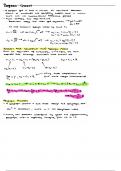
TOPIC 1: INTRODUCTION TO THE LAW OF PROPERTY:
“Is the object a thing? And, if so, what type of thing? “
What is property?
Wide sense – Property includes all the assets that form part of a person’s estate.
➢ Movable assets (Car)
➢ Immovable assets (House)
➢ Immaterial property (Patent)
“Rights of people in or over certain objects or thing.”
• The legal object itself.
• Right of ownership in a legal object.
• All the legal relationships that qualify for constitutional protection under Section 25.
The law of property deals with:
1. Rights and actions of persons with regard to things and other forms of property.
2. It describes the ways in which property rights can be acquired and exercised lawfully.
3. The remedies by which they are protected against infringement.
4. Legal results and implications of other relations between persons and property.
Definitions:
PROPERTY: Everything which forms part of a person’s estate, including corporeal things and
incorporeal interests and rights.
THINGS: A corporeal object outside the human body, and an independent entity capable of being
subjected to legal sovereignty by a legal subject for who it has use and value.
RIGHTS: Is a legally recognised and valid claim by a subject to a certain object. Not all relations
between a person and an object are recognised and protected by law.
PROPERTY RIGHT: Is any legally recognised claim to or interest in property.
LAWFUL: A claim or action is lawful when it is acknowledged and protected by existing legal
principles.
UNLAWFUL: When it is in conflict with or not acknowledged by the law. (Implications)
REMEDY: Legal procedure provided by the legal system to protect a right against infringement or
to control the effects of an unlawful act or situation.
The function of the Law of Property is to:
✓ Harmonize relationships
✓ Guarantee and protect
✓ Control/regulate relationships
,TOPIC 1: THINGS AS LEGAL OBJECTS:
Property:
Wider concept – included the traditional law of things, performances, constitutional rights and
interests
What are things:
POD – The scope of property is law is determined by the extent to which legal objects qualify as things.
“A thing is the legal object of a real right and is therefore, for the purpose of the law of property, the
most important legal object.”
Legal object – phone, laptop, property you live in
➢ Normally tangible
Other object – personal rights
➢ Not tangible
NOT ALL ITEAM FORMING PART OF YOUR ESTATE QUALIFY AS THINGS FOR THE PURPOSES OF
PROPERTY LAW.
Why does this matter?
• As lawyers we want to know how to protect the rights.
• Which remedies are available?
• Which rules and principles apply?
TRADITIONAL DEFINTION OF A THING:
A corporeal or tangible object external to persons and which is, as an independent entity, subject to
judicial control by a legal subject, to whom it is useful and of value.
DEFINTION OF A THING:
Any independent object, whether corporeal or incorporeal, which does not form part of a human
being, which may be controlled by humans, and is of use and value to them.
CHARACTERISITCS OF A THING:
There is a narrow and wide approach.
Things in SA Private property law, traditionally has all the following characteristics:
✓ Corporeality
✓ An impersonal nature
✓ Independence
✓ Appropriability (Can I control it as a human being?)
✓ Use and value
, Narrow or Strict Approach Flexible Approach
All 5 characteristics have to be present Where the five characteristics are regarded as guidelines
for a legal object to qualify as a thing. rather than prerequisites to determine if a legal object is
a thing.
• Corporeality a requirement • Corporeality not a requirement
1. CORPOREALITY:
What are corporeal things?
• Possessing a physical nature; having an objective, tangible existence; being capable of
perception by touch and sight.
• Under Common Law, corporeal hereditaments are physical objects encompassed in land,
including the land itself and any tangible object on it, that can be inherited.
POD:
1. Object can be “corporeal” if it is tangible (perceived by any of the 5 senses)
2. Occupies space
Controversial characteristic
- Because it does not include incorporeal property or intangible property.
- Something you can’t preserve
What about incorporeal property (rights)?
Traditionally Incorporeal property (non-physical i.e intangible interests in property) was not regarded
as property in SA property law structures.
➢ Narrow approach
Courts and Legislature?
• Include incorporeal property in the ambit of things.
• Realities of legal practice demand that the characteristics of corporeality should not be
regarded as an essential characteristic or requirement for recognising an object as a thing, but
rather as a common characteristic.
Thus Practically: Common rather than essential element
What are incorporeal things?
• Lacking a physical or material nature but relating to or affecting a body.
• Under the Common Law, incorporeal property were rights that affected a tangible item, such
as a chose in action (A right to enforce a debt)
• Incorporeal is the opposite of corporeal, a description of the existence of a tangible item.
, QUESTION: Critically discuss the following statement:
“Corporeality, as a characteristic of a thing, has proved to be controversial”. (5 marks)
A thing in property law is traditionally characterised by the following characteristics: Corporeality; an impersonal
nature; independent existence; appropriability and usefulness and value to humans. (1/2) An object can be labelled
“corporeal” if it is tangible, that is, it can be felt or touched or perceived by any of the five senses + occupies space.
(1/2) This determination is important because if something is not a thing, it or the rights held in respect of it cannot
be protected. (1/2) Whether incorporeal objects should be regarded as “thing” is regarded as controversial OR The
recognition of incorporeal property or intangible interests has proved controversial OR academic opinion is varied in
this regard. OR Case law and certain pieces of legislation does recognize incorporeal interests as property, and
therefore it seems more appropriate to identify corporeality as a common characteristic, rather than an essential
element. It seems likely that courts will recognize incorporeals as property. (1/2)
However, in South Africa, there are at least two different approaches to defining what a thing is: narrow (strict)
approach and a more flexible approach. Of the five characteristics, corporeality is the crucially determinative
consideration in distinguishing between these two approaches.
In terms of the narrow or strict approach all 5 characteristics contribute to the determination of whether a legal object
qualifies as a thing. Corporeality is regarded as a requirement for an object to be regarded as a thing. (1) Under this
approach, incorporeal things are regarded as exceptions to the rule/requirement that a legal object must be corporeal.
However, this narrow approach has the inflexibility and inability to deal with modern social, technological and legal
developments OR Incorporeal property referring to non-physical types of property is becoming increasingly important
in the private, commercial and public spheres of life. (1/2)
Corporeality (tangibility of a thing) as a requirement is/may become outdated and impractical. (1/2) As a result, and
over time, there may be too many exceptions to the rule/requirement that a legal object must be corporeal. A wider
approach is necessary. In terms of the wide/flexible approach, the 5 characteristics of a thing are regarded as
guidelines rather than requirements to determine if a legal object is a thing. (1) (Under constitutional property law,
the question whether the property must be corporeal to be worthy of protection does not arise at all. The fact that
constitutional protection of incorporeal property is seen as unproblematic confirms the approach that corporeality
should not be regarded as a requirement for determining whether a legal object is a thing).
2. IMPERSONAL NATURE AND EXTERNAL TO A PERSON:
• Humans are legal subjects and are never regarded as legal objects.
• You can exercise rights over legal objects and things.
• Human corpses – no longer legal subject.
• They can be classified as legal objects, but they still fall outside legal commers (non -
negotiable things)
Renewable body parts are negotiable.
• Can donate or sell – body parts
National Health Act 61 of 2003
➢ Donation and use of human tissue
➢ Purchase and sale
➢ Renewable body parts – may be traded on marked on certain conditions (Hair – wigs)
Question: Prosthetic implants and attachments, are they things?
NOTES BY: ALETTE DU TOIT
TOPIC 1: INTRODUCTION TO THE LAW OF PROPERTY:
“Is the object a thing? And, if so, what type of thing? “
What is property?
Wide sense – Property includes all the assets that form part of a person’s estate.
➢ Movable assets (Car)
➢ Immovable assets (House)
➢ Immaterial property (Patent)
“Rights of people in or over certain objects or thing.”
• The legal object itself.
• Right of ownership in a legal object.
• All the legal relationships that qualify for constitutional protection under Section 25.
The law of property deals with:
1. Rights and actions of persons with regard to things and other forms of property.
2. It describes the ways in which property rights can be acquired and exercised lawfully.
3. The remedies by which they are protected against infringement.
4. Legal results and implications of other relations between persons and property.
Definitions:
PROPERTY: Everything which forms part of a person’s estate, including corporeal things and
incorporeal interests and rights.
THINGS: A corporeal object outside the human body, and an independent entity capable of being
subjected to legal sovereignty by a legal subject for who it has use and value.
RIGHTS: Is a legally recognised and valid claim by a subject to a certain object. Not all relations
between a person and an object are recognised and protected by law.
PROPERTY RIGHT: Is any legally recognised claim to or interest in property.
LAWFUL: A claim or action is lawful when it is acknowledged and protected by existing legal
principles.
UNLAWFUL: When it is in conflict with or not acknowledged by the law. (Implications)
REMEDY: Legal procedure provided by the legal system to protect a right against infringement or
to control the effects of an unlawful act or situation.
The function of the Law of Property is to:
✓ Harmonize relationships
✓ Guarantee and protect
✓ Control/regulate relationships
,TOPIC 1: THINGS AS LEGAL OBJECTS:
Property:
Wider concept – included the traditional law of things, performances, constitutional rights and
interests
What are things:
POD – The scope of property is law is determined by the extent to which legal objects qualify as things.
“A thing is the legal object of a real right and is therefore, for the purpose of the law of property, the
most important legal object.”
Legal object – phone, laptop, property you live in
➢ Normally tangible
Other object – personal rights
➢ Not tangible
NOT ALL ITEAM FORMING PART OF YOUR ESTATE QUALIFY AS THINGS FOR THE PURPOSES OF
PROPERTY LAW.
Why does this matter?
• As lawyers we want to know how to protect the rights.
• Which remedies are available?
• Which rules and principles apply?
TRADITIONAL DEFINTION OF A THING:
A corporeal or tangible object external to persons and which is, as an independent entity, subject to
judicial control by a legal subject, to whom it is useful and of value.
DEFINTION OF A THING:
Any independent object, whether corporeal or incorporeal, which does not form part of a human
being, which may be controlled by humans, and is of use and value to them.
CHARACTERISITCS OF A THING:
There is a narrow and wide approach.
Things in SA Private property law, traditionally has all the following characteristics:
✓ Corporeality
✓ An impersonal nature
✓ Independence
✓ Appropriability (Can I control it as a human being?)
✓ Use and value
, Narrow or Strict Approach Flexible Approach
All 5 characteristics have to be present Where the five characteristics are regarded as guidelines
for a legal object to qualify as a thing. rather than prerequisites to determine if a legal object is
a thing.
• Corporeality a requirement • Corporeality not a requirement
1. CORPOREALITY:
What are corporeal things?
• Possessing a physical nature; having an objective, tangible existence; being capable of
perception by touch and sight.
• Under Common Law, corporeal hereditaments are physical objects encompassed in land,
including the land itself and any tangible object on it, that can be inherited.
POD:
1. Object can be “corporeal” if it is tangible (perceived by any of the 5 senses)
2. Occupies space
Controversial characteristic
- Because it does not include incorporeal property or intangible property.
- Something you can’t preserve
What about incorporeal property (rights)?
Traditionally Incorporeal property (non-physical i.e intangible interests in property) was not regarded
as property in SA property law structures.
➢ Narrow approach
Courts and Legislature?
• Include incorporeal property in the ambit of things.
• Realities of legal practice demand that the characteristics of corporeality should not be
regarded as an essential characteristic or requirement for recognising an object as a thing, but
rather as a common characteristic.
Thus Practically: Common rather than essential element
What are incorporeal things?
• Lacking a physical or material nature but relating to or affecting a body.
• Under the Common Law, incorporeal property were rights that affected a tangible item, such
as a chose in action (A right to enforce a debt)
• Incorporeal is the opposite of corporeal, a description of the existence of a tangible item.
, QUESTION: Critically discuss the following statement:
“Corporeality, as a characteristic of a thing, has proved to be controversial”. (5 marks)
A thing in property law is traditionally characterised by the following characteristics: Corporeality; an impersonal
nature; independent existence; appropriability and usefulness and value to humans. (1/2) An object can be labelled
“corporeal” if it is tangible, that is, it can be felt or touched or perceived by any of the five senses + occupies space.
(1/2) This determination is important because if something is not a thing, it or the rights held in respect of it cannot
be protected. (1/2) Whether incorporeal objects should be regarded as “thing” is regarded as controversial OR The
recognition of incorporeal property or intangible interests has proved controversial OR academic opinion is varied in
this regard. OR Case law and certain pieces of legislation does recognize incorporeal interests as property, and
therefore it seems more appropriate to identify corporeality as a common characteristic, rather than an essential
element. It seems likely that courts will recognize incorporeals as property. (1/2)
However, in South Africa, there are at least two different approaches to defining what a thing is: narrow (strict)
approach and a more flexible approach. Of the five characteristics, corporeality is the crucially determinative
consideration in distinguishing between these two approaches.
In terms of the narrow or strict approach all 5 characteristics contribute to the determination of whether a legal object
qualifies as a thing. Corporeality is regarded as a requirement for an object to be regarded as a thing. (1) Under this
approach, incorporeal things are regarded as exceptions to the rule/requirement that a legal object must be corporeal.
However, this narrow approach has the inflexibility and inability to deal with modern social, technological and legal
developments OR Incorporeal property referring to non-physical types of property is becoming increasingly important
in the private, commercial and public spheres of life. (1/2)
Corporeality (tangibility of a thing) as a requirement is/may become outdated and impractical. (1/2) As a result, and
over time, there may be too many exceptions to the rule/requirement that a legal object must be corporeal. A wider
approach is necessary. In terms of the wide/flexible approach, the 5 characteristics of a thing are regarded as
guidelines rather than requirements to determine if a legal object is a thing. (1) (Under constitutional property law,
the question whether the property must be corporeal to be worthy of protection does not arise at all. The fact that
constitutional protection of incorporeal property is seen as unproblematic confirms the approach that corporeality
should not be regarded as a requirement for determining whether a legal object is a thing).
2. IMPERSONAL NATURE AND EXTERNAL TO A PERSON:
• Humans are legal subjects and are never regarded as legal objects.
• You can exercise rights over legal objects and things.
• Human corpses – no longer legal subject.
• They can be classified as legal objects, but they still fall outside legal commers (non -
negotiable things)
Renewable body parts are negotiable.
• Can donate or sell – body parts
National Health Act 61 of 2003
➢ Donation and use of human tissue
➢ Purchase and sale
➢ Renewable body parts – may be traded on marked on certain conditions (Hair – wigs)
Question: Prosthetic implants and attachments, are they things?