Rasmussen Pathophysiology Exam 2
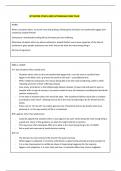
Mechanical obstruction (Intussusception)
Sudden or gradual and partial or complete blockage of intestinal contents in intestines
Causes of mechanical obstruction
foreign bodies, tumors, adhesions, hernias, intussusception (telescoping), volvulus,
strictures, Crohn's disease, diverticulitis, Hirschsprung's disease, and fecal impaction
Causes of functional obstruction
neurologic impairment; intra-abdominal surgery complications; chemical, electrolyte, and
mineral disturbances; infections; abdominal blood supply impairment; renal and lung
disease; and medications (e.g., narcotics)
peritonitis
inflammation of the peritoneum (membrane lining the abdominal cavity and surrounding
the organs within it)
Why does the abdomen become rigid with peritonitis?
Due to inflammation And abdominal muscle spasms
Ulcerative colitis V Chron's
UC:
- Condition in mucosa only
- Begins in the rectum and then extends to the entire colon
- Develops fast (20-30 sec)
- Rarely affects small intestines
- inflammation triggered by T cells accumulation in mucosa
Chron's:
- Condition that is full thickness
- Can be anywhere in small/large intestine (colon)
- Cobblestone appearance (fissures/nodules)
- loses ability to digest and absorb
- Abd. pain in right lower quadrant
,- Intestinal wall is thick/rigid
- Progressive condition that is slow developing
pancreatitis
inflammation of the pancreas (acute/chronic)
acute pancreatitis
Cholelithiasis
-Medical emergency
- sudden and severe
chronic pancreatitis
Alcohol abuse
- gradual but harmful effects
acute pancreatitis manifestations
- Upper abdominal pain that radiates to the back, worsens after eating, and is somewhat
relieved by leaning forward or pulling the knees toward the chest
-Nausea and vomiting
-Mild jaundice
-Low-grade fever
-Blood pressure and pulse changes
chronic pancreatitis manifestations
-Upper abdominal pain
-Indigestion
-Losing weight without trying
-Steatorrhea
-Constipation
-Flatulence
Gastroesophageal reflux disease (GERD):
chyme or bile periodically backs up from the stomach into the esophagus, irritating the
esophageal mucosa
causes of heartburn
, due to spasm from acid reflux
GERD complications
esophagitis, strictures, ulcerations, esophageal cancer (the most serious complication),
and chronic pulmonary disease
Cleft palate
palate results from failure of the hard and soft palate to fuse in
development, creating an opening between the oral and nasal cavity
Cleft lip
Cleft lip results from failure of the maxillary processes and nasal elevations or upper lip to
fuse during development
Can affect one's appearance and may lead to feeding issues, speech problems, ear
infections, and hearing problems
· Causes of cleft lip and palate
develop at 4-9 weeks gestation- genetic mutations, drugs, toxins, viruses, vitamin
deficiencies, and cigarette smoking
appendicitis & manifestations
inflammation of the appendix & Sharp abdominal pain gradually intensifies (over about
12-24 hours), localized to the lower right quadrant of the abdomen, Rebound tenderness,
(Pain may occur anywhere in abdomen; will temporarily subside if the appendix ruptures,
and then the pain will return and escalate), Nausea, vomiting, abdominal distension, and
bowel pattern changes, Indications of inflammation and infection (e.g., fever, chills, and
leukocytosis), Indications of peritonitis (e.g., abdominal rigidity, tachycardia, and
hypotension)
acute gastritis & manifestations
inflammation of the stomach's mucosal lining
- Can be a mild, transient irritation, or it can be a severe ulceration with hemorrhage,
Usually develops suddenly and is likely to be accompanied by nausea and epigastric
pain, Vomiting and Anorexia (loss of appetite)
Mechanical obstruction (Intussusception)
Sudden or gradual and partial or complete blockage of intestinal contents in intestines
Causes of mechanical obstruction
foreign bodies, tumors, adhesions, hernias, intussusception (telescoping), volvulus,
strictures, Crohn's disease, diverticulitis, Hirschsprung's disease, and fecal impaction
Causes of functional obstruction
neurologic impairment; intra-abdominal surgery complications; chemical, electrolyte, and
mineral disturbances; infections; abdominal blood supply impairment; renal and lung
disease; and medications (e.g., narcotics)
peritonitis
inflammation of the peritoneum (membrane lining the abdominal cavity and surrounding
the organs within it)
Why does the abdomen become rigid with peritonitis?
Due to inflammation And abdominal muscle spasms
Ulcerative colitis V Chron's
UC:
- Condition in mucosa only
- Begins in the rectum and then extends to the entire colon
- Develops fast (20-30 sec)
- Rarely affects small intestines
- inflammation triggered by T cells accumulation in mucosa
Chron's:
- Condition that is full thickness
- Can be anywhere in small/large intestine (colon)
- Cobblestone appearance (fissures/nodules)
- loses ability to digest and absorb
- Abd. pain in right lower quadrant
,- Intestinal wall is thick/rigid
- Progressive condition that is slow developing
pancreatitis
inflammation of the pancreas (acute/chronic)
acute pancreatitis
Cholelithiasis
-Medical emergency
- sudden and severe
chronic pancreatitis
Alcohol abuse
- gradual but harmful effects
acute pancreatitis manifestations
- Upper abdominal pain that radiates to the back, worsens after eating, and is somewhat
relieved by leaning forward or pulling the knees toward the chest
-Nausea and vomiting
-Mild jaundice
-Low-grade fever
-Blood pressure and pulse changes
chronic pancreatitis manifestations
-Upper abdominal pain
-Indigestion
-Losing weight without trying
-Steatorrhea
-Constipation
-Flatulence
Gastroesophageal reflux disease (GERD):
chyme or bile periodically backs up from the stomach into the esophagus, irritating the
esophageal mucosa
causes of heartburn
, due to spasm from acid reflux
GERD complications
esophagitis, strictures, ulcerations, esophageal cancer (the most serious complication),
and chronic pulmonary disease
Cleft palate
palate results from failure of the hard and soft palate to fuse in
development, creating an opening between the oral and nasal cavity
Cleft lip
Cleft lip results from failure of the maxillary processes and nasal elevations or upper lip to
fuse during development
Can affect one's appearance and may lead to feeding issues, speech problems, ear
infections, and hearing problems
· Causes of cleft lip and palate
develop at 4-9 weeks gestation- genetic mutations, drugs, toxins, viruses, vitamin
deficiencies, and cigarette smoking
appendicitis & manifestations
inflammation of the appendix & Sharp abdominal pain gradually intensifies (over about
12-24 hours), localized to the lower right quadrant of the abdomen, Rebound tenderness,
(Pain may occur anywhere in abdomen; will temporarily subside if the appendix ruptures,
and then the pain will return and escalate), Nausea, vomiting, abdominal distension, and
bowel pattern changes, Indications of inflammation and infection (e.g., fever, chills, and
leukocytosis), Indications of peritonitis (e.g., abdominal rigidity, tachycardia, and
hypotension)
acute gastritis & manifestations
inflammation of the stomach's mucosal lining
- Can be a mild, transient irritation, or it can be a severe ulceration with hemorrhage,
Usually develops suddenly and is likely to be accompanied by nausea and epigastric
pain, Vomiting and Anorexia (loss of appetite)