What is it?
Studying how the thoughts, feelings and behaviour of individuals are influenced by the real
or imagined presence of others
AFFECT: feelings, emotions
How can it help us understand everyday life? Observational Research
The power of the situation Festinger et al. (1956)
Aim: what happens when people's
beliefs are met with disconfirming
Automatic behaviours evidence
Correlational Research Study: infiltrated a doomsday cult
who received message that the world
would flood, flying saucer come at
midnight to save members from
Hovland et al. (1940) destruction. On the day, the cult
rationalised that their lookout was
Study: looked at the pattern of hostility against what helped to save the world.
blacks in southern states of America
Conclusion: when firmly held socially
Findings: as price of cotton decreased, no. shared beliefs are challenged, people
recorded lynching's of blacks increased. reaffirm their beliefs more strongly to
reduce the dissonance (discrepancy
between beliefs and reality)
Experimental Research
Miller et al. (1948)
Study: interviewed young men attending summer camp and assessed how favourable
they felt towards 2 ethnic groups: Mexicans and Japanese. At the camp, half weren't
allowed to go out and half were.
Results: those who didn't go out were more hostile towards minorities in the next survey
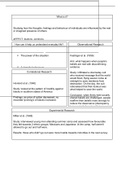
Studying how the thoughts, feelings and behaviour of individuals are influenced by the real
or imagined presence of others
AFFECT: feelings, emotions
How can it help us understand everyday life? Observational Research
The power of the situation Festinger et al. (1956)
Aim: what happens when people's
beliefs are met with disconfirming
Automatic behaviours evidence
Correlational Research Study: infiltrated a doomsday cult
who received message that the world
would flood, flying saucer come at
midnight to save members from
Hovland et al. (1940) destruction. On the day, the cult
rationalised that their lookout was
Study: looked at the pattern of hostility against what helped to save the world.
blacks in southern states of America
Conclusion: when firmly held socially
Findings: as price of cotton decreased, no. shared beliefs are challenged, people
recorded lynching's of blacks increased. reaffirm their beliefs more strongly to
reduce the dissonance (discrepancy
between beliefs and reality)
Experimental Research
Miller et al. (1948)
Study: interviewed young men attending summer camp and assessed how favourable
they felt towards 2 ethnic groups: Mexicans and Japanese. At the camp, half weren't
allowed to go out and half were.
Results: those who didn't go out were more hostile towards minorities in the next survey