10th October 2019
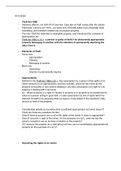
Criminal Law – Lecture 1: An Introduction to Criminal Law
- Sources of criminal law
o Statutes
o Common law/case law (many crimes we study derive from common law, not
statutes)
o International/EU/Council of Europe
- Crime: behaviour that is prohibited by law
- There are considerable misconceptions about crime and the prevalence of crime
- The ‘black letter’ description: crime as a legal violation, determined by the criminal
law
- Public wrong/violation against society and state
o Criminal case names always R v
o R stands for Rex or Regina
- Criminal law is always representative of time and space
- Always aims to punish
- Also to act as some sort of public control
- Criminal law and crimes also have a social, moral and political context
- Not just seen as a crime against another person but a crime against society as a
whole, you are committing a crime against the crown
- Can be in the public interest to prosecute, even if the victim doesn’t want to go
ahead with it
- Even within one country there can still be different criminal laws
Conduct and Consequences of Criminal Law:
1. Prohibits certain acts (rape, theft, etc) – criminalised for the ACT rather than the
OUTCOME
2. Prohibits causing certain consequences under certain circumstances (murder,
criminal damage, etc) – criminalised for the OUTCOME rather than the ACT
3. Prohibits certain states of affair (belonging to a terrorist organisation, being an illegal
immigrant, etc) – just by virtue of being someone or something
4. Requires certain action (health and safety, etc) – criminalised because it requires
someone to DO SOMETHING
Who is a Criminal?
- A person who behaves in a manner that is prohibited by law
- Not all those who commit crime are punished
- ‘Criminals’ versus ‘Others’ is unhelpful and misleading
- Not everyone is treated the same in the eye of the law
- Consider for example, drug policy, joint enterprise
- There is a difference between those who commit crimes and those who are punished
- Drug policies = some people are punished much more heavily
The Temporality of Criminal Law:
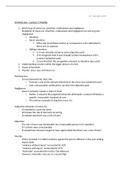
Criminal Law – Lecture 1: An Introduction to Criminal Law
- Sources of criminal law
o Statutes
o Common law/case law (many crimes we study derive from common law, not
statutes)
o International/EU/Council of Europe
- Crime: behaviour that is prohibited by law
- There are considerable misconceptions about crime and the prevalence of crime
- The ‘black letter’ description: crime as a legal violation, determined by the criminal
law
- Public wrong/violation against society and state
o Criminal case names always R v
o R stands for Rex or Regina
- Criminal law is always representative of time and space
- Always aims to punish
- Also to act as some sort of public control
- Criminal law and crimes also have a social, moral and political context
- Not just seen as a crime against another person but a crime against society as a
whole, you are committing a crime against the crown
- Can be in the public interest to prosecute, even if the victim doesn’t want to go
ahead with it
- Even within one country there can still be different criminal laws
Conduct and Consequences of Criminal Law:
1. Prohibits certain acts (rape, theft, etc) – criminalised for the ACT rather than the
OUTCOME
2. Prohibits causing certain consequences under certain circumstances (murder,
criminal damage, etc) – criminalised for the OUTCOME rather than the ACT
3. Prohibits certain states of affair (belonging to a terrorist organisation, being an illegal
immigrant, etc) – just by virtue of being someone or something
4. Requires certain action (health and safety, etc) – criminalised because it requires
someone to DO SOMETHING
Who is a Criminal?
- A person who behaves in a manner that is prohibited by law
- Not all those who commit crime are punished
- ‘Criminals’ versus ‘Others’ is unhelpful and misleading
- Not everyone is treated the same in the eye of the law
- Consider for example, drug policy, joint enterprise
- There is a difference between those who commit crimes and those who are punished
- Drug policies = some people are punished much more heavily
The Temporality of Criminal Law: