1st November 2019
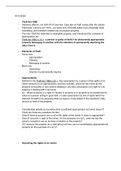
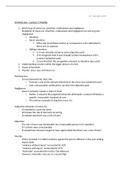
Criminal Law Lecture 8 – Joint Enterprise: Jogee in Context
- Principle = perpetrator of the crime
- Accomplice = the person who assisted or encouraged the principle to commit the
crime
- Joint principles = Val and Ian both stab Sara. Sara succumbs due to the combined
effect of both wounds. Here, both Van and Ian are ‘joint principles’.
- Innocent agent = unaware of the criminal nature of the act involved
- Even if you’re not the principle offender (even if you just aided it) you are still liable
to be punished as the principle offender
- Charged in the same way as the principle offender
o There must be an offence committed by the principle
o The accomplice is charged with the basic offence
o The prosecution only need to prove that the defendant was an accomplice
- The criminal law punishes not only those who directly harm a victim but also those
who assist them
- Assisting covers offering help or assistance to someone:
o Stringer (Ian) [2011] EWCA Crim 1396
o Millward [1994] Crim LR 527
o Beatty v Gillbanks (1882) 9QBD 308
- Even if the act of giving the gun took place before the killing, they are still an
accomplice
- Encouragement encompasses urging someone to commit an offence or indicating
that the commission of the offence is desirable
o Giannetto [1997] 1 Cr App 1, 13
o R v Calhaem [1985] QB 808
What is Joint Enterprise?
- Joint enterprise is now simply an example of how someone can assist or encourage
an offence
- Permits two or more defendants to be convicted of the same criminal offence in
relation to the same incident, even where they had different types of levels of
involvement in the incident
1. Where two or more people join in committing a single crime
2. Where D assists or encourages P to commit a single crime (basic/general accessorial
liability)
3. Where P and D participate together in one crime (A) and in the course of it, P
commits a second crime (B) which D had intended/known he might commit
(Parasitic accessorial liability)
- Sometimes, mere presence can lead to person being an accomplice
When is accessorial mens rea satisfied?
i. D intended to assist or encourage the principle
ii. D intended that the principle would have the mens rea requires for the offence
(not to equate to foresight)
Criminal Law Lecture 8 – Joint Enterprise: Jogee in Context
- Principle = perpetrator of the crime
- Accomplice = the person who assisted or encouraged the principle to commit the
crime
- Joint principles = Val and Ian both stab Sara. Sara succumbs due to the combined
effect of both wounds. Here, both Van and Ian are ‘joint principles’.
- Innocent agent = unaware of the criminal nature of the act involved
- Even if you’re not the principle offender (even if you just aided it) you are still liable
to be punished as the principle offender
- Charged in the same way as the principle offender
o There must be an offence committed by the principle
o The accomplice is charged with the basic offence
o The prosecution only need to prove that the defendant was an accomplice
- The criminal law punishes not only those who directly harm a victim but also those
who assist them
- Assisting covers offering help or assistance to someone:
o Stringer (Ian) [2011] EWCA Crim 1396
o Millward [1994] Crim LR 527
o Beatty v Gillbanks (1882) 9QBD 308
- Even if the act of giving the gun took place before the killing, they are still an
accomplice
- Encouragement encompasses urging someone to commit an offence or indicating
that the commission of the offence is desirable
o Giannetto [1997] 1 Cr App 1, 13
o R v Calhaem [1985] QB 808
What is Joint Enterprise?
- Joint enterprise is now simply an example of how someone can assist or encourage
an offence
- Permits two or more defendants to be convicted of the same criminal offence in
relation to the same incident, even where they had different types of levels of
involvement in the incident
1. Where two or more people join in committing a single crime
2. Where D assists or encourages P to commit a single crime (basic/general accessorial
liability)
3. Where P and D participate together in one crime (A) and in the course of it, P
commits a second crime (B) which D had intended/known he might commit
(Parasitic accessorial liability)
- Sometimes, mere presence can lead to person being an accomplice
When is accessorial mens rea satisfied?
i. D intended to assist or encourage the principle
ii. D intended that the principle would have the mens rea requires for the offence
(not to equate to foresight)