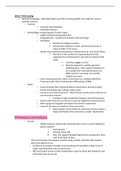
Engelse grammatica en taalvaardigheid
- Word order
- Pronouns
- Verb tenses
- Passive
- Modal verbs
- Irregular verbs
- Nouns
- Articles
- Adjectives and adverbs
- Question tags
- Prepositions
Word order
De vaste regel: plaats altijd voor tijd! De tijd- en plaatsbepalingen staan meestal
achteraan in de zin. Als ze vooraan staan doen ze dat meestal om ergens de nadruk op te
leggen.
De zin is meestal als volgende opgebouwd: wie – doet – wat/wie – waar – wanneer
Bij vragende zinnen begin je met een vragend voornaamwoord en/of een
(hulp)werkwoord. Daarna komt pas het onderwerp.
Bijwoorden van tijd als usually en often staan meestal ergens middenin de zin.
1. Één werkwoord in de zin = bijwoord voor het werkwoord
2. Enige werkwoord in de zin vorm van to be = na de vorm van to be.
3. Groepje van twee of meer WW = er tussen in. Het Bijwoord voor het
hoofdwerkwoord (en dus na het hulpwerkwoord / de hulpwerkwoorden).
Pronouns
Nederlands Pronoun Lijdend en meewerkend
Ik I Me
Jij You You
Hij / zij / het He / she / it Him / her / it
Wij We Us
Jullie You You
Zij (mv) They Them
I schrijf je altijd met een hoofdletter !
Verb tenses
1. Present simple: onvoltooid tegenwoordige tijd. Ook een feit, gewoonte of
regelmatig terugkerende handeling. Vorm = het hele werkwoord. Bij de 3 e persoon
(he, she, it) wordt er een -s aan vast geplakt.
I work here. She works here. We work were.
2. Past simple: de verleden tijd. Aan signaalwoorden is af te leiden of het
tegenwoordig- of verleden tijd is. De basisregel = -ed achter de stam (worked), de
persoon maakt niet uit.
My brother and I laughed a lot.
- Word order
- Pronouns
- Verb tenses
- Passive
- Modal verbs
- Irregular verbs
- Nouns
- Articles
- Adjectives and adverbs
- Question tags
- Prepositions
Word order
De vaste regel: plaats altijd voor tijd! De tijd- en plaatsbepalingen staan meestal
achteraan in de zin. Als ze vooraan staan doen ze dat meestal om ergens de nadruk op te
leggen.
De zin is meestal als volgende opgebouwd: wie – doet – wat/wie – waar – wanneer
Bij vragende zinnen begin je met een vragend voornaamwoord en/of een
(hulp)werkwoord. Daarna komt pas het onderwerp.
Bijwoorden van tijd als usually en often staan meestal ergens middenin de zin.
1. Één werkwoord in de zin = bijwoord voor het werkwoord
2. Enige werkwoord in de zin vorm van to be = na de vorm van to be.
3. Groepje van twee of meer WW = er tussen in. Het Bijwoord voor het
hoofdwerkwoord (en dus na het hulpwerkwoord / de hulpwerkwoorden).
Pronouns
Nederlands Pronoun Lijdend en meewerkend
Ik I Me
Jij You You
Hij / zij / het He / she / it Him / her / it
Wij We Us
Jullie You You
Zij (mv) They Them
I schrijf je altijd met een hoofdletter !
Verb tenses
1. Present simple: onvoltooid tegenwoordige tijd. Ook een feit, gewoonte of
regelmatig terugkerende handeling. Vorm = het hele werkwoord. Bij de 3 e persoon
(he, she, it) wordt er een -s aan vast geplakt.
I work here. She works here. We work were.
2. Past simple: de verleden tijd. Aan signaalwoorden is af te leiden of het
tegenwoordig- of verleden tijd is. De basisregel = -ed achter de stam (worked), de
persoon maakt niet uit.
My brother and I laughed a lot.