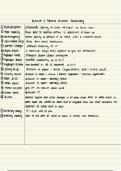
Module 2 : Aqueous Solutions
Vocabulary
① Autrionization compounds ability to react itself to form ions .
②heat capacity heat able to absorb before it vaporizes or heat up
③electronegativity atoms
ability to attract esto itself win a sovalent bond
⑪ non-covalent forces forces form bown molecules
⑤ partial charges unequal sharing of e>
⑥ dipole dipole 2 molecules
align their dipoles to gen . an attraction
① hydrogen bonds strongest dipole-dipole interaction
⑧ hydrogen donor bonded
covalently w O ,
N, F
⑨ hydrogen acceptor non-bonded -
on a separate O , N , F
⑱ strong acids dissolve in water : Ionize (hydrochloric acid : sulfric acid)
⑪Strong bases dissolve in water : Ionize (sodium hydroxide : Calcium hydroxide)
⑫ weak acids dissolve in water : Partially ionize
⑬ Weak bases dissolve in water : Partially ionize
⑪Proton acceptor gets Ht , to reform weak acid
⑮ proton donor generates H+
⑭ Buffer agreous system that resist changes in pH when Small amts of weak acids or
Weak bases are added bic Weak acid or conjugate base can react ,
neutralize the
addition of either acid or base
⑪ buffering range
+
/1 0pH unit
.
of pla
⑱ buttering capacity limit to the amt of acid or base a buffer can neutralize
, Module 2: Aqueous Solutions
water
Bond Angle :
Bent Shape ·
Sp3 hybridization
·
strong bonds
doesn't show
polar
·
tetrahedral electronegativity
bic of lone
·
2 sets bonding e-
pairs .
2 sets
non-bonding
·
Water : Solvent Properties e-
·
water dissolves :
-
Ionic substances (salt , KI)
-hydrogen-bondingSubstances (C-OH ,
N-H)
Carbohydrates proteins amino acias (solvable in water
-
, ,
·
Water does NOT dissolve :
-
oily molecules /looking oil , bees wax)
-helpful in
building plasma membranes (separate life from non-life
solligative properties
·
:
melting point : Snow life
-
put salt to ↓
melting point dissolving ice
=
,
-
osmotic pressure :
-water
moving from an area of highly concentration of water to
& lower concentration of water
water leaves shrivels
egg +
egg
water enters swells
egge egg
water
Chemistry
· Autoionization : rxn ul itself to form ions
Asid base
g O
lacid) Ibase)
ion
↑
2 water rxn w itself to form
hydronium and hydroxide lon
Water :
Compared ul other compounds
O is same column , same
chemistry
·
120 has
-
bent tetrahedral , Sp3
,
↑ ↑
higher MP/BP1
S
Al than the ↓ ↓ ↓ Physical property ↓S
:
rest ↓ ↓ ↓
↓ ↓ ↓
, ·
liquid is more dense than solid
water has high heat
capacity
Cheat capacity : the heat able to absorb before it vaporizes
·
water has attractive properities
lattracted to itself)
Water (module
2 non-metals elements bonded
covalently
·
·
small non-metals form stable covalent bonds due to significant overlap of atoms
°
Bent shape we diff in
electronegativity yields a polarized molecule
i
.
H-" :
electronegativity : atoms ability to attract
-
to itself in covalent bond
·
dipoles show more
slectronegative atom Joxygen
both dipoles
· =
polarity of water
· Molecule has uneven distribution of e-due to O2 ability
from
to attract to both hydrogens
=
Polarity
Non-polar molecules :
cooking oil
bees wax
Polar molecules :
·
polar nature of water allowsIt to dissolve other polar molecules
-
glucose due to C-OH O
It
acetic acid
(vinegar) due to carboxylic acid group R-C-oH
-
Water dissolves due
·
to size , shape ,: Polarity
Water Properities
·
higher melting or boiling point indicate the molecules hasStronger Intermolecular forces
·
neat vaporization-amt of heat needed to
change a liquid e gas
Vocabulary
① Autrionization compounds ability to react itself to form ions .
②heat capacity heat able to absorb before it vaporizes or heat up
③electronegativity atoms
ability to attract esto itself win a sovalent bond
⑪ non-covalent forces forces form bown molecules
⑤ partial charges unequal sharing of e>
⑥ dipole dipole 2 molecules
align their dipoles to gen . an attraction
① hydrogen bonds strongest dipole-dipole interaction
⑧ hydrogen donor bonded
covalently w O ,
N, F
⑨ hydrogen acceptor non-bonded -
on a separate O , N , F
⑱ strong acids dissolve in water : Ionize (hydrochloric acid : sulfric acid)
⑪Strong bases dissolve in water : Ionize (sodium hydroxide : Calcium hydroxide)
⑫ weak acids dissolve in water : Partially ionize
⑬ Weak bases dissolve in water : Partially ionize
⑪Proton acceptor gets Ht , to reform weak acid
⑮ proton donor generates H+
⑭ Buffer agreous system that resist changes in pH when Small amts of weak acids or
Weak bases are added bic Weak acid or conjugate base can react ,
neutralize the
addition of either acid or base
⑪ buffering range
+
/1 0pH unit
.
of pla
⑱ buttering capacity limit to the amt of acid or base a buffer can neutralize
, Module 2: Aqueous Solutions
water
Bond Angle :
Bent Shape ·
Sp3 hybridization
·
strong bonds
doesn't show
polar
·
tetrahedral electronegativity
bic of lone
·
2 sets bonding e-
pairs .
2 sets
non-bonding
·
Water : Solvent Properties e-
·
water dissolves :
-
Ionic substances (salt , KI)
-hydrogen-bondingSubstances (C-OH ,
N-H)
Carbohydrates proteins amino acias (solvable in water
-
, ,
·
Water does NOT dissolve :
-
oily molecules /looking oil , bees wax)
-helpful in
building plasma membranes (separate life from non-life
solligative properties
·
:
melting point : Snow life
-
put salt to ↓
melting point dissolving ice
=
,
-
osmotic pressure :
-water
moving from an area of highly concentration of water to
& lower concentration of water
water leaves shrivels
egg +
egg
water enters swells
egge egg
water
Chemistry
· Autoionization : rxn ul itself to form ions
Asid base
g O
lacid) Ibase)
ion
↑
2 water rxn w itself to form
hydronium and hydroxide lon
Water :
Compared ul other compounds
O is same column , same
chemistry
·
120 has
-
bent tetrahedral , Sp3
,
↑ ↑
higher MP/BP1
S
Al than the ↓ ↓ ↓ Physical property ↓S
:
rest ↓ ↓ ↓
↓ ↓ ↓
, ·
liquid is more dense than solid
water has high heat
capacity
Cheat capacity : the heat able to absorb before it vaporizes
·
water has attractive properities
lattracted to itself)
Water (module
2 non-metals elements bonded
covalently
·
·
small non-metals form stable covalent bonds due to significant overlap of atoms
°
Bent shape we diff in
electronegativity yields a polarized molecule
i
.
H-" :
electronegativity : atoms ability to attract
-
to itself in covalent bond
·
dipoles show more
slectronegative atom Joxygen
both dipoles
· =
polarity of water
· Molecule has uneven distribution of e-due to O2 ability
from
to attract to both hydrogens
=
Polarity
Non-polar molecules :
cooking oil
bees wax
Polar molecules :
·
polar nature of water allowsIt to dissolve other polar molecules
-
glucose due to C-OH O
It
acetic acid
(vinegar) due to carboxylic acid group R-C-oH
-
Water dissolves due
·
to size , shape ,: Polarity
Water Properities
·
higher melting or boiling point indicate the molecules hasStronger Intermolecular forces
·
neat vaporization-amt of heat needed to
change a liquid e gas