Module: Sociology and Everyday Life
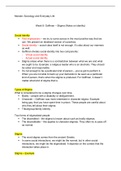
Week 8: Goffman – Stigma (Notes on identity)
Social Identity
First impressions – we try to come across in the most positive way that we
can. We present an idealised version of ourselves.
Social identity – social class itself is not enough. It’s also about our manners
as well.
Goffman divides social identity into two components:
- Virtual social identity
- Actual social identity
Stigma arises when there is a contradiction between what we are and what
we ought to be. Example: a religious leader who is an alcoholic. They should
be sober and responsible.
It’s not enough to be a particular kind of person – you’ve got to perform it.
When you are not able to back up your demands to be seen as a particular
kind of person, that’s when the stigma is produced. For Goffman, it doesn’t
matter what kind of stigma that is.
Types of Stigma
What is considered to be a stigma changes over time.
Bodily – people with a disability or disfigurement.
Character – Goffman was more interested in character stigma. Example:
being gay; that you have spent time in prison. These people are careful about
who they tell about their stigma.
Tribal/group/family identity
Two forms of stigmatized people:
The discredited – the stigma is known about such as bodily stigmas.
The discreditable – this applies to character stigmas. They often try to pass off
as normal.
Stigma
The word stigma comes from the ancient Greeks.
In some social interactions, we might be the normal, but in other social
interactions, we might be the stigmatised. It depends on the context that the
interaction takes place in.
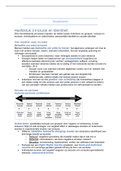
Stigma – Example
Week 8: Goffman – Stigma (Notes on identity)
Social Identity
First impressions – we try to come across in the most positive way that we
can. We present an idealised version of ourselves.
Social identity – social class itself is not enough. It’s also about our manners
as well.
Goffman divides social identity into two components:
- Virtual social identity
- Actual social identity
Stigma arises when there is a contradiction between what we are and what
we ought to be. Example: a religious leader who is an alcoholic. They should
be sober and responsible.
It’s not enough to be a particular kind of person – you’ve got to perform it.
When you are not able to back up your demands to be seen as a particular
kind of person, that’s when the stigma is produced. For Goffman, it doesn’t
matter what kind of stigma that is.
Types of Stigma
What is considered to be a stigma changes over time.
Bodily – people with a disability or disfigurement.
Character – Goffman was more interested in character stigma. Example:
being gay; that you have spent time in prison. These people are careful about
who they tell about their stigma.
Tribal/group/family identity
Two forms of stigmatized people:
The discredited – the stigma is known about such as bodily stigmas.
The discreditable – this applies to character stigmas. They often try to pass off
as normal.
Stigma
The word stigma comes from the ancient Greeks.
In some social interactions, we might be the normal, but in other social
interactions, we might be the stigmatised. It depends on the context that the
interaction takes place in.
Stigma – Example