

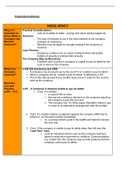
Corporate insolvency
INSOLVENCY
Why is it Practical Considerations:
Important to o Lack of an ability to trade – buying new stock, paying wages etc.
Know When a Directors:
Company has o The duty of directors to act in the best interests of the company
Become changes on insolvency.
Insolvent? o Directors may be liable for wrongful trading if the company is
insolvent.
Loan Finance:
o Insolvency is likely to be an event of default which will enable
holders of security to enforce their security.
The Company May be Wound Up:
o Creditors have to prove a company is unable to pay its debts for the
court to wind up the company.
When is a s122(1)(f) Insolvency Act 1986:
Company A company may be wound up by the court if it is “unable to pay its debts”.
Insolvent? When a company will be “unable to pay its debts” is defined by s123.
This is the main ground that a creditor must prove in order for the court to
wind up the company.
Business
Law and
Practice, s123 – A Company is deemed unable to pay its debts:
p304 – 19.2 1. (1)(a): If a creditor:
Is owed £750 or more.
Has served a statutory demand on the company requiring
the company to pay the sum and
The company has, for three weeks thereafter, failed to pay
or come to an alternative arrangement with the creditor.
2. (1)(b): If a creditor obtains a judgment against the company AND tries to
enforce it, but the debt remains unsatisfied.
I.e. you have tried to send in the bailiffs and failed to recover
the sum due.
3. (1)(e): If the company is unable to pay its debts when they fall due (the
“cash flow” test).
Look for indicative factors such as the company having to
agree to restructure payments to creditors. Communications
e.g. emails from the company may provide evidence that the
company cannot pay its debts.
, Balance sheet test-
(2): If the total value of the company’s assets is less than the amount of its
liabilities
Be mindful that the balance sheet is a snapshot- it is entirely possible the value of
assets (e.g. due to bad debts, change in valuation of assets such as premises,
means that this is misleading).
This test is therefore rarely used, as:
It is difficult for the creditor to obtain the necessary
accounting information.
It is easy for the company to argue that the figures are
out of date or subject to re-evaluation.
s123(1)(a) and s123(1)(b) are arguably easier to prove
as the creditor need show no further evidence than the
statutory demand or unsatisfied judgment.
If a company is "unable to pay its debts" under any of the s123 tests, a
petition by a creditor (amongst others) for the company to be placed into
compulsory liquidation is likely to be successful.
Sch B1 IA 1986 – provides that if the directors appoint an administrator
then the point of insolvency is the time at which the notice of intention to
appoint is filed at Companies’ House.
Director’s duties= duty shifts to creditors instead of shareholder interests
, Wrongful & Fraudulent Trading
Wrongful Trading s.214 IA 1986- duty to creditors
If the director knew, or ought to know prior to winding up that there was no reasonable
prospect for the company to continue trading- D could be found liable and have to make a
contribution to the company’s assets.
214(2)(b)
Where company is insolvent, they should not trade to make things worse for the creditors as
they may be forced to make personal contribution by the court.
Subjective and objective test applied to s.214 of ‘ought to know’
What did this particular director know?
And what would a reasonable director have known in these circumstances?
214(3) defence- D took every step to prevent and minimise the loss to the company’s creditors afte
he became aware of the potential for insolvency- such as taking professional advice, preventing
future credit, drawing up management plans
Rubin v Gunner- defence not used because Director’s continued to pay themselves a salary
despite of awareness that the company was in severe financial difficulty
Liable to make a contribution s.246ZB
Also note s.249 sets out who a connected person to the company is: director, associate of director
associate of the company.
s.435 meaning of associate: husband, wife, CP, relative the individual or their partner, employee,
trustee etc- wide definition
Fraudulent Trading s.213 IA 1986
Harder to rely on- has to be shown that business was conducted with an intention to defraud the
creditors
Re Patrick and Lyon- ‘real moral blame’
Higher standard of proof- difficulty to establish intent
R v Nigel Garvey- usually with criminal conduct
Same result- director liable to contribute
s.246ZA IA 1986- the court, on the application of the administrator declare directors involved to
make contributions to assets as the court thinks proper.
s.6(1) CDDA-allows the court to disqualify any director of an insolvent company whose conduct
raises concerns of the management of the company.
Whether Director will be liable personally:
INSOLVENCY
Why is it Practical Considerations:
Important to o Lack of an ability to trade – buying new stock, paying wages etc.
Know When a Directors:
Company has o The duty of directors to act in the best interests of the company
Become changes on insolvency.
Insolvent? o Directors may be liable for wrongful trading if the company is
insolvent.
Loan Finance:
o Insolvency is likely to be an event of default which will enable
holders of security to enforce their security.
The Company May be Wound Up:
o Creditors have to prove a company is unable to pay its debts for the
court to wind up the company.
When is a s122(1)(f) Insolvency Act 1986:
Company A company may be wound up by the court if it is “unable to pay its debts”.
Insolvent? When a company will be “unable to pay its debts” is defined by s123.
This is the main ground that a creditor must prove in order for the court to
wind up the company.
Business
Law and
Practice, s123 – A Company is deemed unable to pay its debts:
p304 – 19.2 1. (1)(a): If a creditor:
Is owed £750 or more.
Has served a statutory demand on the company requiring
the company to pay the sum and
The company has, for three weeks thereafter, failed to pay
or come to an alternative arrangement with the creditor.
2. (1)(b): If a creditor obtains a judgment against the company AND tries to
enforce it, but the debt remains unsatisfied.
I.e. you have tried to send in the bailiffs and failed to recover
the sum due.
3. (1)(e): If the company is unable to pay its debts when they fall due (the
“cash flow” test).
Look for indicative factors such as the company having to
agree to restructure payments to creditors. Communications
e.g. emails from the company may provide evidence that the
company cannot pay its debts.
, Balance sheet test-
(2): If the total value of the company’s assets is less than the amount of its
liabilities
Be mindful that the balance sheet is a snapshot- it is entirely possible the value of
assets (e.g. due to bad debts, change in valuation of assets such as premises,
means that this is misleading).
This test is therefore rarely used, as:
It is difficult for the creditor to obtain the necessary
accounting information.
It is easy for the company to argue that the figures are
out of date or subject to re-evaluation.
s123(1)(a) and s123(1)(b) are arguably easier to prove
as the creditor need show no further evidence than the
statutory demand or unsatisfied judgment.
If a company is "unable to pay its debts" under any of the s123 tests, a
petition by a creditor (amongst others) for the company to be placed into
compulsory liquidation is likely to be successful.
Sch B1 IA 1986 – provides that if the directors appoint an administrator
then the point of insolvency is the time at which the notice of intention to
appoint is filed at Companies’ House.
Director’s duties= duty shifts to creditors instead of shareholder interests
, Wrongful & Fraudulent Trading
Wrongful Trading s.214 IA 1986- duty to creditors
If the director knew, or ought to know prior to winding up that there was no reasonable
prospect for the company to continue trading- D could be found liable and have to make a
contribution to the company’s assets.
214(2)(b)
Where company is insolvent, they should not trade to make things worse for the creditors as
they may be forced to make personal contribution by the court.
Subjective and objective test applied to s.214 of ‘ought to know’
What did this particular director know?
And what would a reasonable director have known in these circumstances?
214(3) defence- D took every step to prevent and minimise the loss to the company’s creditors afte
he became aware of the potential for insolvency- such as taking professional advice, preventing
future credit, drawing up management plans
Rubin v Gunner- defence not used because Director’s continued to pay themselves a salary
despite of awareness that the company was in severe financial difficulty
Liable to make a contribution s.246ZB
Also note s.249 sets out who a connected person to the company is: director, associate of director
associate of the company.
s.435 meaning of associate: husband, wife, CP, relative the individual or their partner, employee,
trustee etc- wide definition
Fraudulent Trading s.213 IA 1986
Harder to rely on- has to be shown that business was conducted with an intention to defraud the
creditors
Re Patrick and Lyon- ‘real moral blame’
Higher standard of proof- difficulty to establish intent
R v Nigel Garvey- usually with criminal conduct
Same result- director liable to contribute
s.246ZA IA 1986- the court, on the application of the administrator declare directors involved to
make contributions to assets as the court thinks proper.
s.6(1) CDDA-allows the court to disqualify any director of an insolvent company whose conduct
raises concerns of the management of the company.
Whether Director will be liable personally:


