Giorgia Di Bono, 12337013 MEPEU TAKE HOME EXAM 26/03/2020
Question 1. Currency Unions: Costs and Benefits
a. Multiple direct and indirect benefits derive from joining a monetary union, as
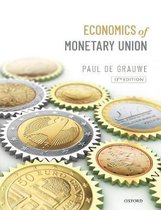
Paul De Grauwe confirmed in the 3rd chapter of his book1. When a single
currency is introduced, the consumers of each Member State can enjoy an
increased level of price transparency, given that they are immediately able to
compare goods prices across national borders. As a result, one could observe
that the competitiveness among the components is substantially restored and
it will, in the long run, produce a favourable welfare effect for the consumers
themselves, who will probably witness an overall decrease in prices.
Eventually, the significative phenomenon of price convergence should indeed
occur. The objective of the latter is the further integration of the currency union
members in various fields, such as the financial, economic and political one.
Subsequently, one should also note that the introduction of a common currency
abolishes price uncertainty, since the exchange rate is fixed and cannot be
modified anymore. Therefore, the elimination of the exchange rate risk would
be accompanied by a reduced systemic risk. In turn, the interest rates would
promptly become lower, resulting in the investment of more capital per worker,
given that the investors would recognize the economic environment to be more
stable. As an immediate consequence, the Member States would witness a
substantial increase in productivity. From this analysis it appears that from
these circumstances, the countries in the area of interest would benefit from a
temporary increase in the output growth rate, stimulating overall economic
progress.
Furthermore, it has been empirically demonstrated that joining a currency
union would foster the internationalisation of the currency itself. The state of
affairs of the US Dollar served as an exemplary model to verify the affirmation
above. As a matter of fact, the worldwide use of a currency guarantees ulterior
1
Paul de Grauwe, Economics of monetary union, Tenth edition (Oxford, United Kingdom: Oxford University Press,
2014).
, revenues, which would derive from seignorage. Besides, the common currency
would be increasingly included in the foreign central banks’ reserves of other
country and would gain value. Moreover, the internationalisation of a currency
causes the increment of opportunities for the domestic financial industry.
b. According to De Grauwe, the actual process of optimisation of a currency
area would suggest both the implementation of new measures and
mechanisms, as well as the elimination of others, which hamper the functioning
of the area. Firstly, one should specify that the creation of a monetary union
entails the deprivation of any control of the participants over monetary policy.
In case of shocks, the members would, thus, be subjected to substantial
adjustment problems. In order to ease the latter process, the countries
involved should be willing to implement more wage flexibility and labour
mobility, which are two of the essential criteria needed to form a currency
union, in the first place. Secondly, the establishment of an optimal currency
area would foresee the deep integration of the stocks and bond market, with
the scope of fostering De Grauwe’s notion of “risk sharing2” among the
members.
Moreover, De Grauwe stated that: “completing a monetary union really means
moving towards a political union3.” With this affirmation, the Belgian economist
expressed the need for extensive political integration, which would guarantee
the removal of the differences in the regulations regarding the labour market
and would, consequently, prevent discrepancies in price developments.
Furthermore, the creation of an integrated political union would require the
essential, automatic flow of intra-countries transfers in disadvantageous
situations. Another important issue De Grauwe elaborated on is the creation of
a budgetary union, that would require common Eurobonds, in which all the
single countries’ government bond would be channelled. The latter would be
followed by the organization of a common unemployment insurance system.
For what concerns the banking system, De Grauwe argued that, in an optimal
currency area, the central bank should indeed function as lender of last resort,
2
De Grauwe, Economics of monetary union.
3
(De Grauwe 2014).
Question 1. Currency Unions: Costs and Benefits
a. Multiple direct and indirect benefits derive from joining a monetary union, as
Paul De Grauwe confirmed in the 3rd chapter of his book1. When a single
currency is introduced, the consumers of each Member State can enjoy an
increased level of price transparency, given that they are immediately able to
compare goods prices across national borders. As a result, one could observe
that the competitiveness among the components is substantially restored and
it will, in the long run, produce a favourable welfare effect for the consumers
themselves, who will probably witness an overall decrease in prices.
Eventually, the significative phenomenon of price convergence should indeed
occur. The objective of the latter is the further integration of the currency union
members in various fields, such as the financial, economic and political one.
Subsequently, one should also note that the introduction of a common currency
abolishes price uncertainty, since the exchange rate is fixed and cannot be
modified anymore. Therefore, the elimination of the exchange rate risk would
be accompanied by a reduced systemic risk. In turn, the interest rates would
promptly become lower, resulting in the investment of more capital per worker,
given that the investors would recognize the economic environment to be more
stable. As an immediate consequence, the Member States would witness a
substantial increase in productivity. From this analysis it appears that from
these circumstances, the countries in the area of interest would benefit from a
temporary increase in the output growth rate, stimulating overall economic
progress.
Furthermore, it has been empirically demonstrated that joining a currency
union would foster the internationalisation of the currency itself. The state of
affairs of the US Dollar served as an exemplary model to verify the affirmation
above. As a matter of fact, the worldwide use of a currency guarantees ulterior
1
Paul de Grauwe, Economics of monetary union, Tenth edition (Oxford, United Kingdom: Oxford University Press,
2014).
, revenues, which would derive from seignorage. Besides, the common currency
would be increasingly included in the foreign central banks’ reserves of other
country and would gain value. Moreover, the internationalisation of a currency
causes the increment of opportunities for the domestic financial industry.
b. According to De Grauwe, the actual process of optimisation of a currency
area would suggest both the implementation of new measures and
mechanisms, as well as the elimination of others, which hamper the functioning
of the area. Firstly, one should specify that the creation of a monetary union
entails the deprivation of any control of the participants over monetary policy.
In case of shocks, the members would, thus, be subjected to substantial
adjustment problems. In order to ease the latter process, the countries
involved should be willing to implement more wage flexibility and labour
mobility, which are two of the essential criteria needed to form a currency
union, in the first place. Secondly, the establishment of an optimal currency
area would foresee the deep integration of the stocks and bond market, with
the scope of fostering De Grauwe’s notion of “risk sharing2” among the
members.
Moreover, De Grauwe stated that: “completing a monetary union really means
moving towards a political union3.” With this affirmation, the Belgian economist
expressed the need for extensive political integration, which would guarantee
the removal of the differences in the regulations regarding the labour market
and would, consequently, prevent discrepancies in price developments.
Furthermore, the creation of an integrated political union would require the
essential, automatic flow of intra-countries transfers in disadvantageous
situations. Another important issue De Grauwe elaborated on is the creation of
a budgetary union, that would require common Eurobonds, in which all the
single countries’ government bond would be channelled. The latter would be
followed by the organization of a common unemployment insurance system.
For what concerns the banking system, De Grauwe argued that, in an optimal
currency area, the central bank should indeed function as lender of last resort,
2
De Grauwe, Economics of monetary union.
3
(De Grauwe 2014).